



Indonesian envoy lauds court decision on undocumented workers' claims
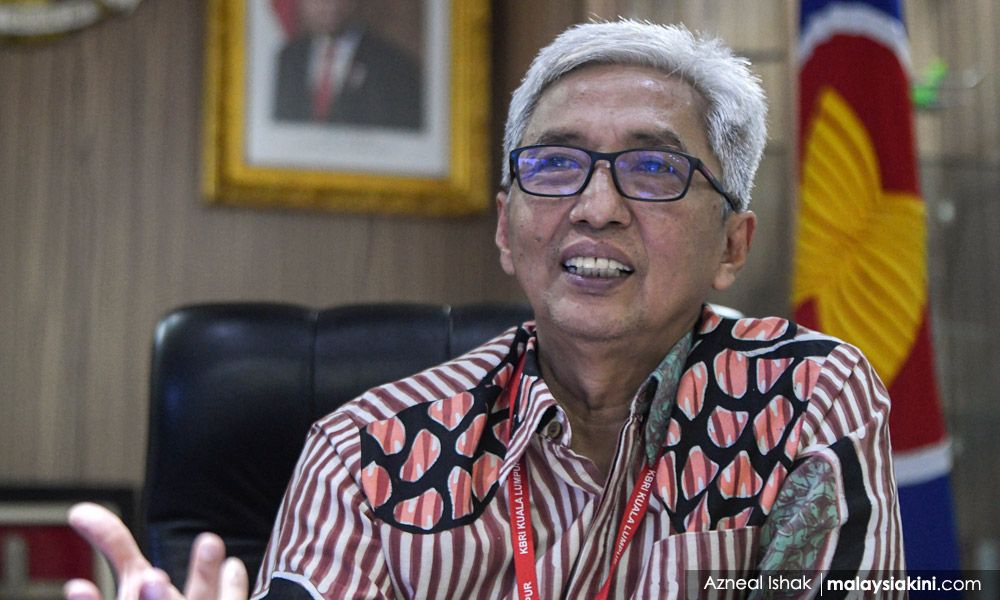
Indonesian ambassador to Malaysia has lauded the Court of Appeal's decision to allow undocumented migrant workers to take their claims to the Labour Department despite their immigration status, saying it is significant progress toward ending forced labour in the country.
Speaking to Malaysiakini, Hermono said the embassy would not need to waste any time in filing unpaid wage claims at the Labour Department on behalf of hundreds of its undocumented workers.
Indonesian ambassador to Malaysia has lauded the Court of Appeal's decision to allow undocumented migrant workers to take their claims to the Labour Department despite their immigration status, saying it is significant progress toward ending forced labour in the country.
Speaking to Malaysiakini, Hermono said the embassy would not need to waste any time in filing unpaid wage claims at the Labour Department on behalf of hundreds of its undocumented workers.
Confirming that there were more undocumented migrant workers than those who were documented, Hermono explained that until now, the embassy had been unsuccessful in claiming unpaid wages of undocumented workers at the Labour Department.
He said this was because it was common practice for the judges to seek proof of valid work passes and employment contracts from the claimants.
He added that when workers were not able to produce these documents, the cases would be dismissed and the workers returned to Indonesia without the wages owed to them for years of work.
He pointed out that the onus to secure a work pass and maintain its validity should fall on the employer and not the worker who has no means of applying for a work pass for themselves at the Immigration Department.
Hermono explained how this was a punishment to the worker with a labour-related complaint, while employers were rarely taken to task for employing undocumented workers.
“Most of the cases we handled in Malaysia were unpaid salaries of undocumented workers.
“In our experience, it is very difficult to get employers to pay the wages they owe undocumented workers.
“This is because so far, the Labour Court has denied undocumented workers their right to redress labour-related grievances,” he said.
However, Hermono attributed all their success in securing the unpaid wages of undocumented workers to negotiations between the embassy and the employer, which results also depended on the goodwill of the employer to fulfil their obligations.
High Court’s ruling upheld
Hermono, who goes by a single name, told Malaysiakini last month that the embassy had received a total of 392 domestic workers into their shelters across the country since 2021, and many of whose wages had not been paid for more than six years.
On Thursday, May 12, Court of Appeal judge Ravinthran N Paramaguru upheld the High Court’s landmark decision that a worker’s immigration status should not deter the Labour Court from hearing their case.

Paramaguru was quoted as saying that he saw nothing in the Employment Act 1955 or in the Employment (Restriction) Act 1968 that prevented a worker from seeking redress at the Labour Court.
He upheld the ruling by Shah Alam High Court judge Azizah Nawawi who was of the opinion that the immigration status of migrant workers was not a question for the Labour Court.
Hermono said he would continue to voice out against unjust practices forced on vulnerable workers who have been denied their rights for years.
Having interviewed many abused domestic workers himself, Hermono explained that employers of undocumented workers were quick to deny having ever employed them because there was no official document to prove their employment relationship.
“I sense that many employers here intentionally hire undocumented workers to stay free from the responsibility for the welfare of workers and timely payment of wages.
Many errant employers ‘untouchable’
Hermono said Indonesians were fond of sneaking into Malaysia undocumented because there was employment for them here and not in other countries where employers are required to have proper documentation.
He said until now, the majority of employers in Malaysia have been “untouchable” by the law for hiring undocumented workers.
However, addressing claims by undocumented workers at the Labour Department without having to incur the cost of taking the cases to the civil courts could inspire employers to respect workers’ rights.
He also cautioned that while this was a positive step forward in addressing forced labour, Hermono said awards for payments of unpaid wages should not be viewed as punishment for the offence of employing an undocumented worker.
“The immigration laws must still apply to both parties and not just one,” he said.





Are you sure you want to delete this comment?
This action cannot be undone.