




HIV group: FTA a matter of life and death
As business groups and policy-makers talk of the effects of intellectual property (IP) rights on profits, investments and economic development, a group representing people living with HIV gave the stark reminder today that, to them, it's 'a matter of life and death.'
As business groups and policy-makers talk of the effects of intellectual property (IP) rights on profits, investments and economic development, a group representing people living with HIV gave the stark reminder today that, to them, it's 'a matter of life and death.'
The Positive Malaysian Treatment Access & Advocacy Group (MTAAG+) stressed this in a statement when responding to calls for Malaysia to put in place higher IP protection measures proposed by the US in order to make it more conducive for foreign investment.
In making the call, Attorney-Advisor at the US Patent and Trademark Office Karen M Hauda said the stricter IP standards proposed by the US in its free trade agreement (FTA) with Malaysia would have little effect, if any, on the price of medicines.
Hauda also denied that local generic medicines industry would go under due to greater restrictions imposed by the FTA or prevent Malaysia from effectively tackling public health issues such as HIV/Aids.
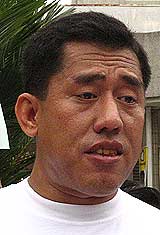 MTAAG+ director Edward Low noted that several world health authorities - such as the United Nations' Special Rapporteur on Human Rights, the World Health Assembly, the World Health Organisation (WHO), and health ministers from Latin American and African countries - have voiced concern that medicine prices would in fact increase following implementation of higher IP protection.
Beside such predictions, however, the lack of empirical date is only because the US has only recently signed bilateral FTAs with other countries. The WHO, said Low, predicts the increase of prices will kick in about 15 years and will affect the whole spectrum of new and generic medicines.
The Canadian generic medicine industry, for example, had estimated that the implementation of 'data exclusivity' - which is one of six IP clauses usually proposed by the US - would have raised prescription medicine costs alone by US$600 million had Canada implemented data exclusivity, he added.
Widely criticised
Jordan, moreover, which Hauda cited as an example of a US FTA partner that has seen a growth in generic and new medicines, has only 1.5 of the six IP provisions, said Low. The Jordan-US FTA, furthermore, has only been operating for five years, he added.
In response to Hauda's assertion that the US FTA will not prevent Malaysia from effectively tackling health issues such as HIV/Aids, then the US Government should agree to put that commitment in the main text of the FTA "in enforceable, legally binding language."
As for the US President's Emergency Plan for Aids Relief programme (PEPFAR) which Hauda cited as an example of the government's commitment to combat the disease, Low said PEPFAR has been widely criticised, even by the government's own Government Accountability Office (GAO).
GAO, said Low, found that PEPFAR's procurement of original medicines instead of generics have deprived people living with HIV in developing countries of the fixed dose combination medicines recommended by the WHO and their governments to reduce the risk of resistance to the medicines.
"The extra cost of US$368 per person per year because of PEPFAR's procurement of original medicines amounts to hundreds of millions spent subsidizing American multinational pharmaceuticals instead of buying the cheapest generic medicines and using the money saved to save the lives of more people living with HIV," said Low
"For people living with HIV, the treatment that we need is a life long treatment. For us, it is a matter of life and death."


Are you sure you want to delete this comment?
This action cannot be undone.