


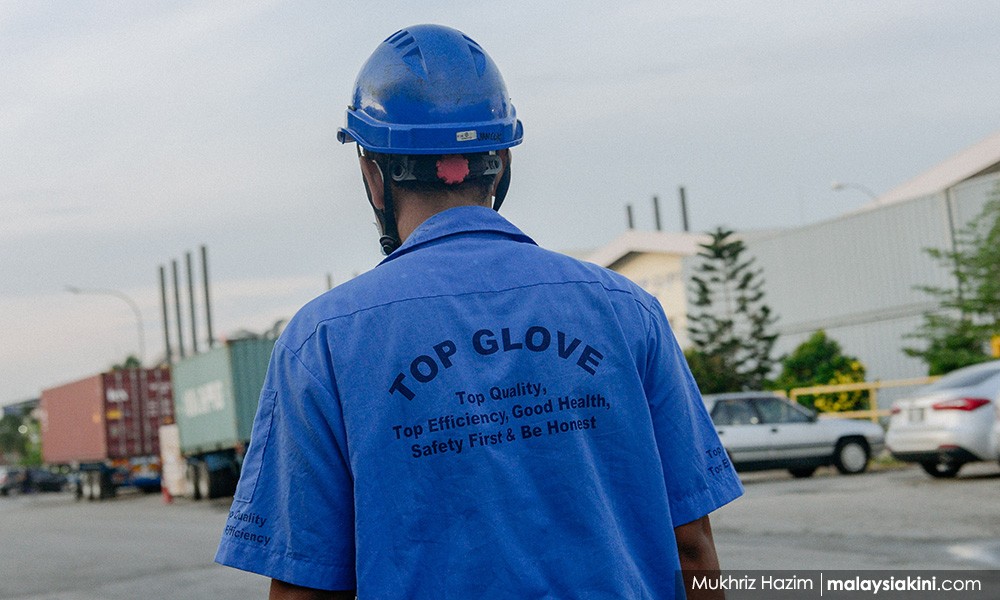

Top Glove family's offshore holdings a contrast to alleged workers woes
This note earlier stated Top Glove had sought the injunction. The error is regretted. The article is also amended to add Top Glove's response to the Yubrav Khadka matter.
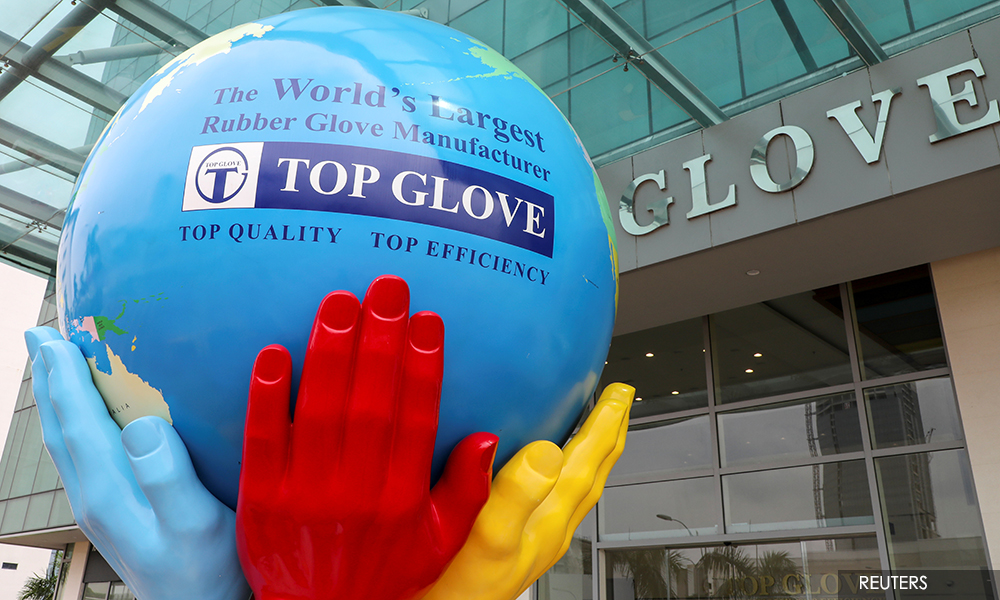
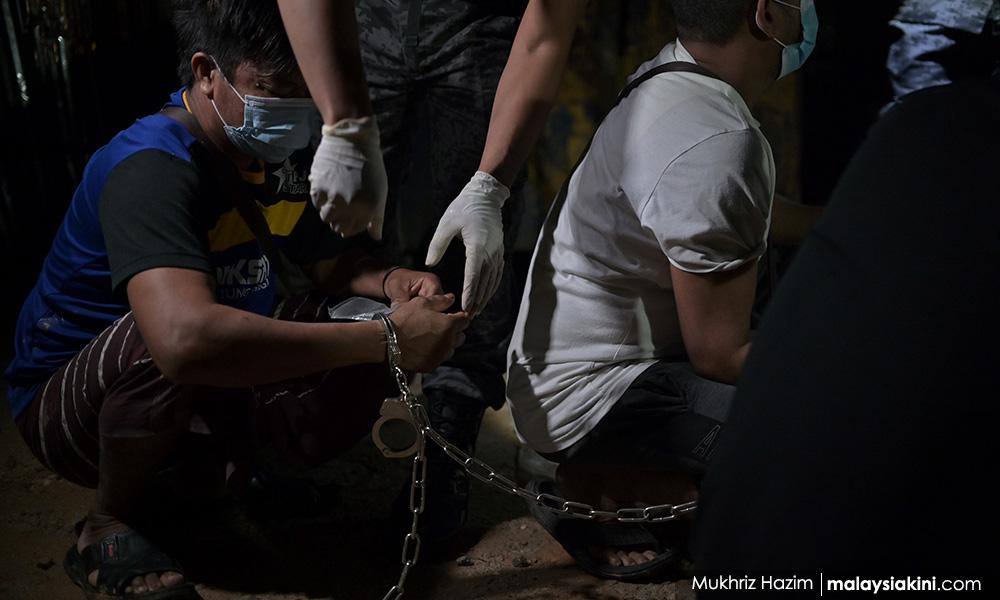
PANDORA PAPERS | In 2020, Malaysia’s largest surgical glove manufacturer Top Glove fired and deported one of its employees, Yuvaraj Khadka, 29, from Chhintang, Dhankuta, back to Nepal on the charge of leaking information about the alleged exploitation of workers.
In 2012, Khadka, then 20, had gone to Malaysia for foreign employment paying NPR 120,000 (RM4,340) to a recruitment agent with the dream of supporting the family financially.
There, he started working at Top Glove. He alleged that the company did not pay his salary and overtime payment in a clear violation of the Malaysian government’s rule. Still, Khadka did not quit his job.
After working for nine years, the company fired him last year on charges of leaking information and sent him back home.
Khadka’s ‘crime’ was taking pictures of migrant workers working in crowded conditions during the Covid-19 pandemic.
Once the photo was made public on social media, the company immediately revoked his labour contract and sent him back to Nepal, making him pay for his own plane ticket, he told...
Editor’s Note: This article was intended for publication in October 2021, as part of the coverage on the Pandora Papers but was held back after Top Glove’s executive chairperson Lim Wee Chai sought an injunction order against its publication by Malaysiakini. It is published today following the settlement of the court case, with relevant updates.
The above note earlier stated Top Glove had sought the injunction. The error is regretted. The article is also amended to add Top Glove's response to the Yubrav Khadka matter.
PANDORA PAPERS | In 2020, Malaysia’s largest surgical glove manufacturer Top Glove fired and deported one of its employees, Yuvaraj Khadka, 29, from Chhintang, Dhankuta, back to Nepal on the charge of leaking information about the alleged exploitation of workers.
In 2012, Khadka, then 20, had gone to Malaysia for foreign employment paying NPR 120,000 (RM4,340) to a recruitment agent with the dream of supporting the family financially.
There, he started working at Top Glove. He alleged that the company did not pay his salary and overtime payment in a clear violation of the Malaysian government’s rule. Still, Khadka did not quit his job.
After working for nine years, the company fired him last year on charges of leaking information and sent him back home.
Khadka’s ‘crime’ was taking pictures of migrant workers working in crowded conditions during the Covid-19 pandemic.
Once the photo was made public on social media, the company immediately revoked his labour contract and sent him back to Nepal, making him pay for his own plane ticket, he told Nepal’s Center for Investigative Journalism (CIJ Nepal).
Khadka said he took the photo of workers congregating in a work setting in May 2020, when Covid infections were increasing. He said that the workers could not adopt safety measures at work and blamed the company.
“Top Glove is a very dangerous company. If someone complains against it, the person is identified and fired,” he said. “So, many workers do not file a complaint against the company even if they are abused.”
Although supply chain and social auditors visit the company for inspection, Khadka believes they do not get the full picture.
In response, Top Glove refuted Khadka's claim that he was not paid his salary and overtime, but did not respond on the reason he was terminated. The company also denied that Khadka paid for his flight home.
"(Khadka) received his final monthly salary from Top Glove in September 2020, which was his last month of employment with the company.
"His airfare to Nepal, amounting to RM1,682.45, was also fully paid by Top Glove."

349 percent increase in profit
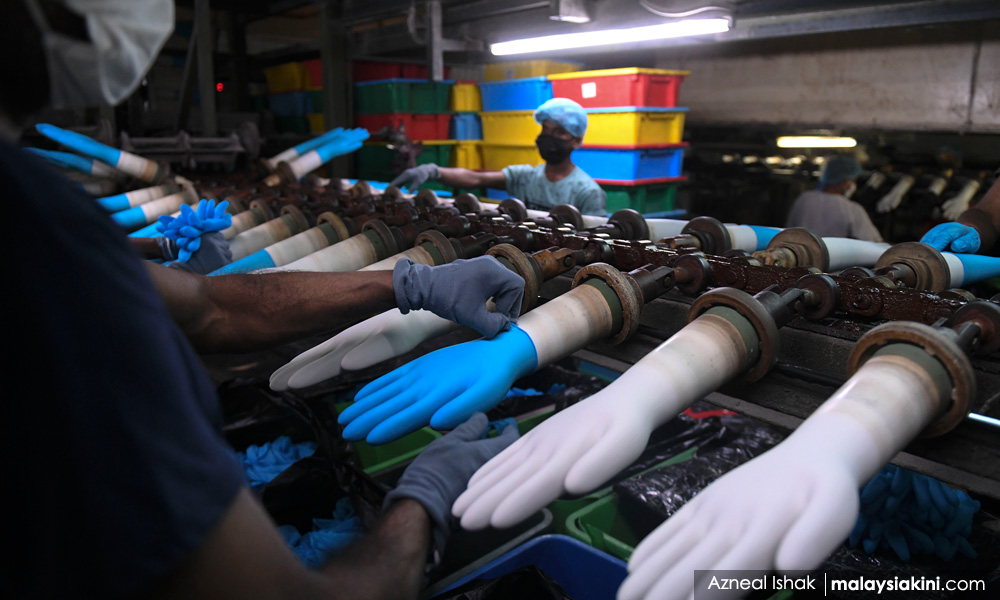
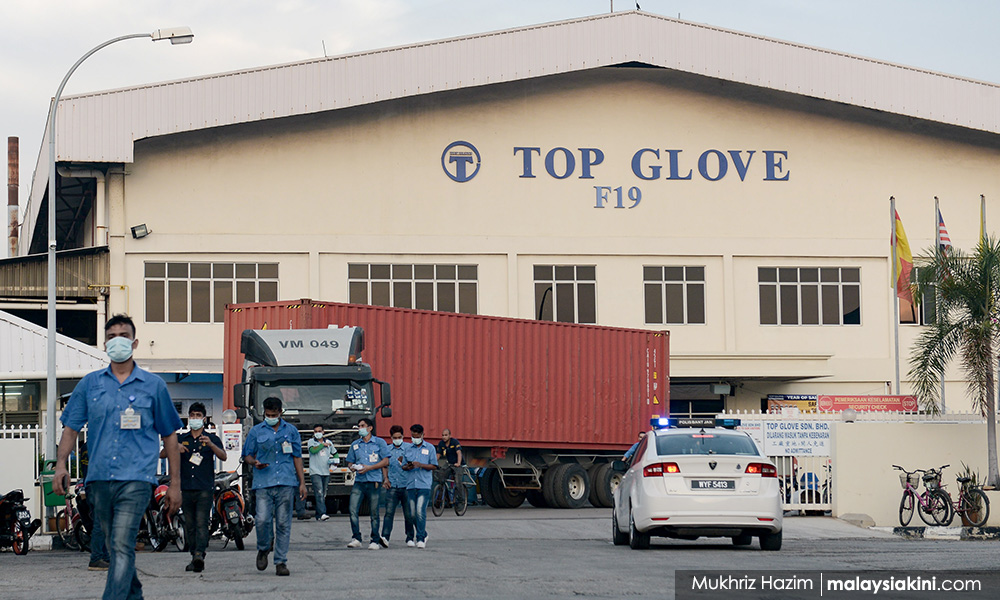
While millions of workers languished globally during the height of the Covid-19 pandemic, Top Glove’s factories in Malaysia continued to operate mostly uninterrupted, staffed by migrant workers, including those from Nepal.
In the year that Khadka was fired, Top Glove reported RM1.75 billion in profit for its financial year 2020.
In 2021, Top Glove did even better, with profit skyrocketing 349.1 percent to RM7.87 billion, thanks to surging demand for rubber gloves and personal protective equipment.
This was despite a poor fourth quarter in 2021, where profit fell to RM607.95 million from the immediate preceding quarter’s RM2.04 billion.
The New York Times, on Dec 20, 2020, reported that Top Glove alone controlled roughly a quarter of the global rubber gloves market.
The report said that glove manufacturers in Malaysia collectively meet about 60 percent of the world’s demands for disposable gloves.
But as the world returns to something akin to normal amid Covid-19 vaccination roll-out, demand for rubber gloves plummeted, and with it, Top Glove’s profits.
Coupled with escalating global inflation and the Ukraine-Russia war, driving up the cost of raw materials and crude oil, the Top Glove group has reported stunning dips in profit.
Last month, it reported a 99.2 percent drop in profits to RM15.29 million in the third quarter ending May 31, down from RM2.04 billion in the same quarter last year.
Its revenue shrank from RM4.16 billion to RM1.46 billion in the same quarter, year-on-year.
The Lims’ offshore investments
As substantial shareholders of Top Glove, founder Lim Wee Chai and his family’s wealth grew exponentially in the first couple of years of the pandemic.
Lim is the executive chairperson of Top Glove. His wife, Tong Siew Bee, sits on the board as a director, while their son is part of the company’s management team.
In Top Glove’s 2020 annual report, Lim was stated to own 2.16 billion direct shares and 680.19 million indirect shares in the company.
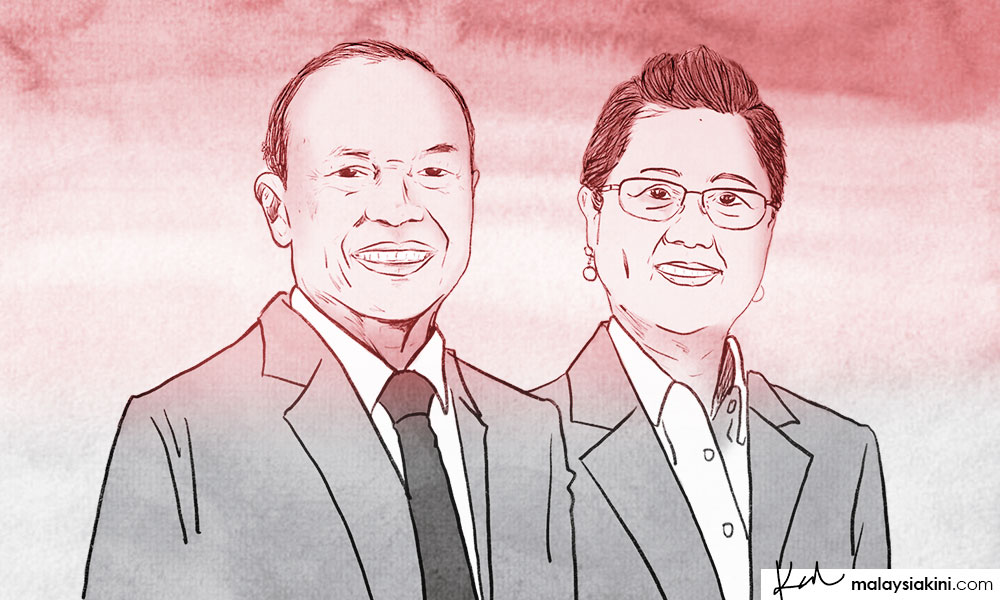
Lim and his family owned about 27 percent of the company’s shares, with another 6.8 percent listed as indirect shareholding and held by First Way United Corporation, a company registered in the British Virgin Islands (BVI).
At least some of those dividend earnings by the Lim family during the pandemic boom could have also made their way to the BVI if the Lims repeated what they did via their offshore investment portfolio from 2007 to 2018, as exposed in the Pandora Papers.
The Pandora Papers is a trove of documents obtained by the Washington DC-based International Consortium of Investigative Journalists (ICIJ) through an anonymous source.
The anonymous source shared with ICIJ some 2.94 terabytes of confidential financial files, amounting to more than 11.9 million documents and other records, from 14 offshore service providers that set up and manage shell companies and trusts in tax havens around the globe.
According to the Pandora Papers, Lim and his family members own or sit on the board of several companies in the BVI, set up by Singapore-based financial services provider Trident Trust.
They are Top Investment Ltd, Mountain High Capital Ltd, Venturelist Ltd and Robust Leader Management Ltd.
Mountain High was set up in July 2007 as an investment portfolio, with US$14 million (RM48.3 million) banked by the Bank of Singapore.
The funds were accumulated by Lim over 10 years, the incorporation document reads.
Besides Lim and Tong’s son and daughter, the companies also include Top Glove employees as directors.
According to an email dated Feb 6, 2017, revealed in the Pandora Papers, their son had certified that his father Lim holds 50,000 shares of Mountain High at the rate of one US dollar per share.
In the case of Venturelist Ltd, the Lim family and two personal assistants at Top Glove were appointed as directors at first, while a year later, only the Top Glove employees remained.
In November 2018, Lim opened another company called Top Investment Limited in the British Virgin Islands.
Among the directors of Top Investment Ltd are Lim, his wife Tong, and their children. Two Top Glove employees, Yap Rueh Yinn and Lai Hui Shi, were also listed as directors.
Robust Leader Management Ltd, which Trident Trust also helped to incorporate, is yet another BVI company linked to the Top Glove owner. There is limited information available, and the purpose of the company is unclear.
When contacted, Lim said the offshore companies and trusts are not part of Top Glove.
According to him, the company employees named in the documents had “assisted willingly in matters to the offshore arrangements” and were paid independently by him for their assistance.
Two of them, he said, are no longer with Top Glove.
In a written statement, he said the BVI firms were not set up to evade taxes, and the funds sent to BVI were dividends from public-listed companies, for which taxes had already been paid.
“Since the income is tax exempt, this declaration is not required for annual income tax submissions,” he said.
Unsanitary and crowded living conditions
The fact that the Lim family are linked to or are beneficial owners of offshore entities is neither illegal nor surprising.
Tax havens are popular among high-net-worth individuals for various reasons, including that they offer attractive tax regimes for legitimate tax optimisation and wealth management.
Lim told Malaysiakini the BVI was chosen as an investment destination “since offshore companies offer a variety of fiscally sound investment opportunities that are time tested and legal”.
Last year, Forbes listed Lim as Malaysia’s eighth richest person, with a net worth of US$3.5 billion.
READ MORE: How Daim, M’sia’s uber-rich use S’pore to store money offshore
Yet as his wealth grew, so did the complaints from Top Glove’s workforce of more than 5,000 migrant workers in Malaysia.
Among the complaints was that workers were forced to work overtime to meet the demand for gloves and personal protective equipment.
In a statement issued on Jan 25, 2019, Migrant Workers Right to Redress Coalition said Top Glove had forced workers to do unsafe work for longer hours, putting workers in debt bondage through recruitment fees and even allegedly confiscating their passports.
This was about a year before Covid-19 hit Malaysian shores, and the need to produce even more rubber gloves to meet the global demand in the pandemic placed more pressure on the manufacturing workforce.
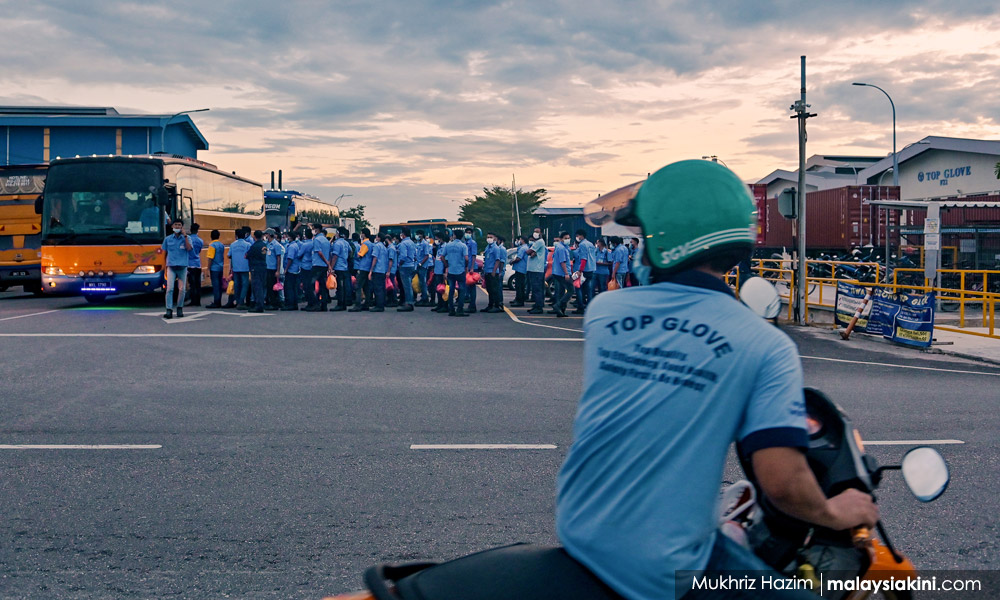
In response to claims of excessive overtime, Top Glove issued a statement on Dec 10, 2020, that its workers “do not perform excessive overtime and are given rest days in line with the Malaysian labour law, which is 104 hours overtime per month and one rest day per week, respectively”.
Accusations of forced labour
In July 2020, Top Glove was hit by a sanction by the US Customs Border and Protection (CBP) following an allegation of forced labour.
A CBP spokesperson at the time told Australia’s ABC News that the decision was “based on reasonable evidence of forced labour in the manufacturing process”.
Still, Top Glove and Malaysian authorities dismissed the claims as “old allegations”.
But by November 2020, the unsafe work and living conditions were laid bare when Top Glove factories were linked to the Teratai Covid-19 infection cluster, Malaysia’s largest ever infection cluster with 7,205 people infected.
One of them, Yam Narayan Chaudhary, a Nepali security guard at a Top Glove factory, died from Covid-19.
Workers who spoke to CIJ Nepal alleged that inadequate workplace safety measures had led to the virus spreading rapidly among workers who were placed in close living quarters.
Raids by the Department of Labour Peninsular Malaysia on Nov 26, 2020, uncovered unsanitary and crowded living conditions for workers.
In one workers’ accommodation in Ipoh, the Labour Department found double-storey houses used as dorms meant for 10 to 12 workers were instead packed with 15 to 20 workers per house.
“During our inspection in all 13 hostels, which are double-storey houses, we discovered that the mattresses and beds were in the dining and living areas,” it said.
The Malaysian government charged Top Glove with failing to provide Malaysian Labour Department-certified housing for its workers on March 16, 2021.
The extraordinary profits enjoyed by glove manufacturers have brought on calls for windfall taxes, but the government fears it might spook investors and push manufacturers to leave Malaysia and set up shop elsewhere.
Rani Rasiah, a migrant workers’ rights advocate and coordinator for the Migrant Workers Right to Redress Coalition, said this means neither the government nor company operators are held responsible for workers’ rights, despite the colossal profits made by the company’s operators and its investors.
She said international pressure was needed to hold Top Glove to account.
Eyes on the tax ringgit
In December 2018, a month after Lim set up BVI firm Top Investment Limited, British daily The Guardian reported that Top Glove was among companies where migrant workers paid to be recruited.
It reported that Nepali migrant workers who went to work for Top Glove paid up to 600,000 Nepali rupees (RM22,140) to local agents but ended up getting paid about RM1,000 a month working in Top Glove in Malaysia.
Rabin Gurung, managing director of the Trust Nepal Overseas Pvt Ltd in Maharajgunj, Kathmandu, was among those involved in the lucrative business of sending Nepali workers to the Top Glove, according to a letter sent by Top Glove to Trust Nepal Overseas sighted by CIJ Nepal.
Migrant workers who spoke to CIJ Nepal said that Gurung charged around NPR200,000 (RM7,380) per person to send them to Malaysia.
When contacted, Gurung denied ever charging a recruitment fee but confirmed supplying workers to Top Glove via a Malaysian firm which was registered as a cleaning company.
“Some time ago, any company registered in Malaysia could do any kind of work,” he said, “That is why we have supplied workers even though it is a cleaning company.”
Despite Gurung’s denials, sources told CIJ Nepal that Top Glove blacklisted Trust Nepal Overseas and stopped hiring workers through the firm after it learnt that workers had to pay fees.
Top Glove now says it has a zero-recruitment fee policy and is refunding any recruitment fees paid by workers.
It has allocated US$30 million (RM133.83 million) for this, as well as to improve worker conditions, CBP said last September. As a result, the CBP lifted the ban on Top Glove imports.
“CBP modified a finding after thoroughly reviewing evidence that Top Glove has addressed all indicators of forced labour identified at its Malaysian facilities,” said CBP acting commissioner Troy Miller.
But Rani is unconvinced.
She said the Migrant Workers Right to Redress Coalition continues to receive complaints about worker rights issues involving Top Glove workers.
Ultimately, she said, the government should do its duty by keeping a watchful eye on large corporations like Top Glove so they do not exploit workers.
But this will be a challenge as long as the state’s priority is the tax ringgit, she said.
This report was produced by CIJ Nepal with additional reporting by Malaysiakini’s Aidila Razak and Andy Heong. It is part of the Pandora Papers investigation by ICIJ and several hundred journalists worldwide.
Read more from the series:
How Daim, M'sia's uber rich use S’pore to store money offshore
Najib insists faultless in 1MDB scandal, top firms didn't raise red flags
Offshore funds linked to 1MDB scandal also involved in Indian, Russian frauds
Politicians, ministers and M’sian uber rich revealed in latest offshore leak
Offshore wealth management: Asset protection, financial privacy or tax evasion?
Hidden riches of world leaders, billionaires exposed in unprecedented leak



Report this comment
Are you sure you want to delete this comment?
This action cannot be undone.