


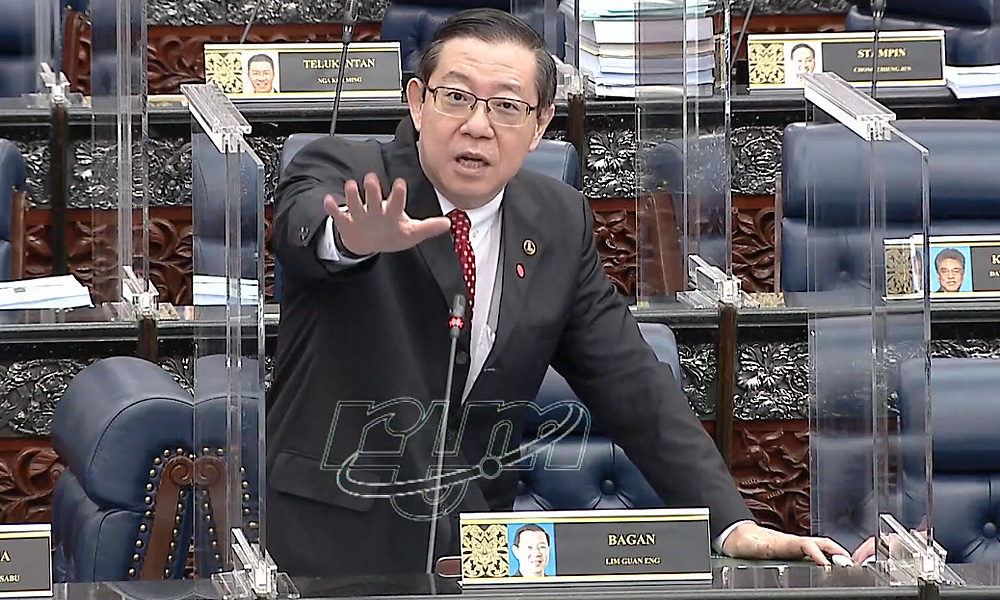

Lim urges imported goods tax waiver until after projected recession
DAP national chairperson Lim Guan Eng in a statement called for the government to reduce the burden of the low-income group who would be the main purchasers of imported LGV priced below RM500.
“The government expects to earn an additional...
Putrajaya was told to waive the 10 percent sales tax on imported low-value goods (LGV) sold online until after the expected recession next year.
DAP national chairperson Lim Guan Eng in a statement called for the government to reduce the burden of the low-income group who would be the main purchasers of imported LGV priced below RM500.
“The government expects to earn an additional RM200 million in revenue following the implementation of the Sales Tax (Amendment) Bill 2022 next year.
“Currently, low-valued goods priced RM500 and below are not subject to any tax when they are imported to Malaysia.
“In other words, the additional RM200 million in revenue for online LVG foreign purchases, and unspecified hundreds of millions of ringgit more collected from online LVG domestic purchases, will be borne by low-income groups.
“The government should be reducing their tax burden instead of increasing them during times of imminent recession and soaring prices,” Lim said.
He clarified there is a need to create a level-playing field by imposing the same tax, which is imposed on local suppliers, on foreign ones too.
However, he said the government should instead waive the 10 percent online sales tax on local suppliers for LVG below RM500.
The Bagan MP said Malaysians do not need new taxes when there are many unresolved issues such as rising prices of food, a labour shortage, and depreciating ringgit.
“The threat of a global recession is real as can be seen from the performance of the US economy which is currently in technical recession over the first two quarters of 2022,” he added.
Similarly, he said the Bank of England also predicted the United Kingdom will be in recession in the final quarter of 2022.
New taxes won’t help
"There is no doubt that additional taxes will not help to generate economic growth to overcome the expected recession," Lim stressed.
This is despite Malaysia’s gross domestic product (GDP) growing 8.9 percent year-on-year in the second quarter of 2022 as domestic demand strengthened amid normalising economic activity as the country moved towards Covid-19 endemicity.
Last week, Finance Minister Tengku Zafrul Abdul Aziz admitted it will be hard for Malaysia to avoid an economic recession next year with the global economy set to slow down.
“The government, in its self-absorption with politicking, continues to express optimism that Malaysia can achieve the 2022 projected economic growth of up to 6.3 percent.
“Even the International Monetary Fund lowered its growth target for Malaysia to at best 5.6 percent for 2022,” Lim said.
The Sales Tax (Amendment) Bill 2022, which was passed by the Dewan Rakyat on Aug 4, is set to be implemented next year.

/file/publisher-c1a3f893382d2b2f8a9aa22a654d9c97/2021/11/fe6b84d7af3638592758011e7bda5bbe.jpg)


Report this comment
Are you sure you want to delete this comment?
This action cannot be undone.