


/file/publisher-c1a3f893382d2b2f8a9aa22a654d9c97/2021/09/a801b74bbfbec16b998513dc6702278f.jpg)

KINIGUIDE | What is the CPTPP trade deal and why is it problematic to some?
KINIGUIDE | Less than 24 hours after Prime Minister Anwar Ibrahim was sworn in, he received a memorandum seeking urgent action.
The memorandum sought the new government to pull back ratification documents for the Comprehensive and Progressive Agreement for Trans-Pacific Partnership (CPTPP) before the trade deal came into force five days later.
But he missed the deadline. Now groups are demanding that the government review its position on the CPTPP and withdraw from the deal signed by the previous administration.
What is the CPTPP and why is it problematic to some? This Kiniguide explores the issue...
KINIGUIDE | Less than 24 hours after Prime Minister Anwar Ibrahim was sworn in, he received a memorandum seeking urgent action.
The memorandum sought the new government to pull back ratification documents for the Comprehensive and Progressive Agreement for Trans-Pacific Partnership (CPTPP) before the trade deal came into force five days later.
But he missed the deadline. Now groups are demanding that the government review its position on the CPTPP and withdraw from the deal signed by the previous administration.
What is the CPTPP and why is it problematic to some? This Kiniguide explores the issue.
What is CPTPP?
The CPTPP started as the Trans Pacific Partnership Agreement (TPPA) - a trade agreement between 12 Pacific Rim nations:
- Australia
- Brunei
- Canada
- Chile
- Japan
- Malaysia
- Mexico
- New Zealand
- Peru
- Singapore
- United States; and
- Vietnam
Signed in 2016, the deal requires countries to remove tariffs on selected imports from other TPPA countries, and sets business conditions for trade, among others.
In 2017, the US under then president Donald Trump withdrew from the TPPA.
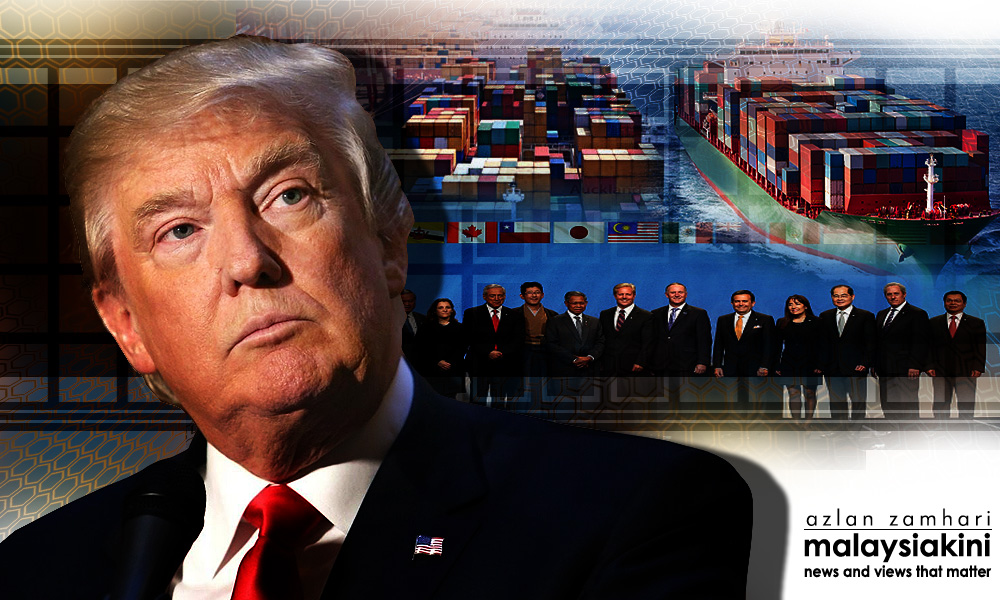
This prompted the 11 remaining countries to sign a new agreement to affirm their commitment to each other in March 2018. The new agreement was named CPTPP.
However, the agreement was ratified on different dates by individual partner countries, and came into force at different times.
Meanwhile, more countries, including China, the United Kingdom, the Philippines and Thailand formally or informally expressed interest to join the pact.
When did the deal come into force for Malaysia?
Malaysia ratified the CPTPP on Sept 30, and the deal came into force 60 days later on Nov 30.
For proponents of the deal, this is three years too late and Malaysian businesses are playing catch up as a result.
Why did Malaysia sign the CPTPP?
The previous administration said the deal is projected to increase trade to US$655.9 billion (RM2.8 trillion) in 2030.
The PWC analysis said the country's gross domestic product (GDP) could grow up to 1.9 percent in 2030 if Malaysia joins the CPTPP, or up to 4.2 percent if China and the UK join the deal.
The Federation of Malaysian Manufacturers argued the deal is crucial to access a larger market, particularly Canada, Mexico and Peru.
Malaysia does not have trade agreements with these countries, which have a combined GDP of US$3.5 trillion.
Is the CPTPP identical to TPPA?
No. While the CPTPP incorporates most of the TPPA's provisions, 22 of those original provisions are suspended under the CPTPP.
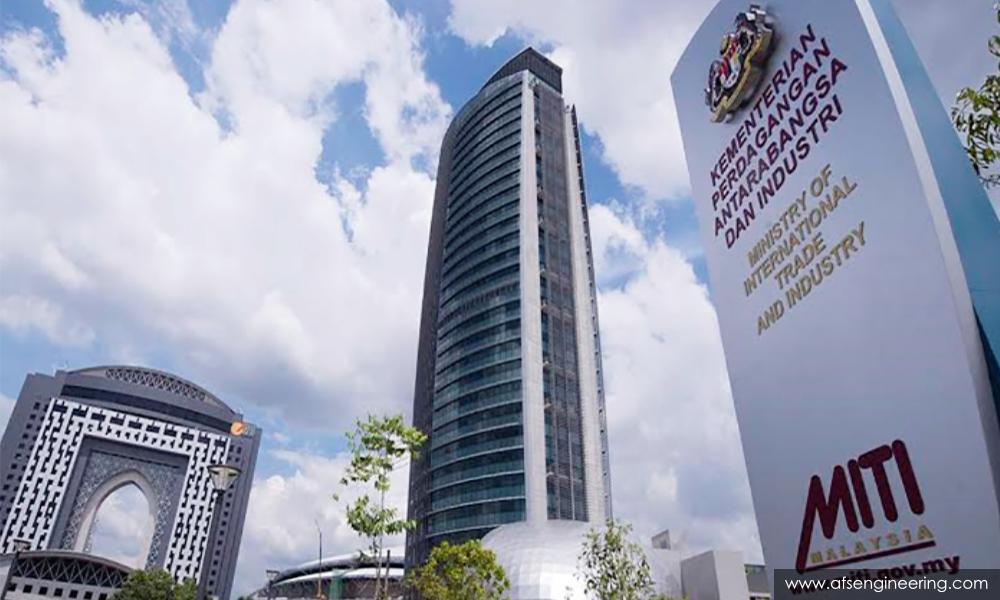
However, both agreements must be read together, the International Trade and Industry Ministry (Miti) said.
Besides the main agreement, Malaysia also signed additional bilateral agreements with member nations on various issues, known as side letters.
They include more than two dozen agreements on matters such as electronic payment services, biodiversity and labour, with countries like Brunei, Canada, Chile, Mexico, New Zealand, Peru and Vietnam.
If it’s similar to the TPPA which was already in place, then why the calls to withdraw?
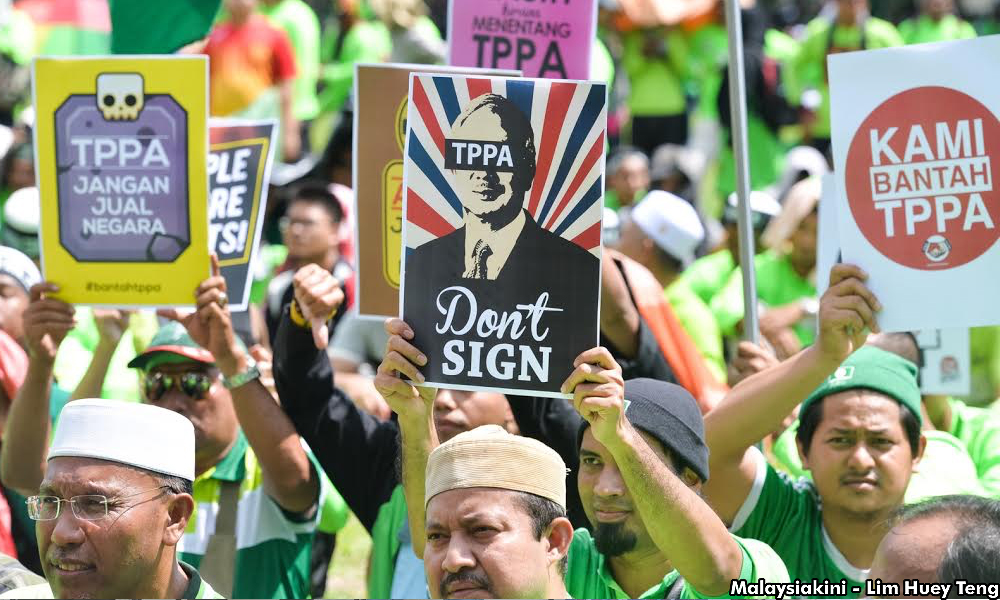
The signing of the TPPA was controversial for various reasons.
Many groups against the TPPA see the CPTPP as a chance to improve on what was signed under the former, while others see it as a chance to get out of the agreement altogether.
What were the issues in TPPA?
There were two large criticisms of the TPPA - it impinged on national sovereignty and it could lead to higher costs of medication which could harm public health.
How can a free trade agreement lead to pricier meds?
The TPPA contained what public health advocates said are “aggressive intellectual property standards” that favour commercial interest against public health.
Most of the policies were pushed by the US government and adopted in the final text of the agreement.
“For pharmaceuticals and other health commodities, stronger intellectual property regimes mean extended patent monopolies and delayed generic competition, and that translates into higher prices for people who need medicines,” Medicins Sans Frontiers said.

For example, one of the provisions was for patent periods to be extended if there are delays for marketing provisions in the member country.
However, in 2015, Miti said this is not a risk for Malaysia because the country’s patent and marketing approvals for pharmaceuticals are diligent, resulting in no delays.
Miti said TPPA countries are also party to World Trade Organisation declarations which allow countries to take measures for public health.
Does the CPTPP have the same provisions on intellectual property?
A number of these provisions were among those suspended in the CPTPP.
However, public health advocates are still concerned because the provisions are not completely eliminated, just temporarily suspended.
“These provisions were not removed from the text and the threat remains that they could be enacted in the future, but suspension means that for now they will not be enacted or enforced,” Medicins Sans Frontiers said.
Why do critics say the TPPA was a threat to national sovereignty?
The sovereignty issue relates to the agreement's investor-state dispute settlement (ISDS) mechanism, which grants investors the right to sue a partner nation in a forum other than the national court.
Critics argue this will inhibit a government's right to roll out policy, which could hurt international investors.
US think tank the Center for Strategic and International Studies notes many developing countries want the ISDS to attract investment because their own weak judicial systems make investing there riskier.
However, the Consumers' Association of Penang (CAP) noted how governments have to pay billions to corporations in ISDS cases under other trade deals.
In the late 1990s, for example, the Canadian government banned the export of toxic waste to comply with the Basel Convention.
US company SD Myers sued the Canadian government for US$20 million, under the North American Free Trade Agreement (Nafta) Chapter 11. The claim was upheld by the Nafta tribunal.
Do governments always lose ISDS cases?
No, cases have also been dismissed or favour governments.
In 1999, a Belgian investor claimed he lost US$2.3 million in the Kuala Lumpur Stock Exchange from the imposition of foreign exchange controls, but lost the ISDS claim.
The ISDS was filed under the Belgium-Luxembourg-Malaysia business investment treaty.
Malaysia has faced three ISDS of which one was settled amicably and two were found in Malaysia’s favour, the PWC analysis stated.
Is sovereignty still a concern with CPTPP?
Yes, the new agreement also has ISDS provisions in its Investment Chapter, which critics have cautioned against.
Although the provisions are narrower than in the TPPA, critics like the Gabungan Kedaulatan Negara argue that the CPTPP has the power to stop governments from rolling out policies like public health lockdowns.
Last year, French airport concessionaires filed an ISDS against Chile for profits lost due to Covid-19 restrictions.
The concessionaire demanded net losses of US$37 million, claiming its profits dropped 90 percent after the airport lost routes.
The conflict escalated after the government refused to give the company financial aid or extend its concession. The case is still in arbitration.
Critics said foreign investors have also used the ISDS to threaten the government to reverse policies.
In April 2020, Peru reportedly announced plans to suspend toll collection on highways to mitigate Covid-19 transmission risk.
Despite this, 18 toll concessionaires, who were foreign investors, continued charging tolls and threatened ISDS claims if the government retaliated.
Why are Malay business groups unhappy with the CPTPP?
Among those vocal against the CPTPP is the Malay Economic Action Council (MTEM), an umbrella body representing some 500,000 Malay-owned businesses.
While MTEM has stated this specifically, one area which may be of particular interest for Malay-owned businesses is the provision for equitable access to government procurement.
This is because the CPTPP is Malaysia’s first trade deal which contains market access commitment to government procurement, and aims to establish fair and open access to all foreign and local suppliers.
This could impact bumiputera-friendly policies in that area.
However, according to the PWC analysis, Malaysia is allowed flexibility to prioritise local and bumiputera companies, like a high procurement value threshold and transition periods.
The report said that this places Malaysian businesses at an advantage as it can access the government procurement market in other CPTPP countries, which have lower procurement value thresholds.
This includes Vietnam, where government procurement was previously not directly accessible to Malaysian companies.
What else are critics concerned about?
Groups opposing the deal argue that it is lopsided against Malaysia, which promises zero import tariffs for its partners, while countries like Japan and Canada still partially impose tariffs on key industries.
They believe this would allow partner countries to flood the Malaysian market with their goods and affect the balance of payments.
For example, the import of Japanese cars could eclipse Malaysia exports to the country, CAP said.
This could also jeopardise jobs in automotive manufacturing, the consumer rights group added.
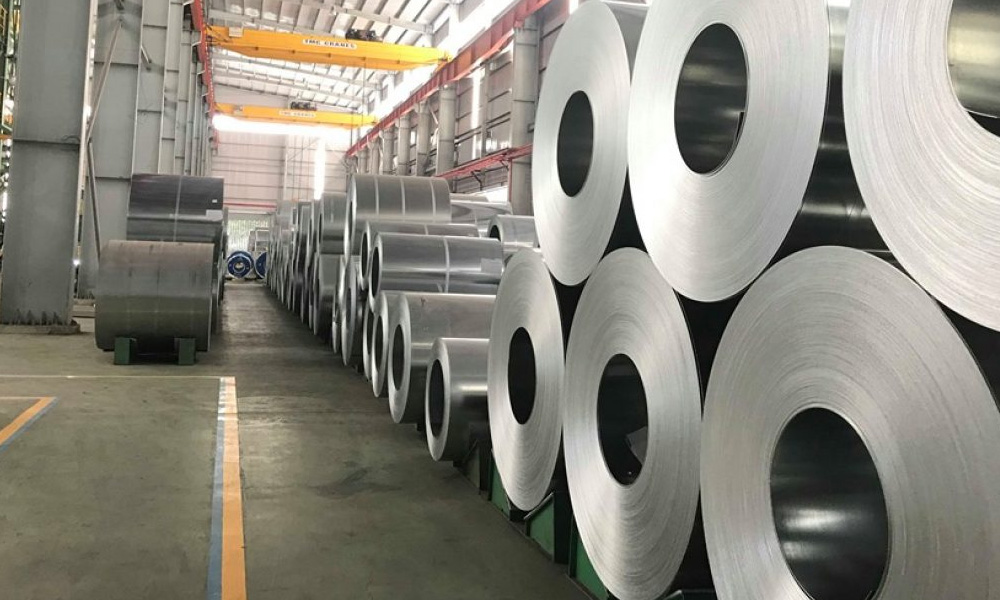
The Malaysia Steel Association also estimates a loss in market share as a result of the CPTPP with more steel imports entering the market.
However, the end user may benefit from more competitive prices and choices, the PWC analysis noted.
How does the new government view the CPTPP?
Perikatan Nasional’s Tasek Gelugor MP Wan Saiful Wan Jan, when arguing for the CPTPP, claimed that the lobby to withdraw from it is strong because of Anwar’s leftist leanings.
Leftist leanings or not, in November last year, Anwar in Parliament urged the government to review the CPTPP.
He said national interests should be preserved in the areas of government procurement, intellectual property and affirmative action.
Anwar, who is also finance minister, has not made the government’s stand on the CPTPP clear.
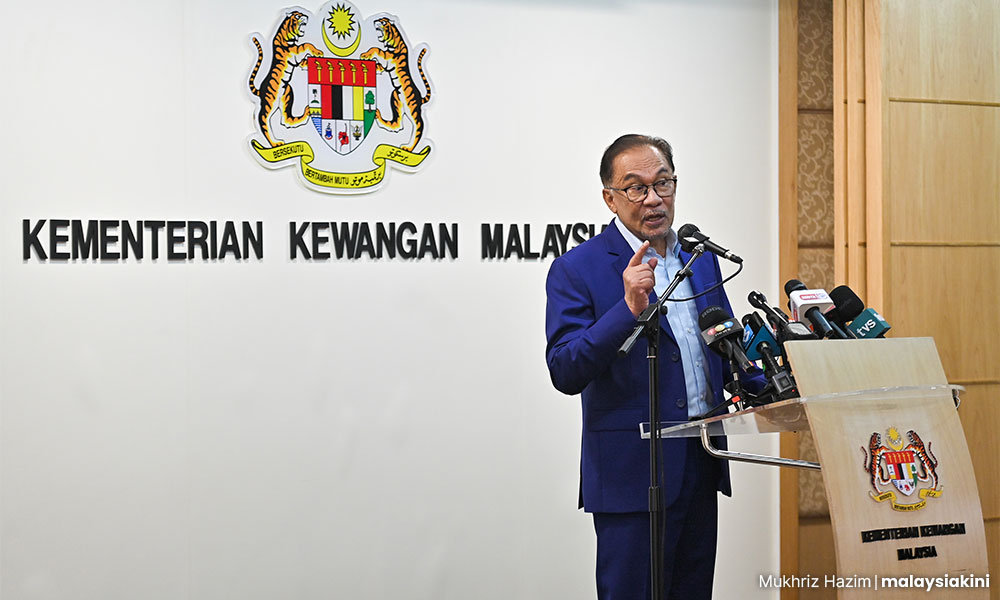
However, he did miss the deadline to retract the ratification before it came into force on Nov 30, two days before the cabinet line-up was announced.
Can and should Malaysia withdraw from the CPTPP?
Yes, any partner nation can withdraw by giving a six-month written notice.
But whether or not it would be a good idea depends on who you ask.
For most of the business sector and free market advocates, withdrawing from the trade deal could have dire implications for access to foreign markets and foreign investments into Malaysia.
Proponents also fear missing the boat, with more countries expressing interest in joining the pact.
Critics of the CPTPP, however, believe this does not trump the potential risk to sovereignty and public interest.
The critics also believe Malaysia already has existing trade deals with some TPPA states and is able to negotiate better terms through bilateral trade agreements with the others.
/file/publisher-c1a3f893382d2b2f8a9aa22a654d9c97/2021/09/eccbaa3c9c9b95e65b528b8ab4a77997.jpg)
/file/publisher-c1a3f893382d2b2f8a9aa22a654d9c97/2022/03/61db8a0dd9ce6c9bcbdd7802745a1618.jpg)
/file/publisher-c1a3f893382d2b2f8a9aa22a654d9c97/2021/07/e1f8209e6912fc535df8c6a0d4db9206.jpg)
/file/publisher-c1a3f893382d2b2f8a9aa22a654d9c97/2022/11/6cf75f683a4f4cad3a93c713e3d094e8.jpg)


Report this comment
Are you sure you want to delete this comment?
This action cannot be undone.