


/file/publisher-c1a3f893382d2b2f8a9aa22a654d9c97/2022/12/b0219041da7ecbe5e3a15ac904e2e282.jpg)

91-year-old sues govt in 50-year battle over inherited land
Sandramadi Adaikan, 91, has been climbing the stairs at the Raub land office and the courts for the past 50 years, fighting for a 0.2ha parcel of land bequeathed to her by her father, but believes her struggles are nearing an end.
She is finally able to sue the Raub District Land administrator and the Pahang Land and Mines director for encroachment on a section of her land and for permitting that encroachment to take place...
Sandramadi Adaikan, 91, has been climbing the stairs at the Raub land office and the courts for the past 50 years, fighting for a 0.2ha parcel of land bequeathed to her by her father, but believes her struggles are nearing an end.
She is finally able to sue the Raub District Land administrator and the Pahang Land and Mines director for encroachment on a section of her land and for permitting that encroachment to take place.
Sandramadi is also demanding to be declared the rightful owner of the entire property.
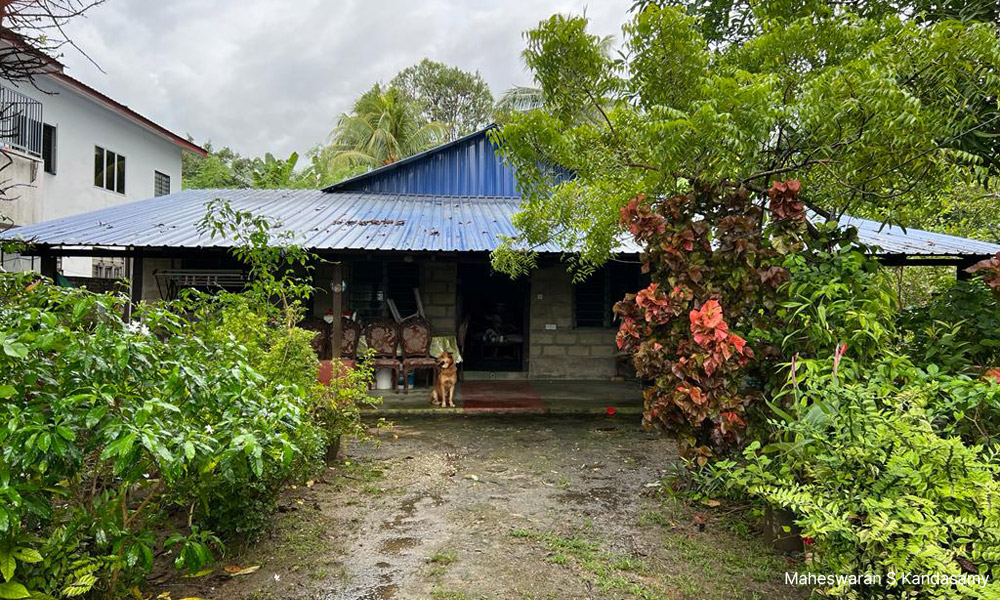
The encroachment is on a portion of this land occupied by a third party and although she continues to live in the house built on the front portion of the same land, she has not been able to fully utilise the entire parcel of land.
It is unclear exactly when the third party encroached onto her land.

“I would not die before settling the status of this land given to me by my father. I never doubted that.
“I am happy because there is hope now that the panel of judges in the Court of Appeal unanimously voted in favour of this case going to trial.
“I have waited not one or two days but I have struggled for 50 years with my sons to get my land back,” said Sandramadi whose case resumes today at the Temerloh High Court with two remaining witnesses to be called on behalf of the plaintiff.
Accused of lying
Sandramathi, who is named as the sole plaintiff, was born in her house, grew up there and continued to live there after her marriage, where she had 11 children.
She is now a grandmother to 24 children and great-grandmother to 10 children aged between 10 and 20 years old.
Her son Maheswaran S Kandasamy, 62, shared how his mother had sold another piece of property to engage lawyers to recover the encroached section of the property over the years because it held a huge sentimental value to her.
The town has changed since Sandramadi’s father, Adaikan, bought the land located just 1.6km from town, back in 1935, and she still holds the 106-year-old deed for the land.

Since the encroachment, Maheswaran recalls watching his mother walking or sometimes riding pillion on his father’s bicycle to the land office to appeal her case every time a new district officer was transferred to Raub.
Then, a fit and strong woman who managed 50 dairy cattle to supplement his labourer father’s income from the works department, Maheswaran said his mother was determined and continued to go to the district office.
The buildings are not disabled-friendly, but undaunted, even in her old age, Sandramadi struggles up the stairs with her daughters aiding her while her wheelchair is carried up.
“This will be the fourth time I am going to the Temerloh courthouse.
“I have been accused of lying and my accusers have refused to investigate my claims,” Sandramadi said between sobs in a phone conversation with Malaysiakini.
Despite having endured repeated humiliation because of her limited formal schooling, she held on to her rights to the land.
She hopes to leave the land to her children.

'Glaring irregularities'
Sandramadi is represented by lawyer R Kengadharan who is confident his client has a strong case.
“The government is alleging that the acquisition of a portion of the land had taken way back in 1953, but the requisition to the survey was issued in 1958, after a lapse of some five years.
“Under the Land Acquisition Act prior to 1960, the notice to acquire is only valid for 12 months,” he explained, adding that his client was strong in the view that there were glaring irregularities.
Kengadharan said his client was also of the view that the state government and the authorities owe her a duty of care to ensure that the integrity of her land was preserved at all times.
“The government contends that she falls under the Public Authorities Protection Act 1978, which says ‘If you want to bring an action against the authorities, you must do so within a period of three years.’
“But she never knew about the acquisition, the notice of intention to acquire was never brought to attention and she never knew about the survey.
“Therefore, it is our argument that it cannot apply because of the many things that were done, were not done in good faith,” he pointed out.
Kengadharan said Sandramadi contends that the relevant public authorities failed to conduct themselves in good faith.
“The scales of justice, in this case, must tilt in her favour as the plaintiff is innocent and is the owner of the entire parcel.
“With no compensation paid and no hearings conducted, my client asks how did the government acquire the portion of land,” he pointed out.
/file/publisher-c1a3f893382d2b2f8a9aa22a654d9c97/2022/11/daa0263a740a957c488583b1aa4b56b7.jpg)
/file/publisher-c1a3f893382d2b2f8a9aa22a654d9c97/2022/08/3236d57e2bc7fdedc5ffe6950d02185c.jpg)





/file/publisher-c1a3f893382d2b2f8a9aa22a654d9c97/2022/01/5ebe0f8ddece4a919c069b03b093cb5c.jpg)


Report this comment
Are you sure you want to delete this comment?
This action cannot be undone.