




Writers issue dare to tycoon Tiong
Why build a media empire when you can use your influence to expand press freedom?
Why build a media empire when you can use your influence to expand press freedom?
Well-known columnist Lee Ban Chen threw down the gauntlet to Sin Chew Daily to hold a press freedom dialogue for local and foreign writers in conjunction with the Chinese daily's bi-annual HuaZhong Chinese literature awards ceremony on June 2 in Kuala Lumpur.
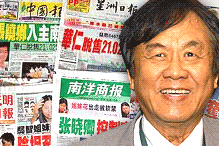 The dare was also a challenge to Sarawak timber tycoon Tiong Hiew King who owns the paper and who is seeking to create a global Chinese-language media group in keeping with the trend towards media conglomerates.
"If Tiong thinks of himself as a cultural person and shares the same cultural language with us, he should organise the dialogue. But if he refuses to help us, I suggest other civil organisations should organise it,"Lee said.
He suggested that the dialogue should be themed 'If you hold 85 percent of the Chinese readership, is it called a monopoly?' saying this would enable examination of problems that the Malaysian media faces.
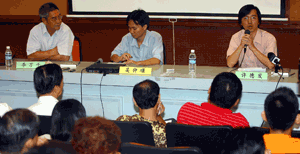 Lee (
extreme left
) was one of four speakers on the issue of media monopoly, organised in conjunction with the ninth anniversary of the MCA's takeover of the Nanyang Press Holdings in May 2001.
Lee (
extreme left
) was one of four speakers on the issue of media monopoly, organised in conjunction with the ninth anniversary of the MCA's takeover of the Nanyang Press Holdings in May 2001.
It was also aimed at protesting the tripartite merger of Hong Kong-based Ming Pao Group, Sin Chew Media Corporation Bhd and Nanyang Press Holdings, all owned by Tiong.
Organised by Writers Alliance for Media Independence at the Selangor Chinese Assembly Hall (SCAH) in Kuala Lumpur on Monday, the event also featured the launch of a book entitled Rising up against media monopoly: The Yellow Ribbon movement in Malaysia 2006 .
Tycoon ticked off
Lee criticised Tiong for attempting to rationalise his merger bid as a global venture.
"He tries to convince us that he is promoting the uniqueness of the Chinese culture and creating a united and bigger Chinese community but I doubt it because (most of the) newspapers he owns are in Malaysia," he said.
He suggested that Tiong should use his political influence to "help us fight against the Printing Presses and Publications Act, teach us how to confront powerful editors and to end the protest by 80 local writers" (blacklisted by Tiong's Chinese dailies).
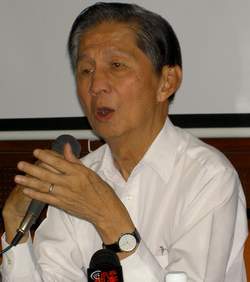 Another speaker, former SCAH chairperson Ngan Ching Wen criticised the merger as leading to a monopoly and subjecting readers to the effects of greater political control over the contents.
He pointed out that the act of merging media is different from establishing a new company.
"If Tiong is willing to start a new paper, we will praise him for doing something brilliant. But if he is merging two papers into one, there s nothing to be proud of," said Ngan.
"He is doing this because he is rich and has some political influence but it is against the spirit of press freedom."
Sin Chew publishes Malaysia's largest circulated Chinese newspaper, Sin Chew Daily , while Nanyang produces the country's oldest Chinese-language daily Nanyang Siang Pau .
Ming Pao Group's major publications include the Ming Pao Daily News , which is published in Hong Kong, Toronto, Vancouver, New York and San Francisco.
Watch 4-minute video here.


Are you sure you want to delete this comment?
This action cannot be undone.