




Demand for police change, public told
Ensuring police accountability is a realistic option but the public should realise that it will not happen without their collective demand and effort.
Ensuring police accountability is a realistic option but the public should realise that it will not happen without their collective demand and effort.
 "There is a lot of hope. But change relies on people power. Civil society must demand for change in order for it to happen, said Aegile Fernandez, coordinator of rights group Tenaganita.
She was speaking at a panel discussion on the Second Year Review of the Implementation of the Royal Police Commission's Recommendations organised by Amnesty International and Suaram in Petaling Jaya today.
Fernandez also said that the public should know their rights as this would allow them engage in a dialogue with police officers rather than direct confrontation
Panelists at the forum concluded that the slow progress in public accountability was due to civil society's complacency as much as the lack of initiative from the government and police force.
 Suaram's Executive Director Yap Swee Seng presented the organisation's 2006 report card on the recommendations' implementation, stating that since the Royal Police Commission submitted their report in April 2005, there has been little improvement in policing standards.
He called for the formation of the long-delayed Independent Police Complaints and Misconduct Commission (IPCMC), saying that the independent body was the best way to implement human rights-based policing in the country.
Postcard campaign
Suhakam's Dr Denison Jayasooria was optimistic about the slow but what he said was evident change in police accountability since the commission's report. He, however, agreed that there needed to be more public support for further improvement.
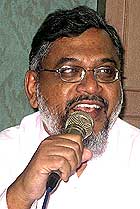 "We do not have a big mass of people invoking change," he said, adding that the people should speak up against police wrongdoings while at the same time praising them when they implemented the right decisions.
Amnesty International Executive Director Josef Roy Benedict invited the public to join Amnesty International's postcard campaign 'Towards Human Rights Based Policing' by signing postcards voting for the establishment of the IPCMC. The postcards will be sent to the Attorney-General's Chambers.
The postcards can be obtained by contacting the Amnesty International office in Petaling Jaya.
Other panelists at today's forum included opposition leader Lim Kit Siang, Saari Sungib of the Ablish ISA movement and V Selvam of the people's support network group, Jerit.


Are you sure you want to delete this comment?
This action cannot be undone.