


/file/publisher-c1a3f893382d2b2f8a9aa22a654d9c97/2024/01/3638deafaffb01a7569af566e0e0d52b.jpg)

KINIGUIDE | A look back at 1997 Renong-UEM deal
KINIGUIDE | When the MACC seized Ilham Tower at the heart of Kuala Lumpur last month, many reading up on the news would have come across a name they may have not heard in a while: Renong Bhd.
In 1997, the company was at the heart of a controversial deal that shook Malaysia’s stock market at a time when investors were already jittery due to the Asian Financial Crisis playing out at the time.
It was reported - though never officially confirmed - that the building’s seizure was linked to a money laundering investigation into the deal between Renong and UEM Berhad and its supposed link to former finance minister Daim Zainuddin.
In this instalment of KiniGuide, we peruse old news reports on how the deal went down.
KINIGUIDE | When the MACC seized Ilham Tower at the heart of Kuala Lumpur last month, many reading up on the news would have come across a name they may have not heard in a while: Renong Bhd.
In 1997, the company was at the heart of a controversial deal that shook Malaysia’s stock market at a time when investors were already jittery due to the Asian Financial Crisis playing out at the time.
It was reported - though never officially confirmed - that the building’s seizure was linked to a money laundering investigation into the deal between Renong and UEM Berhad and its supposed link to former finance minister Daim Zainuddin.
In this instalment of KiniGuide, we peruse old news reports on how the deal went down.
What is Renong and what does Daim have to do with it?
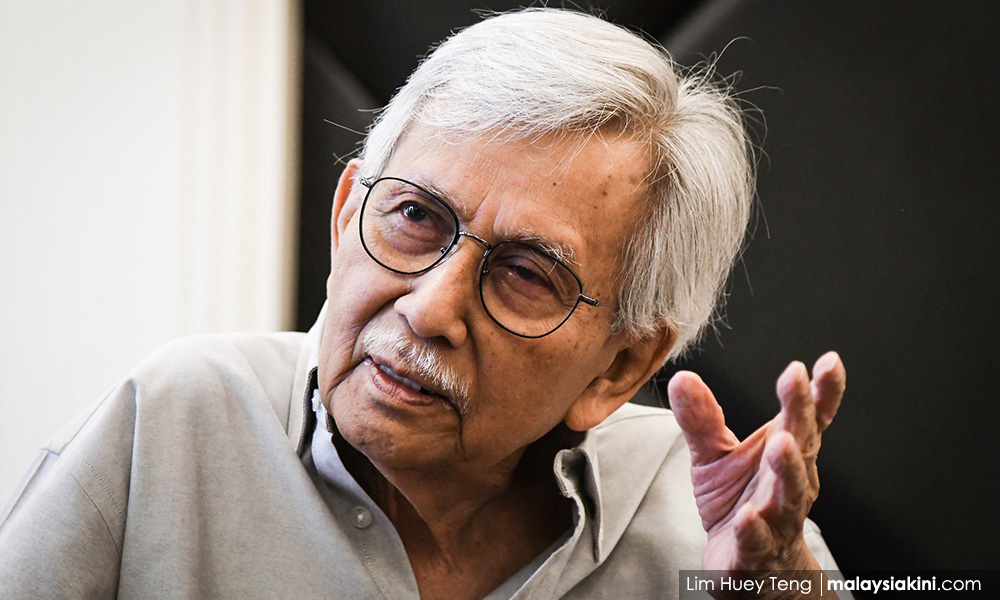
Daim is a close associate of former prime minister Dr Mahathir Mohamad and was already a successful businessperson when he became the Umno treasurer in 1981 and finance minister in 1984. From there, Daim oversaw the expansion of the party’s business activities.
These Umno-linked companies included United Engineers Malaysia (UEM) with its mega infrastructure projects such as the North-South Expressway, and Renong with its relatively small hotel and property development business.

When Umno was deregistered as a result of infighting and a court challenge in 1988, its businesses were held for safekeeping by the official assignee. An official assignee is a government official whose role includes the handling of assets of bankrupt people and companies pending liquidation, and the position is known today as the director-general of insolvency.
The Wall Street Journal reported that after Umno re-registered as “Umno Baru” many of these businesses later wound up in the hands of the same group of Daim’s protégés who used to run it as nominee shareholders for the old Umno.
This includes Renong’s controlling shareholder and chairperson Halim Saad, who is Daim’s protégé.
He reportedly took over Renong from the official assignee and consolidated other former Umno businesses under it. This was done through a series of transactions in 1990 valued at RM1.23 billion at the time (about RM2.87 billion today).
From then on, both Daim and his successor Anwar Ibrahim would deny the company had further links to Umno.
Bernama quoted Daim saying in 1993 that Umno no longer has any involvement in business since the confiscation of its assets. In 1997, Anwar told the Dewan Rakyat in his capacity as finance minister and Umno deputy president at the time that UEM and Renong “have nothing to do with Umno”.
Halim, meanwhile, wrote in an open letter in October 2022 to deny that the two companies belonged to Umno at the time of the 1997 deal. He said he acquired them from the official assignee using his funds and borrowings.
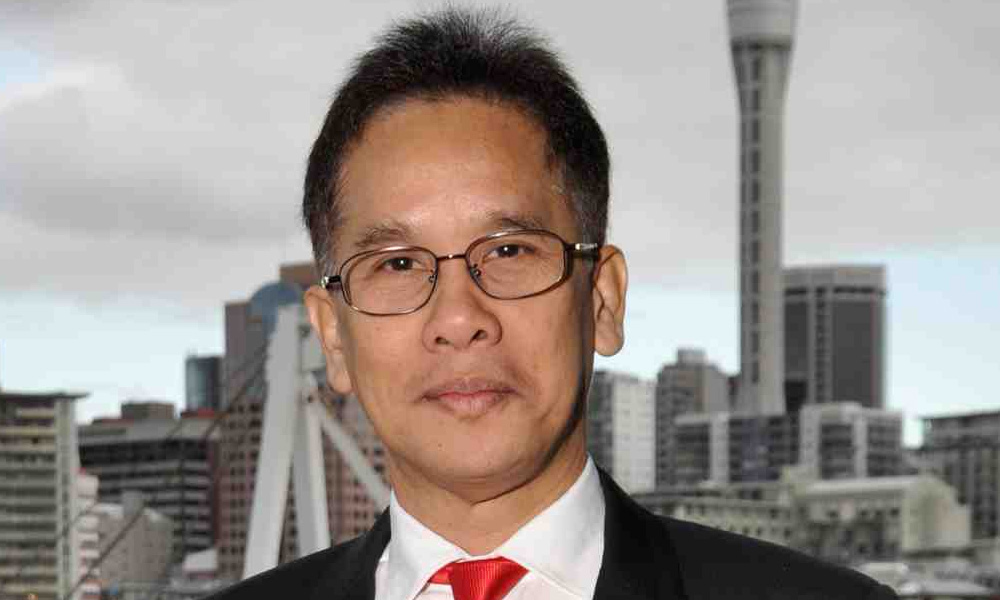
Nevertheless, post-1990 Renong with its subsidiaries like UEM came to be described as a “darling” to investors. Its steady stream of lucrative government contracts and privatisation deals, as well as (real or perceived) political ties, made it seem like a solid bet on the Kuala Lumpur Stock Exchange (KLSE).
Renong would come to own nine subsidiaries with interests including toll-road operations, construction and engineering, property development, financial services, telecommunications, and oil and gas, according to a WSJ report.
But then came the 1997 Asian Financial Crisis with all its woes.
What was it like in 1997?
As the Asian Financial Crisis swept the region, the stock market crashed, Asian currencies faltered, and it became much more difficult and expensive for companies to obtain financing.
In this atmosphere, investors became wary of the debt-laden Renong with its stable of projects that are capital intensive and require a long gestation period before they can bring returns, while Bank Negara’s new lending limits led to concerns that it could hurt Renong’s property sales.
To make matters worse, the WSJ reported in June 1997 that investors feared the company’s solid track record of delivering projects could mean the government would call upon Renong to perform “national service” by rescuing other distressed Malaysian companies amid the crisis.
The report said Renong’s share prices had fallen from RM5.18 in mid-February 1997 to RM3.04 in mid-May that year, before stabilising at around RM3.50 in mid-1997.
What about the deal with UEM?
Renong had a 38 percent stake in UEM.
At the close of trading on Nov 17, 1997, CIMB Bank (which is also linked to Halim through his ownership of another former Umno entity Fleet Group) announced on UEM’s behalf that the company had bought a 32.6 percent stake in its parent company - purportedly on the open market - nearly two weeks before that on Nov 5.
The transaction financed by borrowings involved the transfer of 722.9 million shares at an average price of RM3.24 per share, for a total of RM2.34 billion (equivalent to RM4.14 billion today). This represents a premium over the RM2.90 price of Renong shares at the time trading closed on Nov 17.
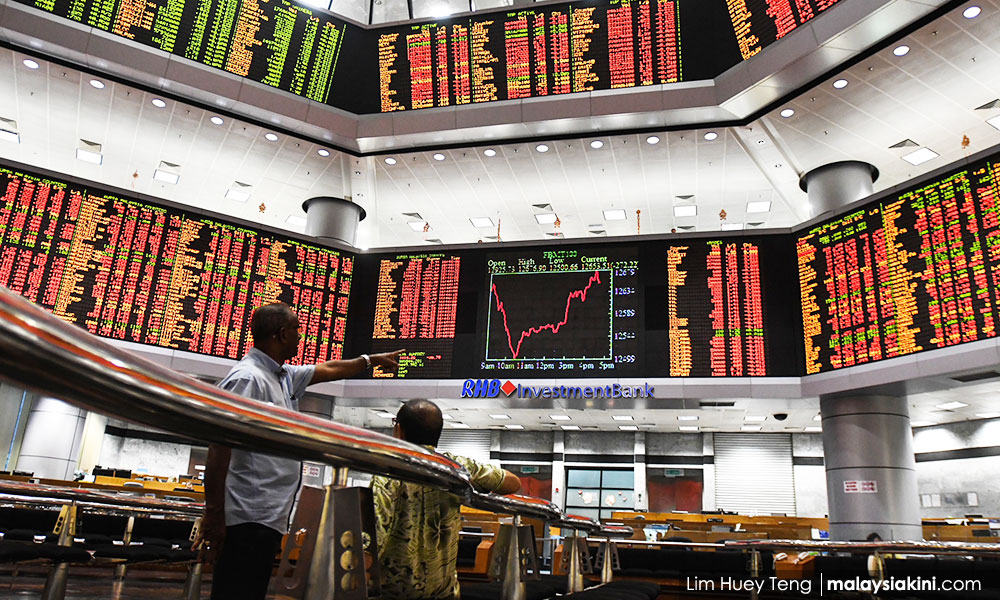
Investors and analysts baulked at the lack of transparency and corporate disclosure surrounding the deal (UEM would later be slapped with a fine for failing to make a timely disclosure), which came at the expense of minority shareholders who missed out on an opportunity to sell their shares at a premium and saw their Renong stocks tank when trading resumed the next day.
The deal was widely seen as a bailout for Renong and Halim, and analysts were sceptical of the claim that the shares were bought on the open market because, according to the International Herald Tribune, the amount of shares involved was equivalent to four months of trading.
There was also controversy over the government’s flip-flop on a waiver that would otherwise compel UEM to make a general offer on the 23 percent Renong shares still in public hands.
Halim, on his part, insisted this was purely a business transaction. He denied he was having debt problems or that the transaction was to rescue him or Renong, according to a New Straits Times report at the time.
In denying that Renong was in dire financial straits, he reportedly told a press conference on Nov 19, 1997, that Renong was RM4.13 billion in the red (of which RM3.7 billion was for project financing) against a paid-up capital of RM3.3 billion.
“I agree that Renong has high gearing, higher than normal companies but we are mainly in infrastructure projects that have a long gestation period,” he was quoted as saying.
Ultimately, UEM’s announcement served to further undermine the already-poor investor sentiment towards Renong and related companies, and Malaysia as a whole as an investment destination.
The KLSE composite index reportedly fell 45.20 points to a four-year-low of 622.09 points on the day after the announcement, while Renong’s shares fell 59 sen to RM2.31. The ringgit’s value fell to RM3.4050 against the US dollar compared to RM3.330 the day before.
UEM (and by extension, Renong) would eventually be taken over by the government via its investment arm Khazanah Nasional in 2001. By that time, Renong’s debt was reportedly RM13 billion.
Halim is now suing the government, claiming that he was compelled to relinquish his shares without adequate compensation. The lawsuit is still being litigated as of the time of writing.
What does Daim have to do with this, and what does the MACC want with him?
Not much is publicly known about the nature of the investigation, or the alleged offence being investigated.
As with common practice with ongoing investigations, the MACC has said little other than to confirm that an investigation is being conducted under Section 4(1) and Section 23 of the Anti-Money Laundering, Anti-Terrorism Financing and Proceeds of Unlawful Act 2001 (AMLATFPUAA).
These laws deal with offences relating to abuse of power and money laundering, and the MACC said it had launched the investigation in February last year following the revelations from the Pandora Papers.
The MACC said on Dec 30 last year it had issued Daim an official notice on June 7, 2023, compelling him to disclose all his assets within 30 days, and had granted him five extensions to do so. The last of these extensions was on Nov 14 last year. The seizure of Ilham Tower came on Dec 18, 2023, though it only came into the public light on Dec 21.
The MACC did not say the investigation revolves around the 1997 deal between Renong and UEM. That detail instead came from various media reports quoting anonymous sources.
The reports purport that Daim had orchestrated the deal, and had refused to comply with instructions to disclose his assets.
Daim has denied any wrongdoing and denounced the investigation against him as a “witch hunt”. He also claims MACC chief commissioner Azam Baki had - in writing - refused to tell him what the investigation was about.
What were the Pandora Papers?
The Pandora Papers were a throve of 11.9 million confidential financial documents and other records that originated from 14 offshore service providers that set up and manage shell companies and trusts in tax havens around the globe.
An anonymous source had shared the 2.94 terabytes of data with the International Consortium of Investigative Journalists, which in turn shared it with its partners around the world including Malaysiakini.

The news portal’s investigation in 2021 found that in these records alone, Daim’s children, wife, or known business associates jointly held assets worth at least £25 million (about RM141 million).
Daim responded to Malaysiakini’s report saying not all the trusts listed in the portal’s email seeking his response belonged to him but trusts are part of estate planning and that all his dealings are legitimate, and all taxes due have been paid.
READ MORE: KINIGUIDE | Asset protection, financial privacy or tax evasion?
Other prominent Malaysians uncovered in the investigation include Tengku Zafrul Abdul Aziz, Deputy Prime Minister Ahmad Zahid Hamidi, former deputy finance minister Yamani Hafez Musa, Selayang MP William Leong, and Mahmud Abu Bekir Abdul Taib who is the son of Sarawak Governor Abdul Taib Mahmud.
It should be noted that owning offshore entities is not illegal, though such vehicles have been used for tax evasion or tax avoidance. Legal uses may include financial privacy, protecting assets from political instability (or an acrimonious divorce), and taking advantage of favourable tax regimes.
Critics of offshore tax havens argue it leads to a loss of tax revenue for governments.
/file/1357/1e52f11ae2a8b4e196a81ba9fc8fc68c.jpeg)
/file/publisher-c1a3f893382d2b2f8a9aa22a654d9c97/2023/02/17a31e67a3a9fc13c1000fe338b27c2c.jpg)
/file/publisher-c1a3f893382d2b2f8a9aa22a654d9c97/2024/01/af76feed1501329956d79a2761f7ec16.jpg)
/file/publisher-c1a3f893382d2b2f8a9aa22a654d9c97/2023/02/7c5ea83952999bc5b28648483620956e.jpg)
/file/publisher-c1a3f893382d2b2f8a9aa22a654d9c97/2023/12/f40ec2d45d838aa20f43f266d9abd920.jpg)


Report this comment
Are you sure you want to delete this comment?
This action cannot be undone.