


/file/publisher-c1a3f893382d2b2f8a9aa22a654d9c97/2024/06/2f670f25db5928fe8371150f9c5ec206.jpg)

'Stop speculating on RON95 subsidy, Economy Ministry still fine-tuning it'
Finance Minister II Amir Hamzah Azizan has requested Malaysians to stop speculating on the government’s move on targeted subsidies for RON95 petrol.
The government needs time to complete its study on the effectiveness of its diesel subsidy targeting scheme, he said.
Finance Minister II Amir Hamzah Azizan has requested Malaysians to stop speculating on the government’s move on targeted subsidies for RON95 petrol.
The government needs time to complete its study on the effectiveness of its diesel subsidy targeting scheme, he said.
“(Economy Minister) Rafizi Ramli and the Economy Ministry are still fine-tuning the rationalising of the RON95 subsidy.
“Give us time to ‘settle down’ first to see (whether) the same way (as with diesel targeting) will be effective.
“But, for now, focus on diesel first,” Berita Harian quoted him as saying.
Amir was speaking at a press conference at the enforcement division of the Customs Department in Pengkalan Kubor, Kelantan.
On July 2, Prime Minister Anwar Ibrahim told the Dewan Rakyat Putrajaya has yet to finalise its subsidy rationalisation plan for RON95 petrol.
The government still does not have a policy paper for “quick implementation” of targeted petrol subsidies and instead wants to monitor the impact of recently introduced targeted subsidies for electricity, chicken, and diesel first, he said.
Before that, Rafizi had said the government would be replicating the same strategy of not giving the public advance notice on any blanket subsidy removal for RON95 petrol as it did for diesel.
Significant reduction
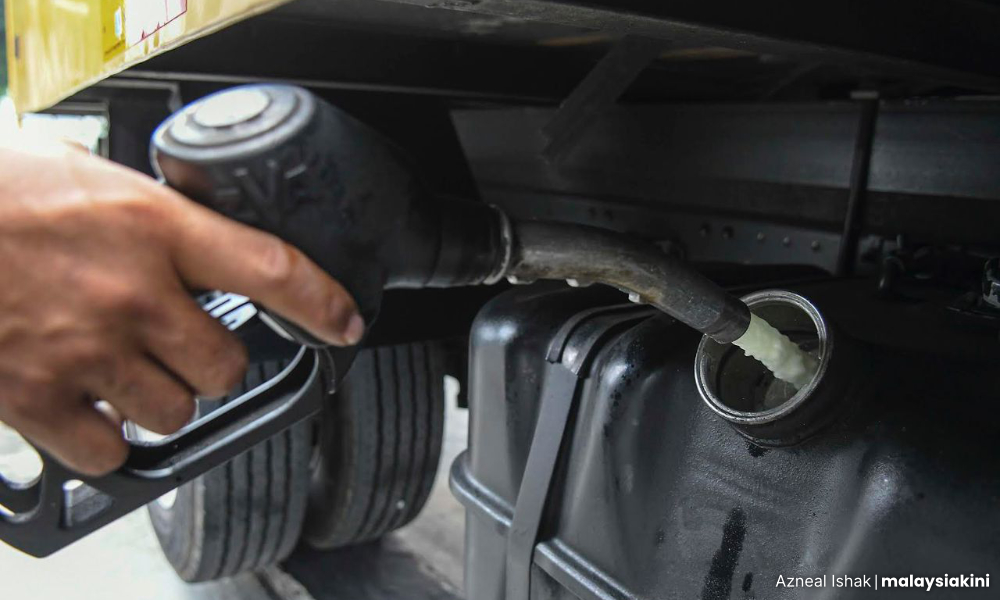
Elaborating, Amir said data showed a significant decrease in diesel sales from gas stations since the implementation of targeted diesel subsidies on June 10.
The average daily sale of diesel from petrol stations throughout the peninsula was 28.6 million litres per day at the beginning of June, which has decreased to 22.2 million litres per day since the policy’s implementation, he said.
From that data, he estimated that leakages amounting to more than RM250 million per month had been avoided.
“This conclusion is supported by data showing that commercial diesel sales increased by 4.8 million litres per day for the same comparison period.
“At the same time, there is a gas station in the northern area close to the border that has experienced a drop in diesel sales of up to 40 to 50 percent in the same time, showing a decrease in smuggling activities to neighbouring countries due to a reduction in the profit margin of smuggling,” he added.
On June 10, the removal of diesel subsidies at the pump came into effect as part of austerity measures to handle the nation’s debt.
Following this, the price of diesel would be floated according to the market rate and updated weekly like RON97.
/file/publisher-c1a3f893382d2b2f8a9aa22a654d9c97/2024/06/04989a242c39a7c52942592f330049b9.jpg)
/file/publisher-c1a3f893382d2b2f8a9aa22a654d9c97/2024/07/96c57cc838dc5b7fc354263ebe7671a3.jpg)
/file/publisher-c1a3f893382d2b2f8a9aa22a654d9c97/2024/07/33e12ae57729969effb5dca0dc0b34b3.jpg)
/file/publisher-c1a3f893382d2b2f8a9aa22a654d9c97/2024/06/50c97629fc9ddd5e0023fa219b7e5550.jpg)
/file/publisher-c1a3f893382d2b2f8a9aa22a654d9c97/2024/01/adf60c356d80bfedb18ffcdb603bc888.jpg)


Are you sure you want to delete this comment?
This action cannot be undone.