


/file/publisher-c1a3f893382d2b2f8a9aa22a654d9c97/2024/09/6bc8ea1e1b70f1a6faeaacd9d1b2f952.jpg)

Kids rescued from GISBH homes risk statelessness, group warns
A rights group has expressed concern over the nationality status of children rescued from homes associated with Global Ikhwan Service and Business Holdings (GISBH).
In a statement on Instagram, the Development of Human Resources for Rural Areas (DHRRA) warned that these children risk becoming stateless due to the lack of proper documentation, following Minister in the Prime Minister’s Department (Religious Affairs) Mohd Na’im Mokhtar’s remarks about their uncertain future.
“Their lineage cannot be determined due to the lack of documentation...
A rights group has expressed concern over the nationality status of children rescued from homes associated with Global Ikhwan Service and Business Holdings (GISBH).
In a statement on Instagram, the Development of Human Resources for Rural Areas (DHRRA) warned that these children risk becoming stateless due to the lack of proper documentation, following Minister in the Prime Minister’s Department (Religious Affairs) Mohd Na’im Mokhtar’s remarks about their uncertain future.
“Their lineage cannot be determined due to the lack of documentation proving their birth within valid marriages.
“This issue has significant legal implications, as the National Registration Department (NRD) cannot register these children without such proof, leaving them without a recognised nationality,” it explained.
On Thursday, Na’im clarified that in the absence of documentation, the Syariah Court will have to evaluate oral testimonies and any available records to determine if the marriages comply with Islamic law.
Once validated, the state Islamic Religious Department will issue a marriage certificate, allowing the NRD to register the children’s births.
Concerns over the children’s legal status surfaced after Inspector-General of Police Razarudin Husain revealed that some rescued children carried “bin Abdullah” in their names, a marker of illegitimacy in Islamic law.
Some parents were reportedly unaware of this status, as certain GISBH members’ marriages were never officially registered.
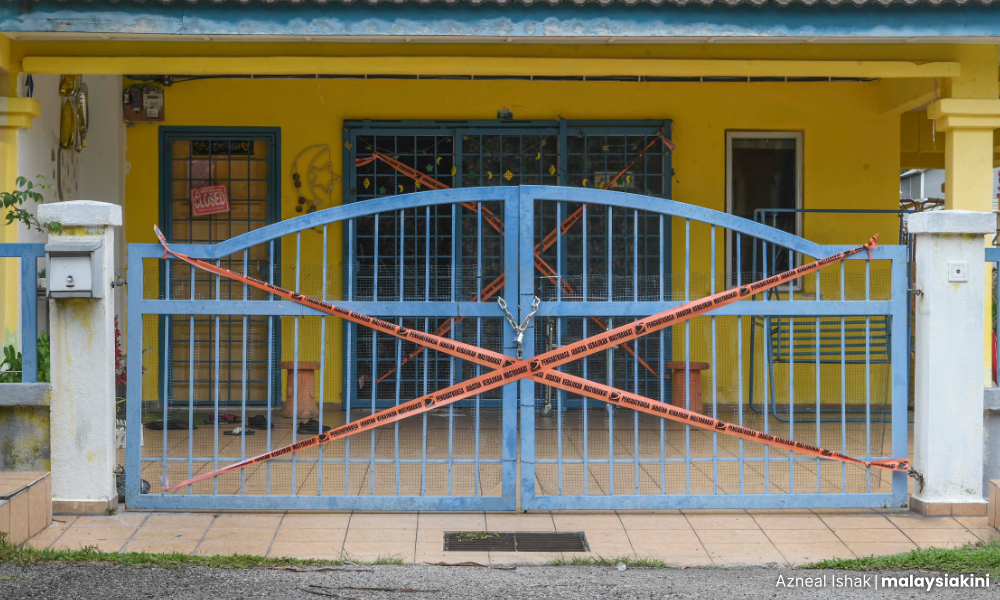
A total of 402 children were rescued on Sept 11 in raids on 20 welfare homes in Selangor and Negeri Sembilan following a police report on Sept 2, which alleged child abandonment, sexual assault, and harassment in these homes which are linked to GISBH.
On Sept 19, GISBH CEO Nasirudin Mohd Ali and 18 others, including his wife, were remanded.
Discrimination against unmarried M’sian fathers
Elaborating, DHRRA also criticised Malaysia’s legal framework, noting that the country is one of only two, along with Barbados, that discriminates against unmarried fathers in their ability to pass on nationality to their children.
“A child born out of wedlock to a father who holds Malaysian citizenship may face the risk of statelessness if their mother is unknown or a non-citizen.
“In Malaysia, citizenship is transmitted predominantly through the father, provided there is documented proof of a legal marriage. Without these documents, children fall into legal limbo, deprived of the basic rights that come with nationality,” it explained.
Although children of Malaysian fathers can apply for citizenship under Article 15A of the Federal Constitution, DHRRA criticised the process as being infamously slow and bureaucratic, leaving many children stateless for years.
“These children are denied access to education, healthcare, and social services, facing a life of uncertainty in their own country,” it added.
DHRAA also pointed out the lack of transparency regarding amendments to Article 15A, mainly changes to lower the age limit for citizenship applications from 18 to 21, which were not made public.
“This prolongs the uncertainty for countless children who remain stateless.
“Without clear communication from the government, families and advocates are left without guidance or reassurance about the future of these vulnerable children,” it said.
/file/publisher-c1a3f893382d2b2f8a9aa22a654d9c97/2024/09/ac76ce8ed2f6878dfa9aa1829347f364.jpg)
/file/publisher-c1a3f893382d2b2f8a9aa22a654d9c97/2024/02/c0281926f9b01f4339752d7bfa7efe85.jpg)
/file/publisher-c1a3f893382d2b2f8a9aa22a654d9c97/2024/09/b0437fb44df63f8fc1f9a9bbbe9008bc.jpg)
/file/publisher-c1a3f893382d2b2f8a9aa22a654d9c97/2024/09/70eabc9a84b965bc79c621db4d29a7a6.jpg)


Report this comment
Are you sure you want to delete this comment?
This action cannot be undone.