


/file/publisher-c1a3f893382d2b2f8a9aa22a654d9c97/2024/08/c97e6864dc7d66ea236a2083d5666a77.jpg)

Chinese turnout in Mahkota not as low as some claim - Johor DAP chief
Chinese voter turnout in the Mahkota by-election is not as low as 35 percent as claimed by some, said Johor DAP chief Liew Chin Tong.
He also argued that DAP and Pakatan Harapan did not underdeliver Chinese votes during the by-election.
Chinese voter turnout in the Mahkota by-election is not as low as 35 percent as claimed by some, said Johor DAP chief Liew Chin Tong.
He also argued that DAP and Pakatan Harapan did not underdeliver Chinese votes during the by-election.
He cited Selangor’s Institute Darul Ehsan, which estimated Chinese turn out to be at 49 percent.
Liew also analysed voting in the Bandar Tengah polling district, which has an 81 percent Chinese population.
There, the average turnout was 49 percent, with 90 percent of votes in the district going to BN.
“Therefore, by all measurements, ethnic Chinese turnout was closer to 50 percent and not 35 percent as some claimed.
“More importantly, almost all Harapan core supporters, regardless of ethnicity, gave their full support to BN in this by-election,” Liew said in a statement today.
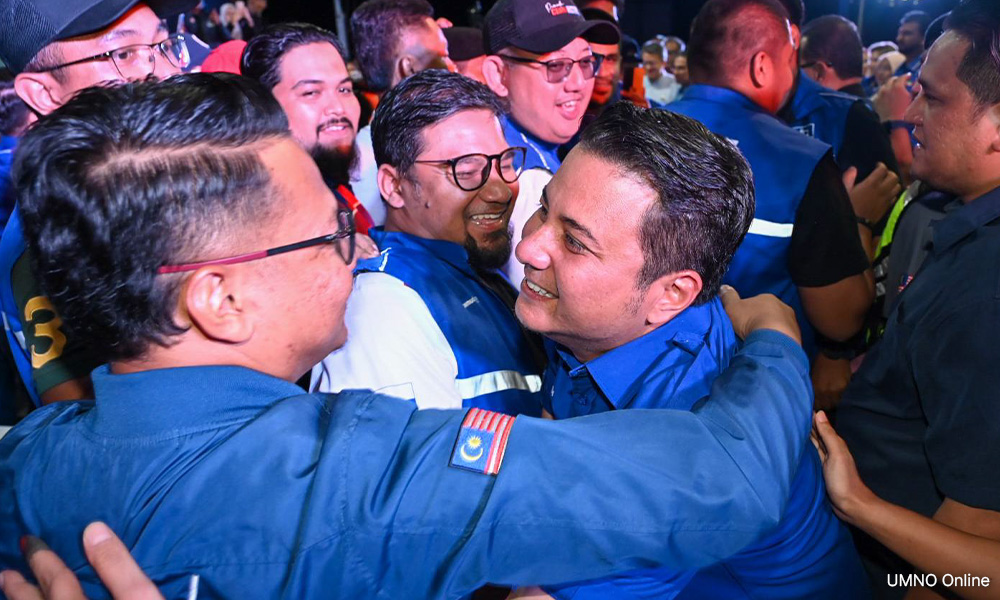
He also noted how eight polling districts previously won by Harapan by a landslide in the 2022 Johor state elections were also won by BN with a landslide during the Mahkota by-election, which he said is proof of vote transferability between Harapan and BN.
While not naming names, Liew appeared to be responding to criticism from BN leaders.
Johor BN chief Nur Jazlan Mohamed claimed that the Chinese turnout was 34 percent.
Meanwhile, in a Straits Times report that placed Chinese turnout at 34 to 36 percent, Johor Umno Youth chief Noor Azleen Ambros claimed that DAP failed to deliver on its promise to raise that number to 55 percent.
Misunderstood projections
Liew, however, indicated that Noor Azleen had misunderstood DAP’s projections.
He said that Harapan was confident that with relentless campaigning, they could get Chinese turnout to be around 50 percent.
“I also cautioned those who wished for a higher ethnic Chinese turnout that even on the rosiest day, the figure would not exceed 55 percent,” he said.
“We were able to convince the voters that a vote for Syed Hussien is a vote for the leadership of Johor Menteri Besar Onn Hafiz Ghazi, as well as a vote for the Unity Government led by Prime Minister Anwar Ibrahim,” he added.
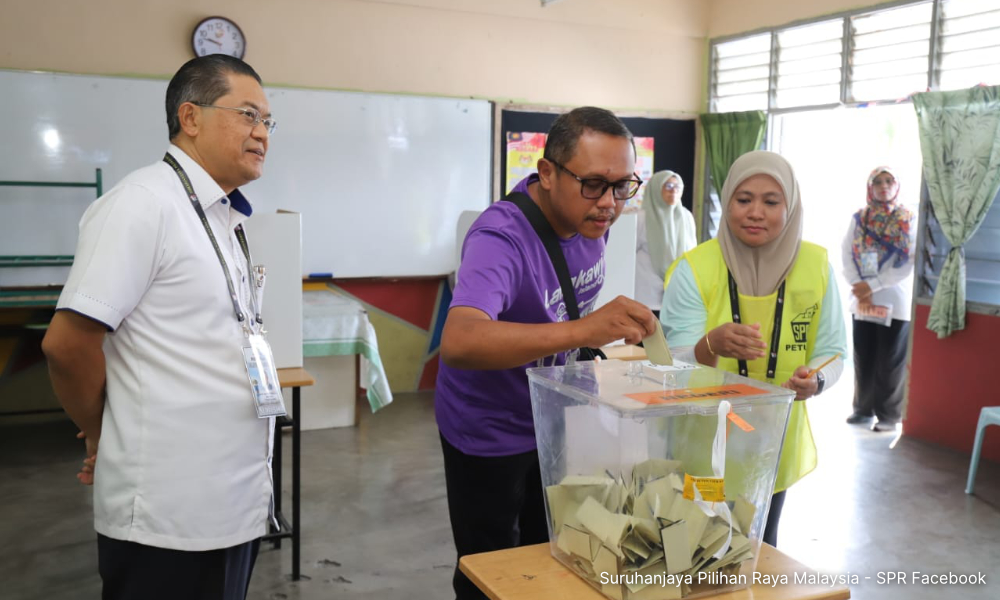
Meanwhile, Liew said a look at polling streams in all districts shows that the last two or three streams tend to have a lower turnout.
He said this is because most younger Kluang voters work out of town, mainly in Singapore and Kuala Lumpur.
“Awareness among younger voters was insufficient - I met some young voters who were eligible to vote (through automatic registration) but were not aware,” he said.
Turnout is a major factor in how elections play out.
In the March 2022 Johor state election, low turnout among non-Malay voters - who are Harapan’s support base - allowed BN to bag 40 out of 56 state seats.
However, when turnout was higher during the 15th general election in November 2022, BN only managed to win 9 out of 25 Parliament seats in Johor, while Harapan - and then ally Muda - bagged 14 seats.
/file/publisher-c1a3f893382d2b2f8a9aa22a654d9c97/2024/10/05a750f344123417565a29de99ce7c09.jpg)
/file/publisher-c1a3f893382d2b2f8a9aa22a654d9c97/2023/06/2ae6667e1a3ecdbedd855ce8b34284dc.jpg)
/file/publisher-c1a3f893382d2b2f8a9aa22a654d9c97/2022/11/09a9006e767cf75bd0ff65050684d370.jpg)
/file/publisher-c1a3f893382d2b2f8a9aa22a654d9c97/2024/04/caeb6f9eb76a813e2156aa2016a1eacb.jpg)
/file/publisher-c1a3f893382d2b2f8a9aa22a654d9c97/2024/09/9bb1f64ac7565def929e62e5fc559394.jpg)
/file/publisher-c1a3f893382d2b2f8a9aa22a654d9c97/2024/05/9d10591b86b5b3937b43679830f4b413.jpg)


Are you sure you want to delete this comment?
This action cannot be undone.