


/file/1135/cb7c9f4f88060e1ca36771d4095bc1ad.jpeg)

Mass conversion claim: 137 Orang Asli to have day in court
A total of 137 Orang Asli will have their day in court to challenge their alleged unlawful mass conversion into Islam over 30 years ago.
Bateq Mayah tribe members were given the opportunity when the Court of Appeal today ordered their lawsuit to be remitted to the Kuantan High Court.
Last year, the High Court allowed an application by the federal government and five other...
A total of 137 Orang Asli will have their day in court to challenge their alleged unlawful mass conversion into Islam over 30 years ago.
Bateq Mayah tribe members were given the opportunity when the Court of Appeal today ordered their lawsuit to be remitted to the Kuantan High Court.
Last year, the High Court allowed the federal government and five other defendants’ applications to strike out the civil action without hearing its merits.
The other five defendants are the Orang Asli Development Department (Jakoa), its director and officer, and the Pahang Islamic Religious and Malay Customs Council.
During today’s proceedings, appellate bench chairperson judge S Nantha Balan said the suit needs to be heard as it involved very serious and scandalous allegations of unlawful forced conversion.
“Here, they (Orang Asli appellants) are talking about fundamental rights and their aboriginal rights, and right to ancestral land not being protected.
“The allegations may be false, nobody is saying that whatever is pleaded has been established.
“That is just the pleading (in the suit) but that in the ordinary case, it cannot be struck out (just like that),” Nantha said on behalf of bench member judges Choo Ka Sing and Ahmad Kamal Md Shahid.
Rehearing
The appellate court then ordered the civil action be remitted to the High Court for rehearing of the defendants’ striking-out bid.
The Court of Appeal also allowed the Orang Asli’s application for an extension of time to file affidavits to oppose the nullification bid.

The matter is set for case management before the High Court on Nov 12.
Filed on Sept 28, 2022, the suit alleged that the wrongful and illegal conversion was carried out at the Orang Asli’s home at Kampung Benchah Kelubi, Merapoh, Kuala Lipis, Pahang, in April 1993.
The court documents claimed that 57 of the plaintiffs were converted during the incident and that the remainder of the plaintiffs were children born later and also have the word Islam on their identity cards due to their descendants.
Threat allegations
The plaintiffs claimed that in early 1993, a Jakoa representative asked two village leaders to not only convert to Islam but also get the other villagers to do so.
They alleged that when the villagers refused to do so, an officer from the department visited the village and issued several threats to ensure their conversion.
The threats included villagers would not be allowed to live in the village anymore, their houses and crops would be destroyed, and they would be chased down and tortured if they ran to the mountains.
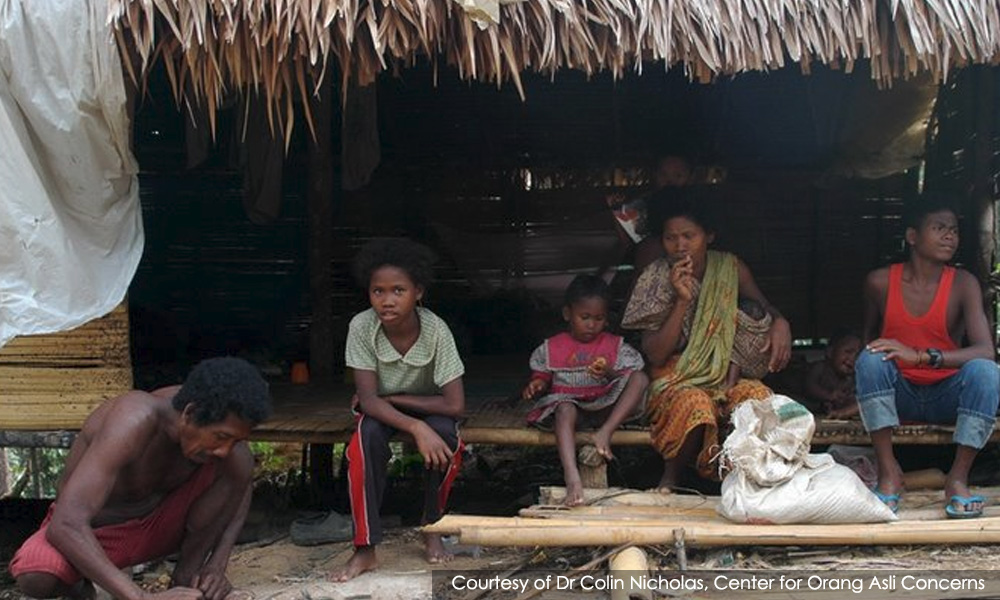
The plaintiffs claimed that the villagers were not informed of the legal implications of embracing Islam, namely that they would be subject to Pahang’s Islamic legal framework and that children born to them would automatically be Muslims too.
They claimed that they did not profess or practise Islam following the alleged mass conversion and continued to embrace the cultural and religious beliefs of the Bateq Mayah.
After 2000 when more of the villagers learnt how to speak basic Bahasa Malaysia, they then realised that the word “Islam” was stated on their identity cards, they added.
Incidentally, the Pahang government is also a defendant targeted by the suit.
While it did not file the striking-out application, the state administration backed the other defendants' nullification bid.
Law firm Seira & Sharizad is acting for the Orang Asli plaintiffs.
The Attorney-General’s Chambers appeared for the federal government.
/file/publisher-c1a3f893382d2b2f8a9aa22a654d9c97/2023/06/9655a7f579ada9f2cd8a22ba3ba337fe.jpg)
/file/publisher-c1a3f893382d2b2f8a9aa22a654d9c97/2022/03/7d1ef7ae86fde4c6de7739557abbc051.jpg)
/file/publisher-c1a3f893382d2b2f8a9aa22a654d9c97/2023/03/110f9d7d7dd2c89565fd83eede3f4ffa.jpg)
/file/publisher-c1a3f893382d2b2f8a9aa22a654d9c97/2021/01/885beacd463c43195ae13650aeb781f2.jpg)


Are you sure you want to delete this comment?
This action cannot be undone.