


/file/publisher-c1a3f893382d2b2f8a9aa22a654d9c97/2024/12/924a91dee261b1d29612cb3203668554.jpg)

Over 100 groups object govt plans to license plant seeds
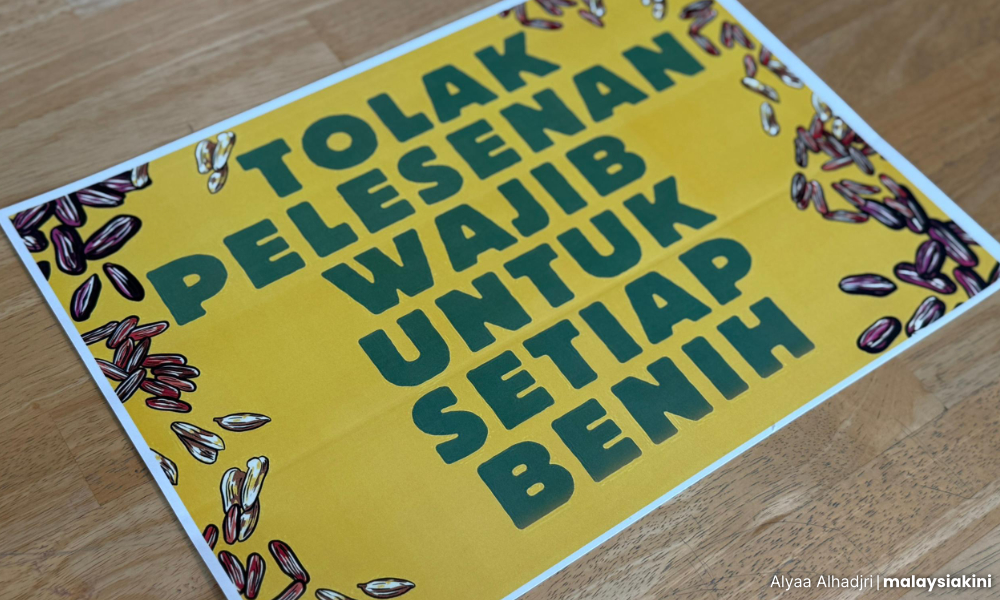
A coalition of 106 farmers’ organisations and civil society groups, representing thousands of members contributing to the country’s domestic supply chain, today endorsed demands for the government to halt a planned tabling of the Plant Seed Quality Bill.
Coming together as the Malaysian Food Solidarity Forum (FKMM), coalition coordinator Nurfitri Amir Muhammad said the draft bill was mooted in 2019 and is expected to be...
Summary
A coalition of farmers’ organisations and civil society groups urge the government to halt the tabling of the Plant Seed Quality Bill.
Groups cite a lack of transparent consultation on concerns including the impact on seeds’ variety, and costs of production.
A coalition of 106 farmers’ organisations and civil society groups, representing thousands of members contributing to the country’s domestic supply chain, today endorsed demands for the government to halt a planned tabling of the Plant Seed Quality Bill.
Coming together as the Malaysian Food Solidarity Forum (FKMM), coalition coordinator Nurfitri Amir Muhammad said the draft bill was mooted in 2019 and is expected to be tabled in the first Dewan Rakyat session next year.
“We urge the government to stop the process of tabling the Plant Seed Quality Bill in the Parliament.
“This is following the absence of a transparent process and comprehensive consultation with all interest groups, particularly small and medium scale farmers, as well as NGOs working on agriculture and environment issues,” said Nurfitri, who read out the groups’ statement during a press conference at Third World Network’s office in Petaling Jaya.

The groups include environmental organisations, community farm operators, consumer associations, women’s groups and others with interest in the production and use of seeds and seedlings.
A key area of concern lies in the proposed licensing requirement that the coalition stresses would jeopardise a farmer’s basic right to store and share seeds, either for commercial or personal use.
While noting that the bill has an acceptable objective to prevent seed buyers from being deceived, the groups argued against the proposed licensing requirement under the Agriculture Department.
“This is an excessive act and will only strengthen the monopoly of seed companies.
“The traditional practices of small farmers in saving, sharing, and selling seeds on a small scale to family members and friends are very important for agrobiodiversity and livelihood of farmers,” said FKMM.
Lack of transparency
After the press conference, Nurfitri told reporters that there is a lack of transparency over important aspects of the bill, including proposed enforcement and punishment for going against the seed licensing requirement.
“This law will be enforced by the Agriculture Department which has its own enforcement officers.
“We remain unsure of the process, hence our request for more transparent consultations,” he said.
“In the first consultation in 2019, a fine of between RM100,000 and RM200,000, as well as up to three years in jail was mentioned for the offence of not having a licence.
“There were two other consultations this year, but there was no more information on the process or punishment,” said Nurfitri.
Other related concerns raised include the impact on the overall price of produce; increased monopoly by companies over individual farmers; and negative effects on agrobiodiversity because, through licensing, the more popular or profitable commercial seeds will be prioritised.
/file/publisher-c1a3f893382d2b2f8a9aa22a654d9c97/2024/10/d26238be568e6188376d2dcc46c9a6ff.jpg)
/file/publisher-c1a3f893382d2b2f8a9aa22a654d9c97/2024/10/7d4c299c9085cc73b51882f59c7495cc.jpg)
/file/publisher-c1a3f893382d2b2f8a9aa22a654d9c97/2024/11/cabc3b473abf3336ee6034e488170694.jpg)
/file/publisher-c1a3f893382d2b2f8a9aa22a654d9c97/2024/10/eb7a1bb2ce9a24e9c2eb9f3a69750da5.jpg)
/file/publisher-c1a3f893382d2b2f8a9aa22a654d9c97/2024/09/95ee24be7a3b017cb0ac3b60ca703072.jpg)


Are you sure you want to delete this comment?
This action cannot be undone.