


/file/publisher-c1a3f893382d2b2f8a9aa22a654d9c97/2025/02/8c0d590ad41daa2397ea6df1001f8802.jpg)

We don't need religious rules in 'secular' Sarawak – SUPP
With Putrajaya coming under fire over proposed guidelines for Muslims participating in events at non-Muslim places of worship, Sarawak United Peoples’ Party (SUPP) said the state won’t be needing them.
Describing Sarawak as “secular’, its secretary-general Sebastian Ting said they find the proposed guidelines “unnecessary and overbearing”.
“Although we fully understand and respect the minister’s proposal...
Summary
Sarawak United Peoples’ Party secretary-general Sebastian Ting says the state won’t need the proposed guidelines for Muslims participating in events at non-Muslim places of worship.
He says the proposal is “unnecessary and overbearing”.
Ting adds such rigidity may lead to misunderstandings, suspicion and even resentment among communities.
With Putrajaya coming under fire over proposed guidelines for Muslims participating in events at non-Muslim places of worship, Sarawak United Peoples’ Party (SUPP) said the state won’t be needing them.
Describing Sarawak as “secular’, its secretary-general Sebastian Ting said they find the proposed guidelines “unnecessary and overbearing”.
“Although we fully understand and respect the minister’s proposal for the guidelines, paramount in our stand is that there is no official religion in Sarawak.
“Hence, ‘secular Sarawak’ is enshrined in our constitution and also the Malaysia Agreement (MA63) and it must be taken into cognisance when proposing guidelines bordering on any religion, including Islam,” he said in a statement today.
In a written reply to the Dewan Rakyat on Tuesday, Minister in the Prime Minister’s Department (Islamic Affairs) Na’im Mokhtar said the government is planning to introduce the new guidelines.
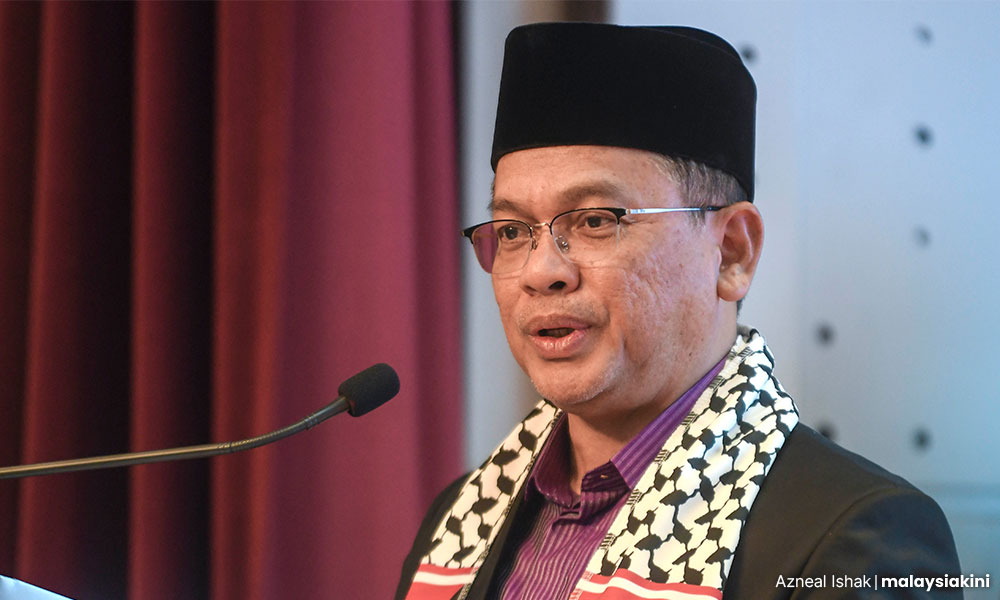
Among others, organisers are to seek permission from religious authorities if the event includes Muslims, and the events must not contain elements that could offend Muslim sensitivities.
READ MORE: KINIGUIDE | Interfaith events: Old rules, new proposal, royal precedents
Following backlash, Na’im said the guidelines were still under review.
Anwar said the cabinet will discuss the guidelines today.
Unhelpful in fostering unity
On that note, Ting said over-regulating religious practices and being overly cautious about religious sensitivities - especially when such issues are not actual concerns of the people - could create unnecessary divisions.
He added that such rigidity may lead to misunderstandings, suspicion and even resentment among communities that have long lived together peacefully.
“Instead of fostering unity, it could create an artificial sense of separation where none existed before.

“A better approach would be to encourage open dialogue, mutual understanding, and education on religious diversity while allowing people to maintain their traditions freely,” Ting said.
The SUPP leader then extolled Sarawak’s approach to embracing diversity, premised on mutual respect and often celebrating each other's festivals and traditions.
“This unity is deeply rooted in Sarawak’s culture, where interfaith marriages, mixed-ethnic communities, and a strong sense of togetherness are common.
“And Sarawak proves that trust and natural co-existence work better than excessive control,” Ting said.
Earlier today, former minister Rafidah Aziz also criticised the proposed guidelines, adding that the faith of Muslims is neither fragile nor rooted in ignorance.
“We are not ignorant, our ‘iman’ (faith) so weak to have supervision,” she was reported as saying.
/file/publisher-c1a3f893382d2b2f8a9aa22a654d9c97/2024/07/89ddb9b0bda9358603d6e85557597eac.jpg)
/file/publisher-c1a3f893382d2b2f8a9aa22a654d9c97/2023/02/389cb10f1b000d41da393c8d41282abc.jpg)
/file/publisher-c1a3f893382d2b2f8a9aa22a654d9c97/2024/11/d645216914809211e9dacdba11caa435.jpg)
/file/publisher-c1a3f893382d2b2f8a9aa22a654d9c97/2024/10/df1f0f0085992009f7a09dbb552eeb10.jpg)
/file/publisher-c1a3f893382d2b2f8a9aa22a654d9c97/2024/11/1845cd2354fb0a2fbd64d2e9b9accf79.jpg)


Report this comment
Are you sure you want to delete this comment?
This action cannot be undone.