


/file/publisher-c1a3f893382d2b2f8a9aa22a654d9c97/2023/09/ef6ae7a6c782cc6eb4cc7e74dfd7b67a.jpg)

Gag order may block right of MPs to debate addendum issue: Hamzah
The parliamentary opposition leader said this in a court application for his lawyers to hold a watching brief during ex-prime minister Najib Abdul Razak’s judicial review linked to the alleged royal addendum...
Summary
Opposition leader Hamzah Zainudin contended that any gag order, if allowed by the civil court, may disrupt the right of MPs to debate the royal addendum issue in Parliament.
The Bersatu lawmaker’s contention is part of his affidavit for the court to allow him and two other opposition lawmakers to have their lawyers hold a watching brief in Najib’s related court action.
Attorney-General Dusuki Mokhtar in his affidavit objected against the application by the three lawmakers.
The government’s application for a gag order, if allowed by the civil court, may disrupt the right of MPs to debate the alleged house arrest addendum in Parliament, according to Hamzah Zainudin.
The parliamentary opposition leader said this in a court application for his lawyers to hold a watching brief during ex-prime minister Najib Abdul Razak’s judicial review linked to the alleged royal addendum.
In the filing sighted by Malaysiakini, Hamzah pointed out that he and two others - Deputy Opposition Parliamentary Whip Ronald Kiandee and Terengganu Menteri Besar Ahmad Samsuri Mokhtar - should be allowed to have their lawyers hold a watching brief as the addendum issue was raised in the Dewan Rakyat as far back as March 7 last year.
Hamzah noted that former prime minister Ismail Sabri Yaakob raised the issue on that date and that questions on whether the addendum existed were raised again in Parliament on Dec 10 last year.
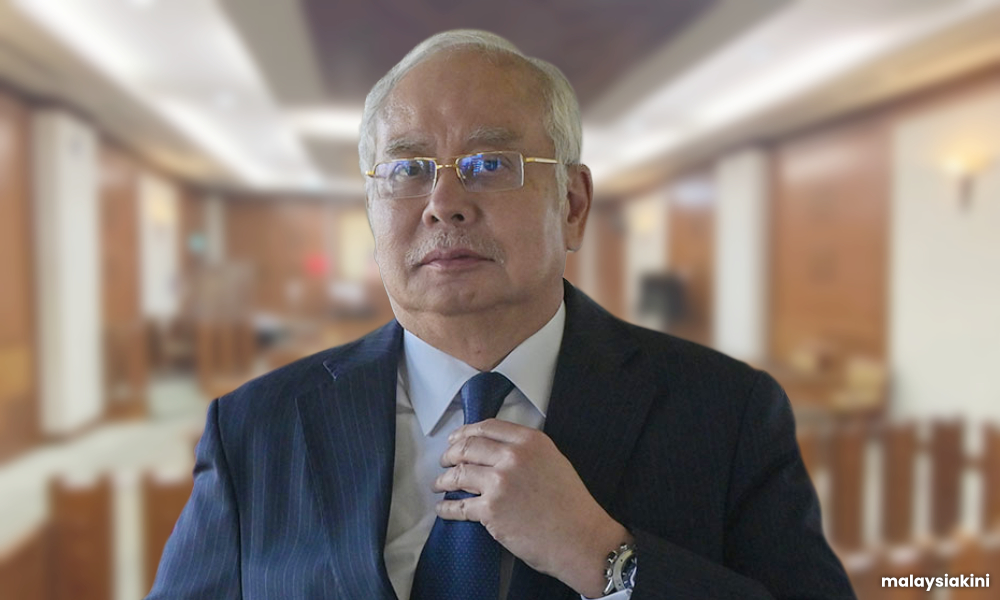
The Bersatu lawmaker pointed out that the case raised very important issues about the Constitution that he and other MPs have sworn to uphold, safeguard, and defend.
“I wish to state that if the gag order is allowed (by the Kuala Lumpur High Court), it would create a situation whereby Dewan Rakyat lawmakers’ right to raise, ask questions, discuss, and debate the issues, in this case, would be restrained or attempted to be restrained by those who do not wish the matter be discussed, debated, or asked even though this cannot be done in the Dewan Rakyat.
“This raises the issue of whether the right of Dewan Rakyat lawmakers can be restrained by this honourable court,” Hamzah said in his affidavit filed on Jan 22.
In Malaysia, the judiciary generally has no jurisdiction to issue an order binding Parliament and its lawmakers at both the Dewan Rakyat and Dewan Negara levels.
However, in an opposing affidavit filed on Feb 10, Attorney-General (AG) Dusuki Mokhtar objected to the bid by the three opposition lawmakers for their lawyers to conduct a watching brief over Najib’s ongoing civil action.
The government’s top lawyer pointed out that the three are not parties to the gag order bid, thus they have no right to raise any objection.
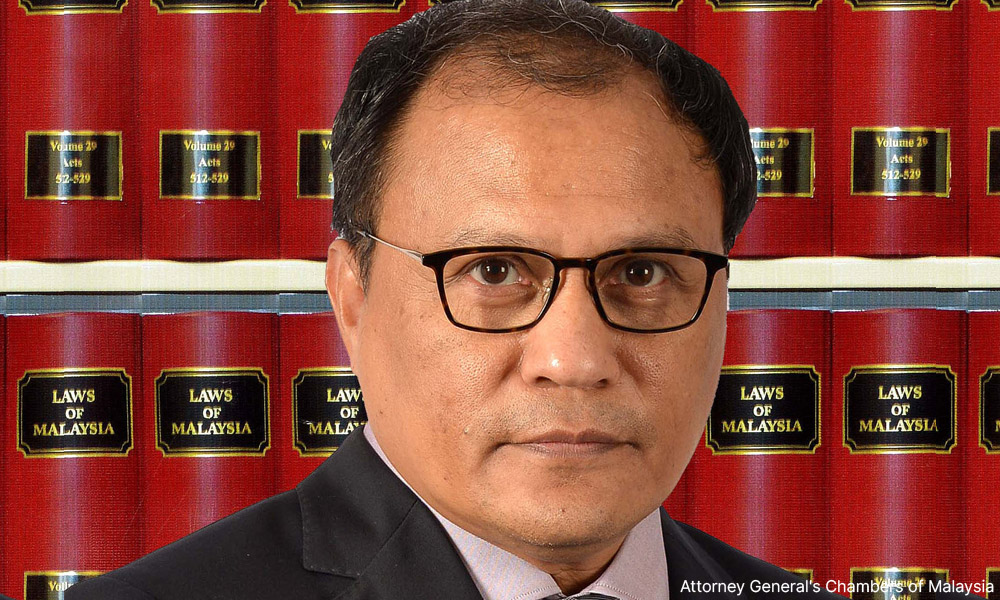
Dusuki pointed out that, at any rate, the three are already prevented from discussing Najib’s court action in the Dewan Rakyat, courtesy of parliamentary speaker Johari Abdul’s Feb 4 ruling.
The AG contended that the three lawmakers’ presence via their lawyers is not necessary as Najib’s legal team is sufficient to submit on any constitutional issues that may arise in court.
It should be noted that Najib himself objected to the government’s application for a gag order over his judicial review court proceedings.
Application filed
On Jan 20, the government’s gag order application was filed to curtail public statements that could question the integrity and power of the Pardons Board and the Yang di-Pertuan Agong.
According to the application, the government sought to restrain any party, including the media, from publishing, broadcasting, or disseminating anything related to the ongoing judicial review.
It sought a gag order over dissemination that could cause public discussion and speculation that trigger doubt, questions, challenges, or insults against the prerogative of the Agong.
The government also sought the order over dissemination that could raise speculation and statements that could jeopardise the credibility and integrity of the decisions, functions, and powers of the Pardons Board chaired by the Agong.
If the civil court allows the gag order, it would prevent not only the media from reporting the case but also restrain any member of the judiciary and lawyers directly dealing in the civil action from sharing copies of confidential documents linked to the case with the public.
Najib’s judicial review seeks the implementation of the alleged royal addendum allowing him to serve the remainder of his six-year jail sentence under house arrest.
Najib granted leave
In July last year, the High Court denied leave for Najib to commence the judicial review on reasons that the supporting affidavits by Deputy Prime Minister Ahmad Zahid Hamidi and Pahang Menteri Besar Wan Rosdy Wan Ismail were hearsay.
However early this year, the Court of Appeal reversed this ruling and granted leave to Najib’s civil action. The judge ordered the matter be reverted to the Kuala Lumpur High Court to hear the merits of the judicial review.
The appellate court also allowed Najib to rely on his son Nizar’s affidavit, whereby Nizar claimed the Pahang palace confirmed the addendum existed.
On Jan 29 last year, the Pardons Board issued royal advice for Najib’s 12-year jail sentence to be halved to six years and his RM210 million fine reduced to RM50 million.
However, the former prime minister claimed there was also a supplementary royal decree allowing him to serve his time under house arrest.
The sentence concerns the RM42 million SRC International abuse of power, criminal breach of trust, and money laundering case.
/file/publisher-c1a3f893382d2b2f8a9aa22a654d9c97/2023/09/25007feab1be60b505c4527b138b1adb.jpg)
/file/publisher-c1a3f893382d2b2f8a9aa22a654d9c97/2024/01/8a6de531ed4040c74f3f31988a2edf7e.png)
/file/publisher-c1a3f893382d2b2f8a9aa22a654d9c97/2020/01/a00a5fb6977dfa97c8296d140e2e5e8d.jpg)
/file/publisher-c1a3f893382d2b2f8a9aa22a654d9c97/2025/02/f695af666081ee529bed3d4b07224132.jpg)


Are you sure you want to delete this comment?
This action cannot be undone.