


/file/publisher-c1a3f893382d2b2f8a9aa22a654d9c97/2025/02/1e86b69712c6b23531b9452806bb1c51.jpg)

Duo nabbed over bid to smuggle 4,386 turtles in suitcases from KLIA
Malaysian authorities seized 4,386 pig-nosed turtles from being flown out of the country at the Kuala Lumpur International Airport (KLIA) on Tuesday.
Following a tip-off, officers from the Department of Wildlife and National Parks of Peninsular Malaysia (Perhilitan) and the airport Aviation Security (AVSEC) team checked two passengers who were going on AirAsia flight AK512 from Kuala Lumpur to Hanoi.
Summary
Malaysian authorities prevent smugglers from flying more than 4,300 pig-nosed turtles out of the country at KLIA on Tuesday.
The turtles have an estimated value of RM1.75 million and two suspects have been detained.
The Hanoi-bound passengers fail to produce permits to transport wildlife out of the country.
Malaysian authorities seized 4,386 pig-nosed turtles from being flown out of the country at the Kuala Lumpur International Airport (KLIA) on Tuesday.
Following a tip-off, officers from the Department of Wildlife and National Parks of Peninsular Malaysia (Perhilitan) and the airport Aviation Security (AVSEC) team checked two passengers who were going on AirAsia flight AK512 from Kuala Lumpur to Hanoi.
“The checks on the two passengers revealed that they were carrying seven luggage containing 4,386 pig-nosed turtles (Carettochelys insculpta).
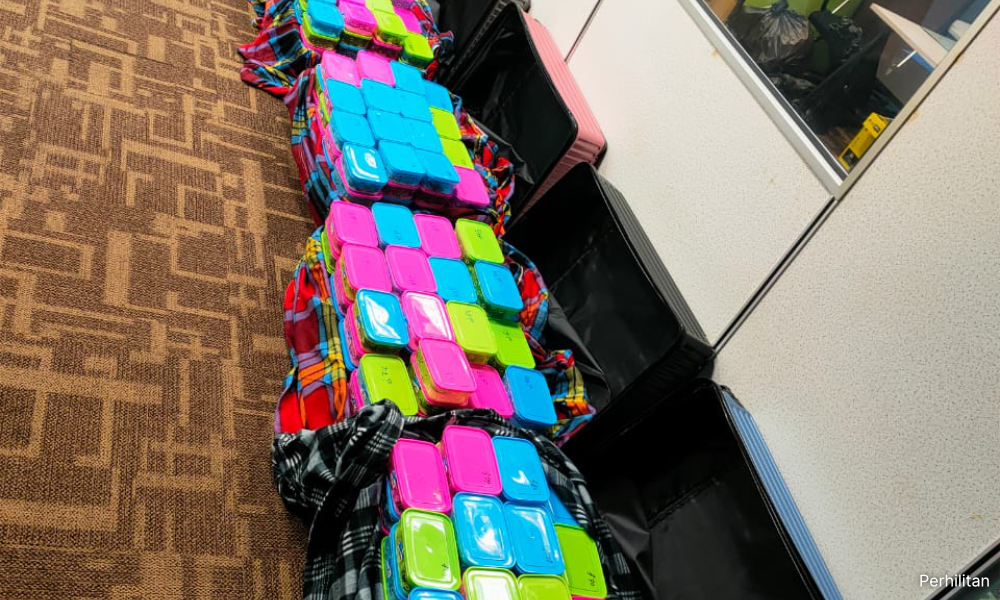
“The turtles were placed inside multiple small plastic containers inside the luggage. Pig-nosed turtle species are categorised as exotic wildlife,” said Perhilitan in a statement on its official Instagram account today.
No export permits found
Upon the discovery, the passengers were detained and questioned by Perhilitan officers.
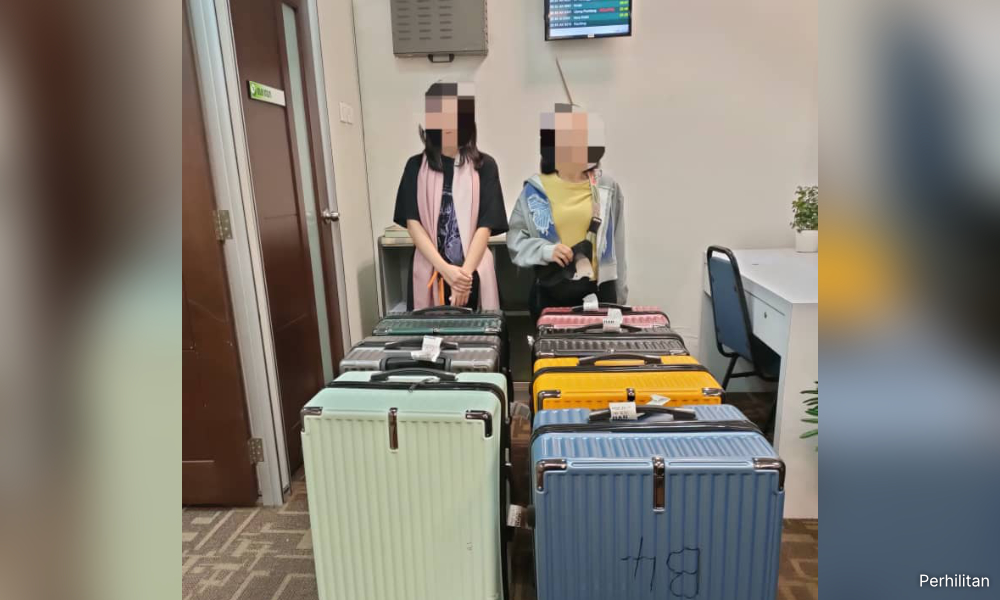
“Our investigation showed they failed to produce valid documents issued by Perhilitan to export the animals from Malaysia,” said Perhilitan.
Perhilitan said the seized pig-nosed turtles have an estimated value of RM1.754 million.
The case will be investigated under the Wildlife Conservation Act 2010 and the International Trade in Endangered Species Act 2008.
“Perhilitan wishes to issue a warning to any individuals keeping or conducting criminal activities related to wildlife animals to stop their act or face stern action under the law,” it said.
The department also called for the public to support its enforcement efforts by alerting Perhilitan of such activities at its hotline 1-800-88-5151 or via its website.
Non-native species
The pig-nosed turtle is not native to Malaysia and is generally found in Australia and on the Indonesian island of Papua.
Apart from being sold as pets, conservationists say the pig-nosed turtle is often hunted for its meat and used in traditional medicines in some Asian countries.
Malaysia is considered a major transit point for the illegal trafficking of endangered species to other parts of Asia.
Earlier this month, the Customs Departments in Mumbai and the Andaman and Nicobar Islands in India foiled two attempts to smuggle primates from Malaysia into the country, via passenger flights.
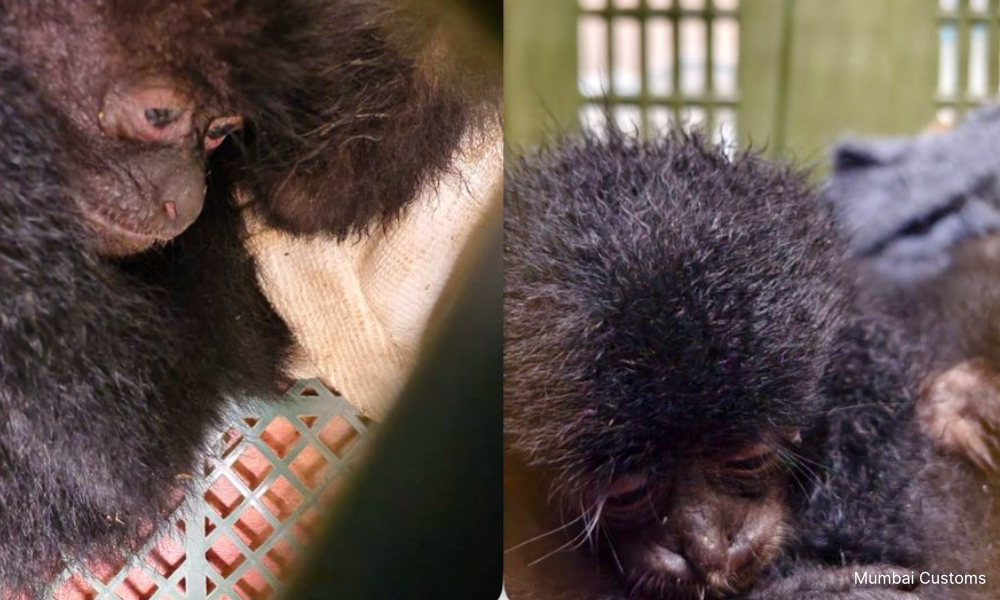
In the Mumbai case, five infant gibbons were hidden in plastic containers in a trolley suitcase carried by a passenger, who travelled on a Malaysia Airlines flight from Kuala Lumpur.
Three of the primates had died while two were in critical condition upon rescue and will be sent back to Malaysia once rehabilitated.
In the Andaman and Nicobar Islands case, eight juvenile primates - the pig-tailed macaque and gibbon - were recovered in the bags of two passengers who flew on an AirAsia flight from Kuala Lumpur.
The alleged smugglers had intended to continue travel to Bengaluru and Chennai, local media reported.
Last October a Malaysian woman was caught in the Chennai Airport trying to traffic four gibbons and 52 iguanas via a flight from Kuala Lumpur.
In September 2024, a passenger from Kuala Lumpur flew to Chennai Airport with 5,000 turtles in his luggage, while the month before that the authorities there intercepted 778 Indian star tortoises found in a passenger’s baggage.
AI scanners enhanced
When contacted by Malaysiakini, the Customs Department said it has enhanced artificial intelligence scanners which can detect wildlife smuggling but it only scans hand-held bags.

The department did not detect any wildlife smuggled in hand-held bags scanned at KLIA this month.
Checked-in luggage is handled by Malaysian Airports Holdings Bhd, who when contacted declined to comment on the recent cases but said that it had enhanced its security checks to combat wildlife trafficking in 2023, including introducing additional checks and sniffer dogs.
/file/publisher-c1a3f893382d2b2f8a9aa22a654d9c97/2025/02/b92bcdcd9836ace126a9b6df3e72aafd.jpg)
/file/publisher-c1a3f893382d2b2f8a9aa22a654d9c97/2025/02/04101a2a69f82e2e561ec540f56fed52.jpg)
/file/publisher-c1a3f893382d2b2f8a9aa22a654d9c97/2021/11/efecc36beacf3b343a7ba2ae327b22c1.jpg)
/file/publisher-c1a3f893382d2b2f8a9aa22a654d9c97/2024/10/3094d61f1fb304305cf8bfbdc476af7a.jpg)
/file/publisher-c1a3f893382d2b2f8a9aa22a654d9c97/2024/01/a66589c92c6247906c945ed7a06bc770.jpg)


Are you sure you want to delete this comment?
This action cannot be undone.