


/file/publisher-c1a3f893382d2b2f8a9aa22a654d9c97/2024/08/f8bb8e508891950a396574141462cb67.jpg)

Peter Anthony goes to jail for forgery
Former Sabah infrastructure development minister Peter Anthony begins a three-year jail sentence over a forged document case today.
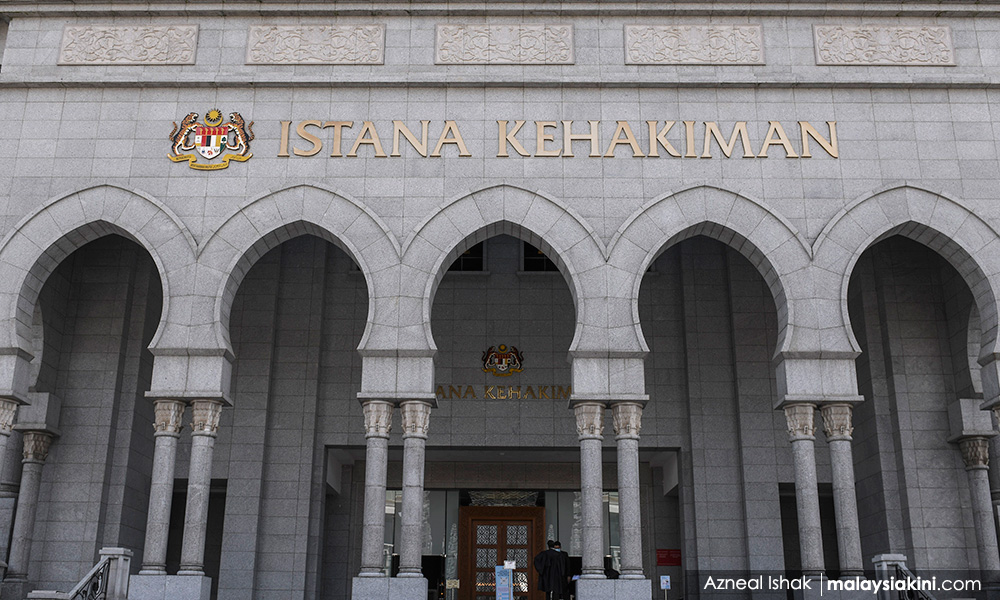
The Court of Appeal denied his last ditch appeal to set aside his conviction and sentencing in the case linked to a maintenance and service contract at Universiti Malaysia Sabah (UMS) 11 years ago.
Summary
Former Sabah infrastructure development minister Peter Anthony begins serving his three-year jail sentence over a forged document case linked to a maintenance and service contract at Universiti Malaysia Sabah (UMS) 11 years ago.
The Court of Appeal unanimously upholds the guilty verdict as well as the three-year custodial term and RM50,000 fine.
The Melalap assemblyperson is set to lose his state seat as well as his eligibility to contest in the upcoming Sabah election.
Former Sabah infrastructure development minister Peter Anthony begins a three-year jail sentence over a forged document case today.
The Court of Appeal denied his last-ditch appeal to set aside his conviction and sentencing in the case linked to a maintenance and service contract at Universiti Malaysia Sabah (UMS) 11 years ago.
A three-person bench - chaired by judge Ahmad Zaidi Ibrahim and comprising judges Zaini Mazlab and Azmi Ariffin - unanimously upheld the guilty verdict as well as the three-year jail term and RM50,000 fine.
Under the law, the Melalap assemblyperson is set to lose his state seat and would not be eligible to contest in the upcoming Sabah state polls this year.
Article 48(1)(e) of the Federal Constitution disqualifies a parliamentarian or assemblyperson found guilty in a criminal case and sentenced to two years in jail or fined more than RM2,000.
The forgery case is linked to the time when Peter was managing director of Syarikat Asli Jati Engineering Sdn Bhd, which at the time was contracted to perform operational and maintenance work for the Mechanical Phase 2A at the UMS campus in Sabah in 2014.
Syarikat Jati was involved in a joint venture with UMS' subsidiary Ulink Property Sdn Bhd for a project to construct a building at the Urban Transformation Centre at UMS for student activities.
The forged document in question is a letter of support from UMS to Syarikat Jati for the smart partnership project, with the prosecution contending that Peter forged the said letter to gain federal government approval for the project.
The contract award was later revoked when UMS and the Prime Minister's office uncovered misconduct linked to the forged letter, leading to Peter being charged in the criminal court.
Reading the judgment on behalf of the appellate panel today, Zaini said they are not inclined to challenge these findings, as the Sessions Court, being the trial court, is in the best position to analyse the demeanour of these witnesses and assess their testimonies against the evidence presented.
Zaini said the trial court rightly concluded that circumstantial evidence strongly indicated only Peter could have forged the letter.
The Court of Appeal judge said star witness Shukor Mohd Din - who was a middleman between Syarikat Jati and UMS - testified he drafted the letter of support on Peter's computer in the accused's office, left the blank letterhead in the office, and only typed the content of the letter and not the title, before leaving the office.
Zaini noted that the lower court correctly surmised Peter's guilt as evidence showed that the accused later provided the forged document to Shukor, with the title already typed.
The appellate judge said the lower court had rightly labelled Peter's defence witnesses’ testimonies as afterthought - that Shukor never visited Peter's office and that the computer in the accused's office could only be accessed with a password.
Zaini said the trial court properly ruled that the defence was mere denials and afterthought, noting that these claims were not raised during the investigation or presented to the prosecution's witnesses such as Shukor during trial.
Zaini added that the panel is not inclined to disturb the sentence from the lower court as it should only be altered if it is found to be manifestly excessive or insufficient.
"We are convinced that the Sessions Court provided a thorough judicial evaluation of the evidence, and we find no errors that would justify intervention by the appellate court.
"Therefore, we conclude that the conviction of the accused is sound. We dismiss the appellant’s appeal and uphold the conviction and sentence imposed by the Sessions Court," he said.
A police officer escorted Peter through a side door in the appellate court as his wife looked on from the public gallery.
Charged under Section 468 of Penal Code
In 2020, before the Kuala Lumpur Sessions Court, the 54-year-old politician claimed trial for the charge under Section 468 of the Penal Code, which provides a maximum seven-year jail term and a fine.
In 2022, the trial court found the Parti Kesejahteraan Demokratik Masyarakat president guilty of forging the letter dated June 9, 2014, at the office of the principal private secretary to the prime minister at the Perdana Putra building, Putrajaya, between June 13 and Aug 21, 2014.
The lower court convicted him two years ago and imposed a three-year jail term and RM50,000 fine. While he paid the fine, he obtained a stay of execution on the jail term pending the disposal of his appeal.
Two years ago, the Kuala Lumpur High Court upheld his guilty verdict and sentencing.
The prosecution called 15 witnesses to testify against Peter, including former prime minister Najib Abdul Razak, former treasury secretary-general Irwan Serigar Abdullah, and former chief justice Zaki Azmi.
Peter was among three witnesses who took the stand for his defence.
Lawyer Nicholas Kow acted for Peter, while deputy public prosecutor Wan Shaharuddin Wan Ladin appeared for the prosecution.
/file/publisher-c1a3f893382d2b2f8a9aa22a654d9c97/2024/08/dc6184404495ba5ee7ef7a33594fb187.jpg)
/file/publisher-c1a3f893382d2b2f8a9aa22a654d9c97/2024/12/b60f2abff0999fa9d6451715354fc153.jpg)
/file/publisher-c1a3f893382d2b2f8a9aa22a654d9c97/2022/11/1ff850c99e4f76a3af97a8facbb97dc1.jpg)


Are you sure you want to delete this comment?
This action cannot be undone.