


/file/publisher-c1a3f893382d2b2f8a9aa22a654d9c97/2025/04/988e71d11110b257c4304c5cd270ffee.jpg)

Khazanah Research urges firms not to fire workers over 'voodoo tariffs'
Its deputy director of research, Yin Shao Loong, criticised the methodology behind the US imposition, calling it “an arbitrary formula that does not reflect economic realities or is rooted in any reality of tariff rates.”
He explained that the tariff was...
Summary
As the US tariffs bite, Khazanah Research Institute (KRI) calls on local industries to avoid premature layoffs and to look beyond American markets.
Based on the arbitrary formula for the “reciprocal tariffs”, described as “voodoo tariffs”, KRI compared the move to the Smoot-Hawley Act, which implemented protectionist trade policies that triggered the Great Depression in the 1930s.
Semiconductors, pharmaceuticals, copper, lumber, bullion, and certain critical minerals not available in the US are among the commodities exempted from Trump’s tariffs.
Khazanah Research Institute (KRI) urged businesses not to resort to mass layoffs in response to the latest US tariff hike, which it described as based on a “voodoo tariff” formula.
Its deputy director of research, Yin Shao Loong, criticised the methodology behind the US imposition, calling it “an arbitrary formula that does not reflect economic realities or is rooted in any reality of tariff rates.”
He explained that the tariff was derived by dividing Malaysia’s trade balance by its total exports to the US, resulting in a figure that was then converted into a percentage, which seemed to arbitrarily inflate the actual trade surplus.
“The 47 percent figure has got nothing to do with any tariffs that Malaysia actually has with the US,” he said.
Yesterday, Malaysia was among 60 countries the US slapped with a “reciprocal tax” while imports from the rest of the world faced a minimum 10 percent tariff, all of which will come into effect in less than a week.
As part of President Donald Trump’s administration’s move to address the republic’s trade deficit, Malaysia faces a “reciprocal tax” of 24 percent with the exemption of certain goods.
“They’re not using tariffs to determine this reciprocal tariff rate.
“Instead, they’re using a formula based on Malaysia’s 2024 trade balance, US$24.8 billion, divided by the total imports to the US, US$52.5 billion, resulting in 0.47, which they turned into 47 percent.
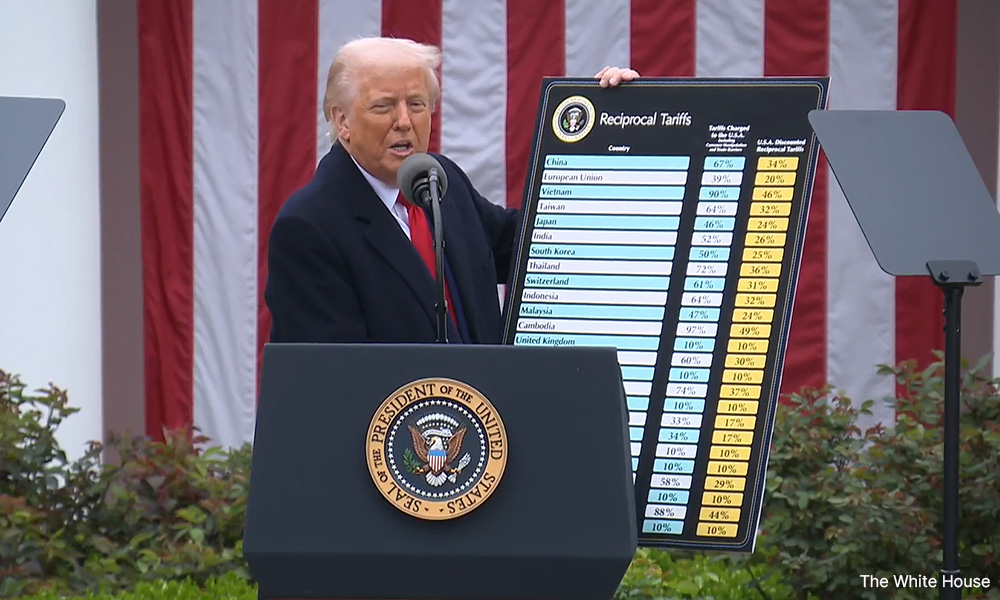
“However, to reduce the impact on US consumers, officials arbitrarily halved the final figures, bringing Malaysia’s tariff rate down to 24 percent,” he said, arguing that this approach resulted in arbitrary figures.
“Yeah, so it’s basically voodoo tariffs,” he remarked.
Yin argued that this simplistic approach, while easy to calculate, overlooked the broader complexities of global trade and did not accurately reflect Malaysia’s economic standing.
The US Trade Representative (USTR), which issued the trade tariffs, acknowledges the challenges of calculating real tariff equivalencies.
In explaining the “reciprocal tariff” formula on its website, the USTR acknowledged that calculating the effects of tariffs, regulations, taxes, and other policies in each country would be complicated, if not impossible to calculate, owing to the many factors involved.
Both Malaysia and the US are members of the World Trade Organization (WTO), which sets global trade rules.
Yin said the USTR acknowledges that Malaysia’s average Most Favoured Nation (MFN) tariff rate on US imports is 5.6 percent, indicating that Malaysia already maintains relatively low tariffs on American goods.
The MFN tariff rate is the standard tariff applied to WTO member countries without special trade agreements.
“But they decided to levy a 47-24 percent tariff on us. So, it’s not proportional or reciprocal,” he said.
Yin said all existing trade agreements have been set aside.
“The US is throwing out the rule book by doing this.”
Trump’s tariff on the world
Commodities exempted from the new tariffs include semiconductors, pharmaceuticals, copper, lumber, bullion, and certain critical minerals not available in the US, as well as steel, aluminium, and automotive products already covered under existing Section 232 tariffs.
Semiconductors include microchips or integrated circuits - the tiny electronic components that power everything from smartphones and computers, to cars and industrial machinery.
However, the exemption on semiconductors does not exempt the entire electronics or electrical industry, as other electronic components and electrical products may still be subject to tariffs.
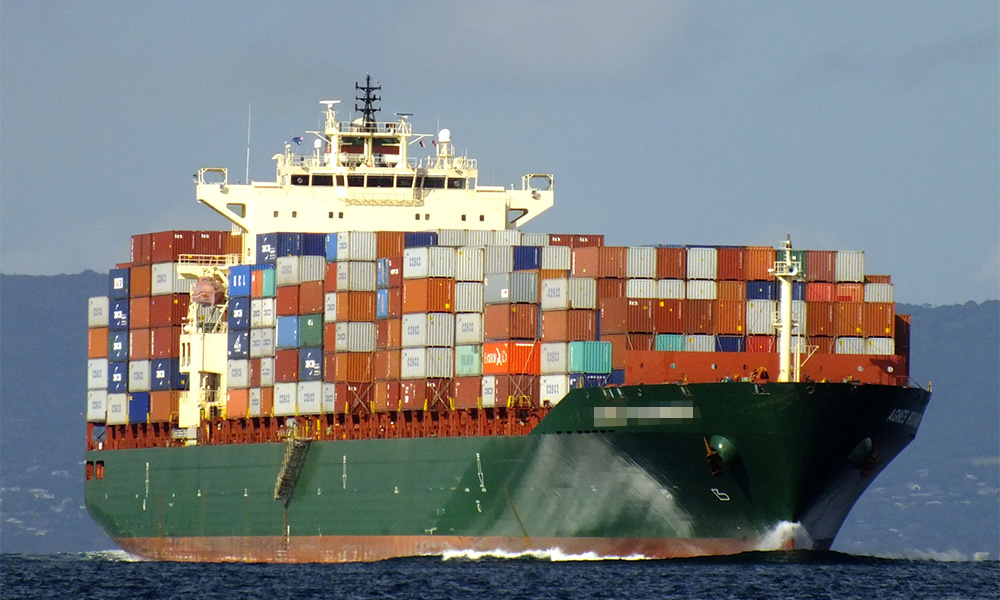
The Trump administration’s 25 percent levy on all cars shipped to America went into effect yesterday, while the 10 percent baseline tariff will take effect on Saturday, and the higher “reciprocal” tariffs will begin on April 9.
Despite the tariffs, Malaysia remains in a competitive position compared to neighboring countries, said Yin, adding that Malaysia is positioned to leverage its strong ties with China and Asean.
“Some countries in the region face significantly higher tariff rates, such as 46 percent for Vietnam, 36 percent for Thailand, and 49 percent for Cambodia.
“While Singapore faces the minimum 10 percent tariff, it cannot absorb significant amounts of manufacturing other countries are doing.
“Malaysia, on the other hand, continues to maintain its strengths, with more trade occurring with China and Asean than with the US, and this makes it increasingly important for Malaysia to explore other export opportunities,” said Yin.
Although some trade tariffs were proposed as early as February, Trump’s announcement yesterday left many nations questioning the methodology behind them, with some, like Canada and the European Union, preparing “countermeasures”.
US stocks saw sharp declines, with major indexes like the Nasdaq and S&P 500 posting significant losses, while the new import taxes, expected to cost hundreds of billions, are raising concerns about a potential economic downturn.
Meanwhile, Trump responded to the sell-off, saying, “It was expected”.
He also compared the tariffs to an emergency surgery, stating, “The patient was very sick. The economy had a lot of problems. The operation is over, and now we let it settle in,” according to reports.
JP Morgan analysts called the tariffs the largest US tax hike since 1968, with economists warning of an increasing likelihood of a downturn this year.
In Malaysia, the prospect of a 24 percent levy on goods prompted labour groups to express fears of factories shuttering and call for incentives to encourage greater local investment.
Manufacturers voiced concerns over a potential decline in export volumes and the disruption or restructuring of supply chains involving both Malaysian producers and US-linked multinational operations based in Malaysia.
Can expect more arbitrary decisions
In terms of compliance, Malaysian goods sold to the US will face tariffs once they enter the country, leaving little choice but to adhere to the new tariffs, but Yin said businesses should hold tight and assess the evolving situation.
He said it is too early to consider job cuts in Malaysia as the full impact of the US tariffs remained uncertain.
Given the unpredictability of Trump’s decisions, he said: “With Trump, we can expect more arbitrary decisions and policies, so basing your strategy just on one announcement may be a bit premature.”
“It’s premature to start looking at job cuts because you’ve got to see how buyers in the US respond to this. Can they source cheaper goods from elsewhere? Can they not?” he reflected.
Yin said the US tariffs were not just about balancing trade - they were designed to push manufacturing out of countries like Malaysia, China, and Mexico and back into the US.
This effectively means job losses for these countries.
In response, he explained, Malaysia must work on diversifying its trade partnerships to reduce reliance on the US.
While this shift will come with short-term economic challenges, the impact will be felt globally, as a slowdown in US consumption affects economies worldwide.
“In the short term, prices will rise, leading to inflation and consequently, the US runs the risk of entering a recession, which would reduce consumer demand overall.
“This downturn, rather than the tariffs themselves, could ultimately weaken demand for Malaysian exports,” said Yin, whose research area focuses on industrial policy, climate change, and future technologies.
Policy or delusion?
Trump has framed his tariff policies as a long-term strategy rather than focusing on their immediate economic effects.
He has also downplayed concerns that they could trigger a recession.
“He (Trump) doesn’t believe that sustained high tariffs will cause a recession or depression. But the history of the United States in the 1930s contradicts that.
“The Smoot-Hawley Act helped trigger the Great Depression in the 1930s. Trump has explicitly said in a news address that he doesn’t believe that can happen.
“What he believes and what will happen may be two different things,” said Yin.
/file/1214/0bf383954dafb7c17e3338903e7f3d8f.jpeg)
/file/publisher-c1a3f893382d2b2f8a9aa22a654d9c97/2025/04/cd07f3a02d1bacb46c9dc8585ea64fc8.jpg)
/file/publisher-c1a3f893382d2b2f8a9aa22a654d9c97/2019/02/cc1edacda79349f502eb94fb7068f62d.jpg)
/file/publisher-c1a3f893382d2b2f8a9aa22a654d9c97/2020/10/0b58ceb8a0736b50e49b15b5446f4a00.jpg)


Are you sure you want to delete this comment?
This action cannot be undone.