


/file/publisher-c1a3f893382d2b2f8a9aa22a654d9c97/2025/04/cbba907acbb57819e440d306365135b0.jpg)

Zafrul: Tariff on US goods 5.6pct, not 47pct
Speaking to reporters today, Zafrul said he had met with US Ambassador to Malaysia Edgard D Kagan to seek clarification on the figure cited by President Donald Trump during his recent announcement on tariffs.
Summary
Investment, Trade, and Industry Minister Tengku Zafrul Abdul Aziz says Malaysia imposes a 5.6 percent tariff rate on American exports - a significantly smaller figure than the 47 percent that the US previously claimed.
This comes after Prime Minister Anwar Ibrahim said the government rejects the US’ claim, which led to Malaysia being slapped with a reciprocal tariff of 24 percent.
Investment, Trade and Industry (Miti) Minister Tengku Zafrul Abdul Aziz has clarified that the actual tariff rate Malaysia imposes on American exports is 5.6 percent, contrary to the US’ claim of a 47 percent tariff.
Speaking to reporters today, Zafrul said he had met with US Ambassador to Malaysia Edgard D Kagan to seek clarification on the figure cited by President Donald Trump during his recent announcement on tariffs.
He added that his ministry is establishing a task force to engage with related industries and exporters as part of efforts to counter the “unilateral decision to impose tariffs”.
“Malaysia wants to continue to be a reliable partner to all countries, including our traditional partners like the United States and China,” Scoop quoted him as saying.
Yesterday, Prime Minister Anwar Ibrahim said Putrajaya rejects the US’ claim that Malaysia had imposed a 47 percent tariff on US imports into the country.
The prime minister said a reciprocal tariff of 24 percent was imposed on Malaysia due to a “fundamentally flawed” calculation.
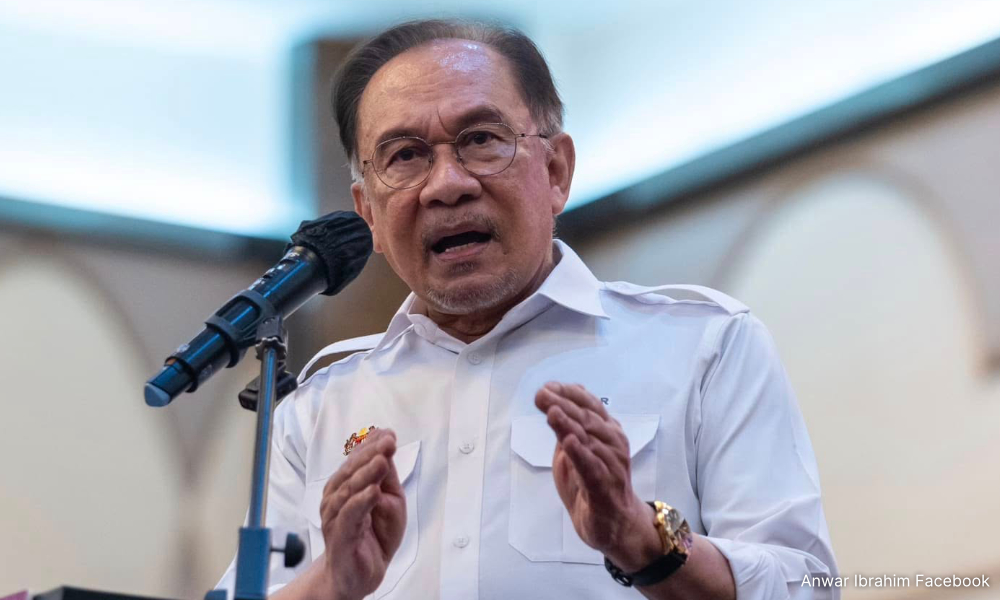
At that time, Anwar did not state the actual tariff rate Malaysia imposes on US exports.
Earlier today, Anwar said the US’ move to impose tariffs on certain countries uninhabited by humans demonstrates a lack of proper considerations, slamming the tariffs as lacking justification and proper rate-determination methods.
Previously, economic journalist James Surowiecki asserted that instead of a complex formula, the US merely divided the percentage of its trade deficits with other countries to determine the tariff rates.
It was also suggested that the Trump administration may have used AI to determine its tariff formula, as multiple users found that platforms such as ChatGPT would provide an identical formula when questioned on how to calculate reciprocal tariffs.
Ongoing study, gathering input
Meanwhile, Zafrul also said the government is taking several measures to deal with the implications of the US tariffs, including activating the National Geoeconomic Command Centre.
Findings from Miti’s ongoing sectoral impact study focusing on key export sectors to the US will be presented to the centre, which he said is expected to hold a meeting soon.
He added that a task force under Miti will gather input from key stakeholders, including private sector representatives.
Last week, Trump announced that all imports into the US would be slapped with a baseline 10 percent tariff, which came into effect on April 5.
Starting April 9, the US will impose an individualised reciprocal higher tariff on the countries with which it has the largest trade deficits.
/file/publisher-c1a3f893382d2b2f8a9aa22a654d9c97/2025/03/6df310083f1de2c4135b025f2a5469a8.jpg)
/file/publisher-c1a3f893382d2b2f8a9aa22a654d9c97/2025/04/ace03e92bb89269e532634ccbecdd7ee.jpg)
/file/publisher-c1a3f893382d2b2f8a9aa22a654d9c97/2025/04/cd07f3a02d1bacb46c9dc8585ea64fc8.jpg)
/file/publisher-c1a3f893382d2b2f8a9aa22a654d9c97/2025/04/636d6b8ecd5e6c66786a0f9751196c3b.jpg)
/file/publisher-c1a3f893382d2b2f8a9aa22a654d9c97/2020/03/16007147e05b8e8b14da757538cb7355.jpg)
/file/publisher-c1a3f893382d2b2f8a9aa22a654d9c97/2024/10/d622c7b801628c3d819a7c41132d121d.jpg)
/file/publisher-c1a3f893382d2b2f8a9aa22a654d9c97/2020/10/0b58ceb8a0736b50e49b15b5446f4a00.jpg)


Are you sure you want to delete this comment?
This action cannot be undone.