


/file/publisher-c1a3f893382d2b2f8a9aa22a654d9c97/2025/06/cc188626d3ddf2d8771e0a26d21f9043.png)

FMM sounds alarm over looming 25pct US tariffs, urges swift govt action
The Federation of Malaysian Manufacturers (FMM) has raised the alarm over a looming 25 percent blanket tariff on all Malaysian exports to the United States, set to take effect on Aug 1.
In a statement today, FMM described the latest move under Washington’s reciprocal tariffs as a major blow to local exporters already grappling with cost pressures and a challenging global trade environment.
“The manufacturing sector is already reeling from the earlier...
Summary
FMM warns about a 25pct US tariff on all Malaysian exports to the US, effective Aug 1.
FMM urges the govt to intensify diplomatic efforts to defer or exempt the new tariffs and implement domestic policies to support affected industries.
The Investment, Trade and Industry Ministry reaffirms its commitment to discuss the tariffs with US counterparts and mitigate their impact on Malaysian businesses.
The Federation of Malaysian Manufacturers (FMM) has raised the alarm over a looming 25 percent blanket tariff on all Malaysian exports to the United States, set to take effect on Aug 1.
In a statement today, FMM described the latest move under Washington’s reciprocal tariffs as a major blow to local exporters already grappling with cost pressures and a challenging global trade environment.
“The manufacturing sector is already reeling from the earlier 10 percent tariff, compounded by the expanded sales and service tax (SST) and revised electricity tariffs, especially for high-voltage users.
“This latest escalation risks further destabilising an already fragile industrial landscape,” said FMM president Soh Thian Lai.
FMM noted that while semiconductors have been spared from the new tariffs, the broader supporting ecosystem - including suppliers of parts, machinery and services -remains vulnerable.
Products expected to be hit hard include rubber goods, textiles, furniture, and industrial components.
The industry body warned that Malaysia’s position had worsened in comparison to regional peers.
Worse than neighbours
While the country’s proposed April tariff of 24 percent was initially seen as relatively moderate, the new blanket rate puts Malaysia on par or worse than neighbours — especially with Vietnam securing a bilateral deal that lowered its rate to 20 percent.

“Other Asean members like Singapore, Brunei and the Philippines weren’t even named in this tariff round. This risks diverting US sourcing to more favourable alternatives,” Soh said.
He added that Malaysia’s significant role in US and global high-tech supply chains must be highlighted in negotiations, particularly in the electrical and electronics, medical devices and precision engineering sectors.
“Our compliance record, investment linkages, and value-added contributions should be leveraged to seek targeted relief or differentiated treatment,” he said.
FMM urged the government to intensify diplomatic efforts under the National Geoeconomic Command Centre (NGCC), coordinated by the Investment, Trade and Industry Ministry, to seek an immediate deferral of the Aug 1 implementation and a longer-term exemption or rollback.
At the same time, domestic policy measures must be rolled out to cushion affected industries, including targeted financial aid, export promotion, and structural reforms.
“A whole-of-government approach is critical to protect Malaysia’s manufacturing base, preserve jobs, and maintain investor confidence,” said Soh.
Review SST expansion
FMM also renewed its call for a review of the recently expanded SST, warning of cascading tax effects due to the lack of a business-to-business (B2B) exemption.
“Critical services such as logistics, warehousing and contract processing are now subject to service tax, inflating costs that ultimately trickle down to consumers.

“This undermines tax neutrality and erodes industrial competitiveness,” said the group.
FMM proposed introducing a B2B exemption mechanism for licensed manufacturers, along with longer-term tax reforms to remove the “tax-on-tax” element.
To help exporters weather current shocks and reposition for growth, FMM proposed several structural initiatives:
• Raise the ceiling of the Market Development Grant
• Remove fees for association-led trade missions under the Malaysia External Trade Development Corporation
• Offer targeted incentives for branding, certification and digital market access
• Introduce tax breaks for automation, robotics and digital tech investments
• Set up a Madani Manufacturing Digitalisation Grant for SMEs
• Channel foreign worker levies toward apprenticeships and high-tech investment
FMM also called for the expedited establishment of the National Supply Chain Council, and for Malaysia - as Asean chair - to push for a regional Supply Chain Coordination Council.
Long-term protection
At the strategic level, Soh urged the government to fast-track the Malaysia-EU Free Trade Agreement and pursue new markets in Africa, Latin America and the Middle East.
“A broader and more diversified trade base is essential to reduce our reliance on any single export destination,” he said.
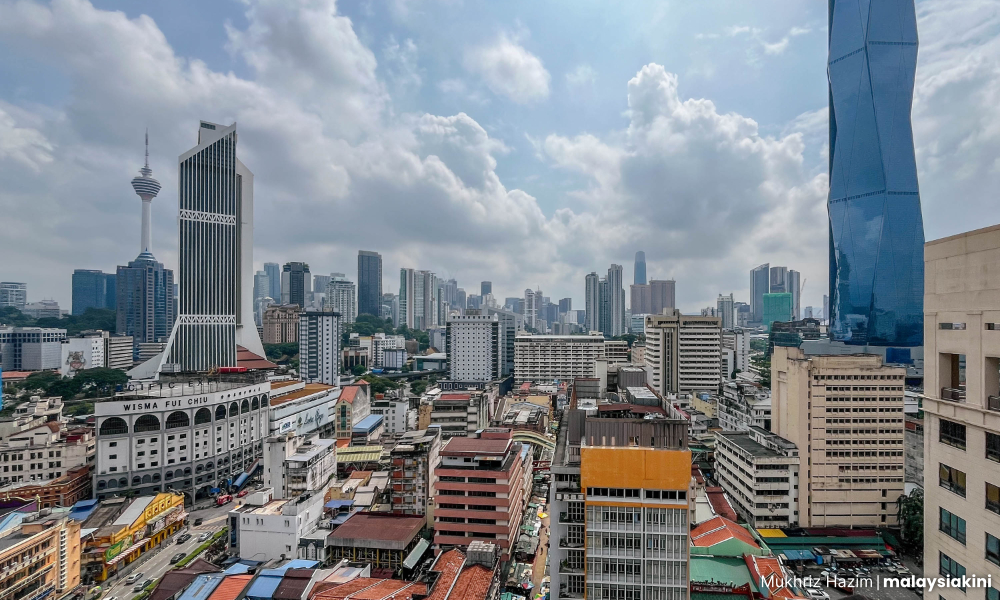
As Malaysia navigates what FMM described as one of the toughest trade environments in recent memory, the group stressed that coordinated and bold action is needed to shield industries from long-term harm.
“With strong government-industry collaboration and clear, timely policies, Malaysia can preserve its manufacturing edge and chart a sustainable path forward,” said Soh.
Collapse in orders
Separately, the Malaysian Furniture Council (MFC) said that many member companies have already experienced order cancellations, with buyers shifting their sourcing to other countries.
The council, in a statement, said the furniture industry is one of the few sectors in Malaysia being successfully led by local enterprises and has made significant inroads into the global market.
“We also support a comprehensive supply chain spanning from timber, logistics, design, retail, and more.
“Hence, the latest tariff adjustment will most likely trigger a collapse in orders, shrinking production capacity, waves of layoffs, and even a surge in business closures,” said the council.
MFC also urged the government to continue pursuing tariff negotiations with the US; suspend or withdraw all recently introduced cost-raising policies, especially the expanded SST coverage; and introduce a short-term relief plan, including tax deferrals, raw material tax rebates, and export incentives to stabilise orders and protect jobs.
Discussions to continue
In an immediate response, the ministry today reaffirmed Malaysia’s commitment to continue discussions with its US counterparts to address outstanding issues, clarify the scope and impact of the announced tariffs, and pursue avenues for the timely conclusion of ongoing negotiations.
The ministry also stressed that the government remains committed to protecting the interests of Malaysian businesses, workers, and consumers and will take all necessary steps to mitigate the impact of these new measures.
The US is Malaysia’s second-largest trading partner and largest export destination, with total trade in 2024 rising nearly 30 percent to RM324.9 billion (US$71.4 billion).
Exports to the US reached RM198.7 billion (US$43.7 billion), while imports rose to RM126.3 billion (US$27.7 billion).
/file/publisher-c1a3f893382d2b2f8a9aa22a654d9c97/2024/08/047b1facd49492d895d50303ab34ac94.jpg)
/file/publisher-c1a3f893382d2b2f8a9aa22a654d9c97/2021/05/03bc306b2c395e05daad2659f274fd3b.jpg)
/file/publisher-c1a3f893382d2b2f8a9aa22a654d9c97/2025/05/ec36e384faa6029d3c47da542e2e9213.jpg)
/file/publisher-c1a3f893382d2b2f8a9aa22a654d9c97/2024/07/6b1edfc0887daa9cac78b9a822414ba5.jpg)
/file/1321/3adc05d8be808a7bdad83d2dcbef4d45.jpeg)


Report this comment
Are you sure you want to delete this comment?
This action cannot be undone.