


/file/publisher-c1a3f893382d2b2f8a9aa22a654d9c97/2025/05/7f6c0355f69041f84623c1fd68100869.jpg)

Nga demands apology after MACC clears MyKiosk of graft claims
PARLIAMENT | Housing and Local Government Minister Nga Kor Ming has demanded an apology from critics of the MyKiosk initiative, who claimed impropriety and wrongdoing in the project.
This was after the MACC found no criminal elements in its investigation into alleged corruption and misappropriation involving the project’s tender process.
PARLIAMENT | Housing and Local Government Minister Nga Kor Ming has demanded an apology from critics of the MyKiosk initiative, who claimed impropriety and wrongdoing in the project.
This was after the MACC found no criminal elements in its investigation into alleged corruption and misappropriation involving the project’s tender process.
“Alhamdulillah, last week, the MACC announced that there was no abuse of power and no element of corruption.
“So those who threw stones should not hide their hands. On behalf of the ministry staff who have worked tirelessly to help the people, I demand that those who spread slanderous accusations apologise,” Nga (Harapan-Teluk Intan) told the Dewan Rakyat today during the question-and-answer session.
He was responding to Onn Abu Bakar (Harapan-Batu Pahat), who raised questions regarding the implementation of MyKiosk 2.0.
Nga revealed that as of July, 3,518 out of 4,054 units under MyKiosk 2.0 have been taken up, representing an occupancy rate exceeding 86 percent.
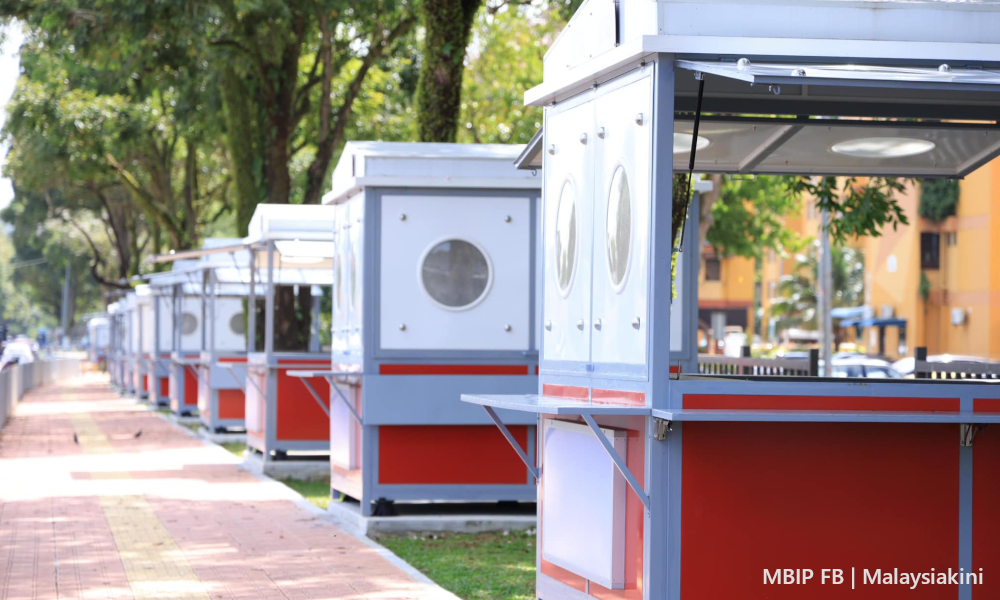
He also said that under MyKiosk 1.0, 2,926 out of 3,189 units are occupied, achieving a filling rate of 91.75 percent.
In May, MCA Youth lodged an MACC report calling for an investigation into the RM250 million MyKiosk project, questioning the procurement process and alleging that the kiosks were purchased at RM25,000 to RM34,000 each despite a purported market price of only RM12,800 per unit.
READ MORE: KINIGUIDE | MyKiosk: Hawker reform or costly white elephant?
On July 4, MACC chief commissioner Azam Baki said that there were no criminal elements in the investigation into the allegations, and that the MACC’s ongoing probe is related to governance issues.
‘We went to the MACC, they did not come to us’
In the Dewan Rakyat sitting today, Nga noted that the ministry itself proactively invited the anti-graft agency to examine the project.
“Previously, there were various allegations claiming that this was a white elephant project, and because of that, the ministry took the initiative itself to invite the MACC to investigate.
“MACC did not come to us; we went to them and submitted all the necessary documents,” he said, stressing that public servants’ contributions should be appreciated rather than smeared with baseless allegations.
Nonetheless, Nga acknowledged weaknesses in the project’s implementation, adding that the ministry has introduced reforms, including a “traffic light” system to benchmark local authorities’ performance in managing MyKiosk units.
He added that the local councils will now be awarded full marks if they achieve 100 percent occupancy among traders.
“In line with the ministry’s commitment to continuous improvement based on trader feedback, MyKiosk 2.0 has been upgraded in terms of design specifications to be more environmentally sustainable and equipped with better facilities, without any increase in rental rates.
“This initiative has successfully transformed the livelihoods of 7,243 hawkers and petty traders nationwide,” he said.
Among its success stories are a fried chicken seller at the Melaka International Trade Centre Square who now earns up to RM30,000 a month, and food and soymilk traders who have doubled their monthly incomes to RM18,000 after joining the programme.
The MyKiosk initiative aims to uplift micro, small and medium enterprises (MSMEs) by improving the socio-economic standing of local communities. MyKiosk 1.0 units cost approximately RM15,000 each, with local councils charging monthly rent under RM300 and waiving rental payments for the first six months.
MyKiosk 2.0, launched this year as a continuation of the initial programme, introduced upgraded kiosks with sturdier structures, hydraulic windows, ceiling fans, LED panels, and 1,000W solar systems, with unit costs reaching up to RM25,000.
Nga added that the government is also studying the potential launch of MyKiosk 3.0 to further enhance the initiative’s impact.
/file/publisher-c1a3f893382d2b2f8a9aa22a654d9c97/2025/05/a2d2a7cbfc53d52b667e023600547c69.jpg)
/file/publisher-c1a3f893382d2b2f8a9aa22a654d9c97/2025/05/0373d0ba0e96a79e702595afa678dd6b.png)
/file/publisher-c1a3f893382d2b2f8a9aa22a654d9c97/2025/05/445603ea8bd5b5c7997dda33607528d6.jpg)
/file/publisher-c1a3f893382d2b2f8a9aa22a654d9c97/2025/04/d978c0ff518e0fc61b4af8fe3085d896.jpg)


Are you sure you want to delete this comment?
This action cannot be undone.