


/file/publisher-c1a3f893382d2b2f8a9aa22a654d9c97/2023/11/f9997c56872f99c455bfda49d4e50898.jpg)

Govt scraps plans for high-value goods tax
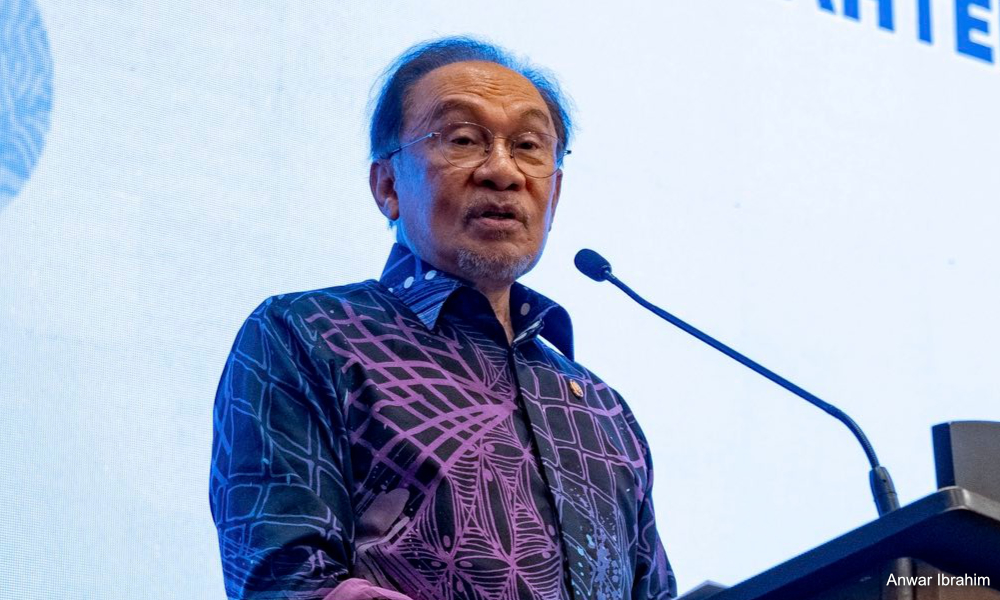
The Finance Ministry has decided not to implement the high-value goods tax (HVGT), said Prime Minister Anwar Ibrahim in a written parliamentary reply from yesterday.
He explained that the decision was made as the revision to the sales and service tax (SST), which has been expanded to between five and 10 percent, has taken into account luxury items.
The Finance Ministry has decided not to implement the high-value goods tax (HVGT), said Prime Minister Anwar Ibrahim in a written parliamentary reply from yesterday.
He explained that the decision was made as the revision to the sales and service tax (SST), which has been expanded to between five and 10 percent, has taken into account luxury items.
Anwar, who is also the finance minister, added that the SST expansion would generate RM5 billion in revenue this year, with the figures doubling to RM10 billion in 2026.
“The government has decided not to proceed with the implementation of the HVGT, but the principles behind the taxes have been implemented in the recently reviewed sales taxes, where luxury goods and discretionary items are already taxed at either five or 10 percent,” said Anwar.
He said this in response to Jempol MP Shamshulkahar Deli’s question regarding the ongoing progress and expected revenue from the implementation of several taxes, including the HVGT, the digital goods tax, capital gains tax, low-value goods tax (LVGT), SST, and the rationale behind the upcoming subsidy rationalisation.
The prime minister also explained that the revenue gained from the LVGT, which came into effect last year, has already recorded a revenue of RM500 million in 2024, and that the service tax on digital services, which has been implemented since 2020, recorded a revenue of RM1.6 billion in 2024.
He also noted that the capital gains tax (CGT), introduced in March 2024, is expected to bring in a total revenue of RM800 million annually.
Tax background
Pasir Mas MP Ahmad Fadhli Shaari, in December last year, had posed the same question to the government regarding the implementation of the HVGT.
In late 2023, Anwar announced the HVGT in his Budget 2024 speech, with an expected implementation date of May 1, 2024.
However, in March last year, Bernama reported that the government was still engaging with relevant stakeholders to finalise the details.
Anwar explained that the delay was to give more time to refine the policy and related legislation, ensuring its implementation would be orderly, efficient, and aligned with international best practices.
Muda had also criticised the delay, questioning why the government was quick to implement taxes on ordinary citizens, but hesitant to enforce luxury taxes for the rich.
/file/publisher-c1a3f893382d2b2f8a9aa22a654d9c97/2024/11/543fbd7ee0c031707a76510097169ff4.jpg)
/file/publisher-c1a3f893382d2b2f8a9aa22a654d9c97/2023/09/ae737bd3d40bcc77a0ae63a559a318dd.jpg)
/file/publisher-c1a3f893382d2b2f8a9aa22a654d9c97/2023/02/c7ef714de194bcf444a8e6cdfe9dd2ce.jpg)
/file/publisher-c1a3f893382d2b2f8a9aa22a654d9c97/2023/11/30613d80fc1a43bb4f3fa520ec1e191d.jpg)
/file/publisher-c1a3f893382d2b2f8a9aa22a654d9c97/2023/11/d5e62e4c1a02a45a5a2fdde690e74577.jpg)


Report this comment
Are you sure you want to delete this comment?
This action cannot be undone.