


/file/publisher-c1a3f893382d2b2f8a9aa22a654d9c97/2025/08/a954aa3c2eb403bd0cfdf03e0596d2c0.jpg)

Ex-MAS staff defends Boeing aircraft purchase, says they're safe
Malaysia Aviation Group (MAG) previously announced the acquisition of 30 new planes directly from Boeing as part of its aircraft modernisation strategy.
The order includes 18 Boeing 737-8s and...
Summary
The Malaysia Airlines System Retirees Association backs the government’s RM40 billion purchase of 30 new Boeing 737s.
Its president Shulhameed Marican says the jets underwent extensive audits after two fatal 737 Max crashes and assures they have since operated safely.
He notes the timing is right as Boeing is offering competitive prices while global demand for aircraft is high.
The Malaysia Airlines System Retirees Association (Masra) lauded the government’s move to purchase Boeing aircraft valued at US$9.5 billion (RM40 billion), assuring they are safe to use.
Malaysia Aviation Group (MAG) previously announced the acquisition of 30 new planes directly from Boeing as part of its aircraft modernisation strategy.
The order includes 18 Boeing 737-8s and 12 Boeing 737-10s, powered by CFM Leap-1B engines, with an option for 30 more 737s.
Boeing 737 Max jets were grounded worldwide between March 2019 and late 2020 after two catastrophic crashes involving the Max 8 model.
The first was Lion Air Flight 610, which crashed into the Java Sea shortly after take-off on Oct 29, 2018, killing all 181 passengers and eight crew members. The second was Ethiopian Airlines Flight 302, which crashed after take-off on March 10, 2019, killing all 149 passengers and eight crew members.
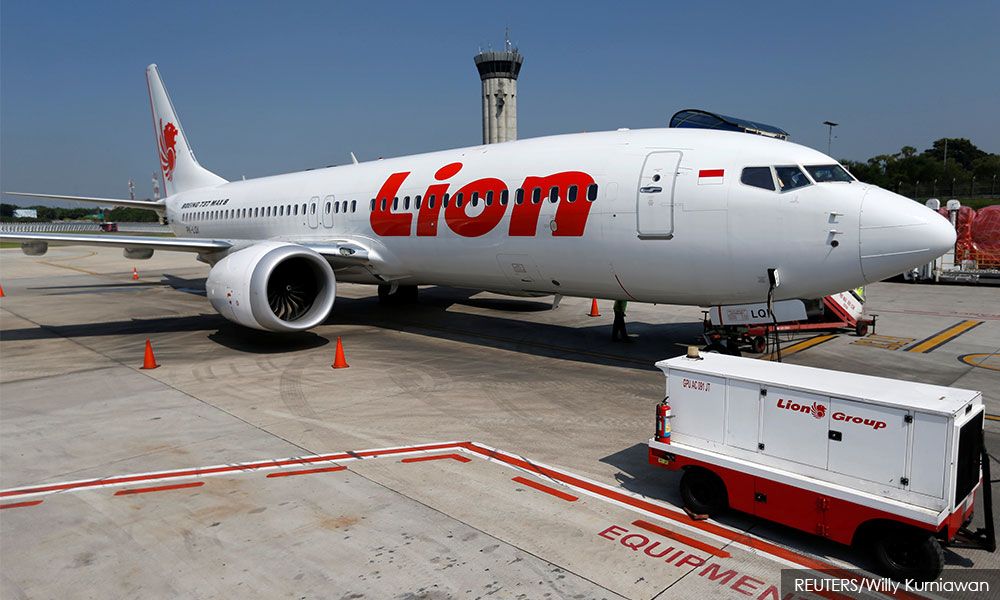
The incidents were partly attributed to the plane’s manoeuvring characteristics augmentation system (MCAS) - software intended to improve stability.
Boeing no longer uses the word “Max” on its newer planes, and now uses “737-8” for the Max 8 and “737-9” for the Max 9 models.
‘Most audited aircraft’
Masra president Shulhameed Marican assured the airworthiness of the Boeing 737-8s that MAG would purchase.
“This particular aircraft is the most audited aircraft since the incidents, from Boeing and then to the FAA (the US’ Federal Aviation Administration).
“So it has been checked from A to Z. Since the incidents, it has not experienced any problem,” he said during a media briefing on the purchase today.
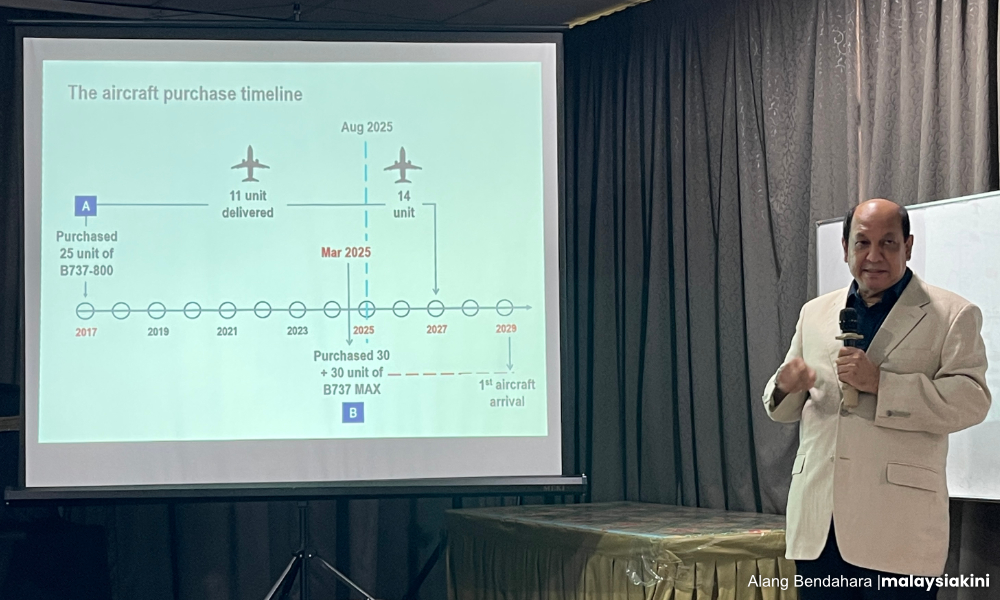
Shulhameed (top picture) also assured that there is ample time before MAG receives the first aircraft, expected in four years.
“By the time the aircraft arrives in 2029, every nook and corner will be looked into,” he said.
He added that the timing is also ripe for MAG and the government to announce the purchase, as, due to the incidents, the aircraft are being sold at competitive prices.
He also said that with the high standards of Malaysia Airlines pilots, there is no reason for any worry.
“Our pilots’ standards are very high. It has always been. As a trainer, I can tell you this. Every airline recognised Malaysian and Singaporean pilots’ licences for a simple reason, due to language (the mastery of English),” he said.
‘They have fixed it’
Another aviation expert at the media briefing, Amin Khan, echoed the same sentiment.
“It is unfortunate that the incidents happened, but after the crash, Boeing and the FAA re-examined the software, and it took them about two years.
“The fact is that they have fixed it, which means it is a good aircraft now,” said the former senior vice-president (Commercial Strategy) of Malaysia Airlines.
Amin admitted that in the early days after the crashes, he was scared to fly on the 737 Max and even contemplated making a U-turn upon flying on the particular model as he was nervous.
“But now I know it has been fixed. It is a good aircraft today. Based on the two incidents, it gives a learning curve to the engineers as to what happened,” he said.
Workhorse of an aircraft
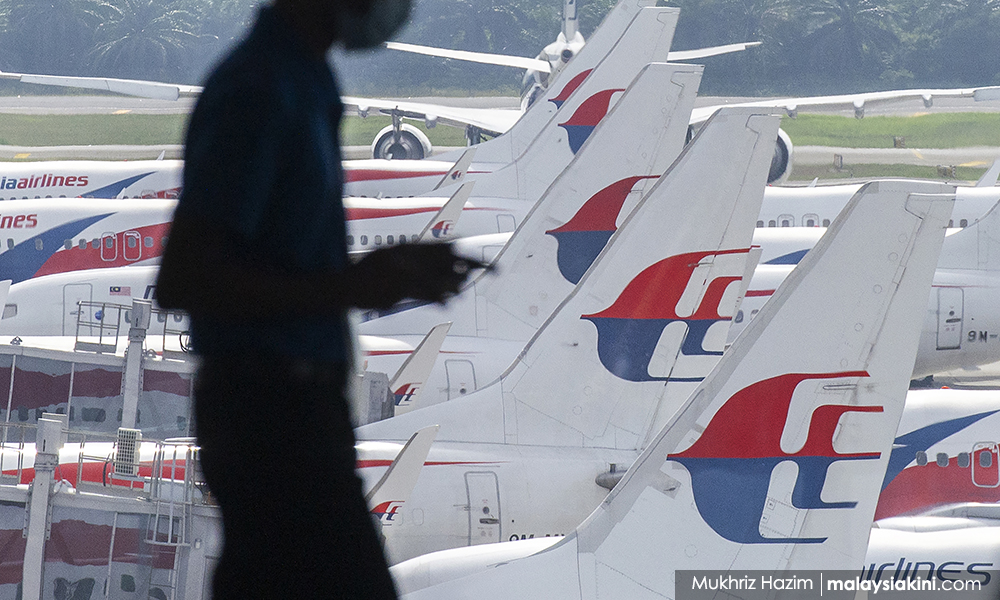
Shulhameed said the Boeing 737 has always been the choice of many airlines, including Malaysia Airlines.
“When I asked people how many Boeing 737s Malaysia Airlines has, many say a dozen or 30 or 40. It has 60, and yet other airlines have more.
“Boeing 737 is the workhorse of Malaysia Airlines,” he said.
Touching on the investment part of the deal, he said there is value in changing the aircraft to newer models.
“The average age of the Boeing 737 we have in the present system is 12.7 years, so by the time the new 737 comes in 2029, the current fleet will be 16 or 16.7 years old.
“So when new aircraft come in, the old go out, and there is resale value in it too, just like selling an old car when a new car arrives,” he said.
Making financial sense
Shulhameed said the timing is also very crucial, because if MAG does not buy now, it will lose out.
“If we do not order now, then you will not get the aircraft, as many manufacturers cannot keep up with the current demand, because during the Covid-19 pandemic, many people left the aircraft (manufacturing) industry,” he said.
Amin agreed, noting that it has not been easy to purchase aircraft post-pandemic, as the manufacturing capacity now is 20 percent lower and many airlines are rushing to purchase new planes.
“So it is a business decision whether to buy now or later, taking into consideration that it is very difficult to get new aircraft now,” he said.
Amin added that if MAG decides to buy later, it should consider whether it can get the aircraft later, as if it cannot, then it will be forced to lease.
“But (by) then the market will charge you at a higher price,” he explained.
Amin added that the purchase would not financially burden MAG or the government.
He explained that the down payment can be negotiated to less than 10 percent, after which the rest would be paid in instalments, like “buying a house”.
‘Tax money not used’
Previously, MAG announced the purchase of new Boeing aircraft to strengthen Malaysia’s position as a major player in the global aviation industry.
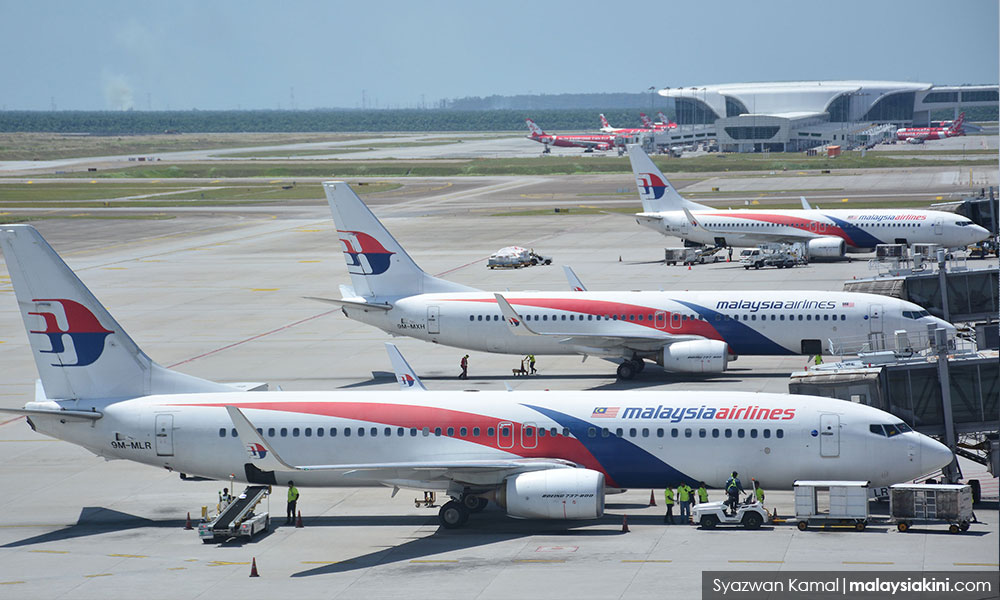
Globally, orders for hundreds of the American jets were announced by Japan, the United Arab Emirates, Indonesia, Cambodia, Bangladesh, and other countries as part of negotiations to reduce US tariffs.
Investment, Trade, and Industry Minister Tengku Zafrul Abdul Aziz reiterated that the recent acquisition of Boeing aircraft by MAG was a corporate move funded by the company’s coffers, not public funds.
Responding to questions raised over Malaysia’s perceived compromise in tariff negotiations with the US, Zafrul said, “The purchase of the aircraft was a strategic business decision by MAG and was financed using company funds and not the people’s tax money.”
/file/publisher-c1a3f893382d2b2f8a9aa22a654d9c97/2025/08/e44e01cadfcd24e9b42ca624b126b336.jpg)
/file/publisher-c1a3f893382d2b2f8a9aa22a654d9c97/2024/06/e229db050486450c62f992ed27eb2b70.jpg)
/file/publisher-c1a3f893382d2b2f8a9aa22a654d9c97/2020/01/aca5d7448b01c5e5412e7532621a9e8c.jpg)
/file/publisher-c1a3f893382d2b2f8a9aa22a654d9c97/2024/04/33056fcfd50628707032d666c2674039.jpg)
/file/publisher-c1a3f893382d2b2f8a9aa22a654d9c97/2025/07/cdadf4b622f1623945cc6005f9217663.jpg)


Are you sure you want to delete this comment?
This action cannot be undone.