


/file/publisher-c1a3f893382d2b2f8a9aa22a654d9c97/2023/10/fa849de98640ff2ae504397a158ab02a.jpg)

Bersatu man's acquittal raises doubts on justice system, says C4
Graft watchdog C4 Center has slammed the prosecution’s move to drop all 12 corruption and money laundering charges against Bersatu man Adam Radlan Adam Muhammad in exchange for a RM4.1 million compound payment.
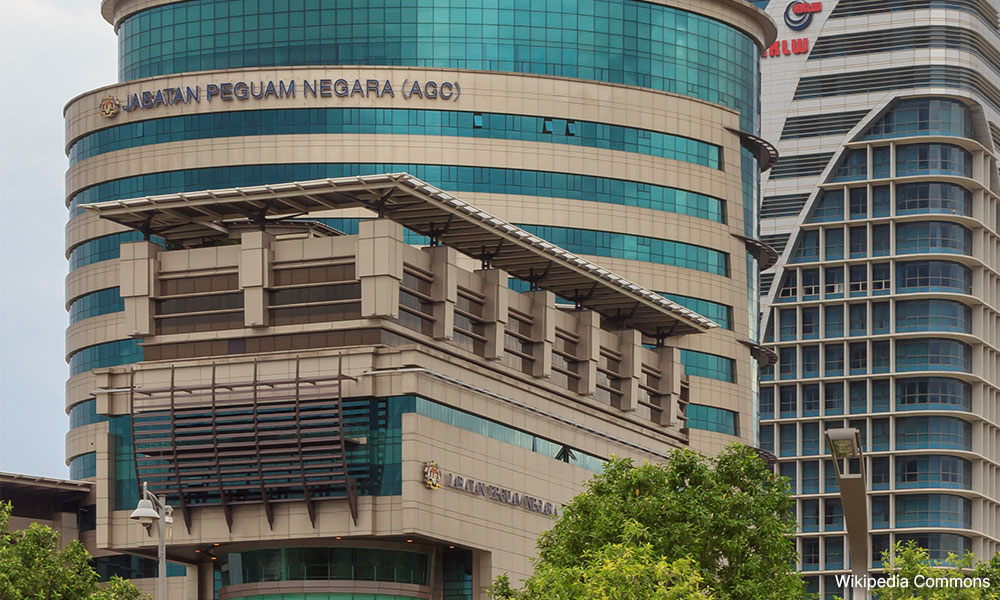
Asserting that the decision exposes weakness in prosecutorial transparency and casts doubt on the integrity of the nation’s criminal justice system, the NGO urged the Attorney-General’s Chambers (AGC) to further clarify the move.
Graft watchdog C4 Center has slammed the prosecution’s move to drop all 12 corruption and money laundering charges against Bersatu man Adam Radlan Adam Muhammad in exchange for a RM4.1 million compound payment.
Asserting that the decision exposes weakness in prosecutorial transparency and casts doubt on the integrity of the nation’s criminal justice system, the NGO urged the Attorney-General’s Chambers (AGC) to further clarify the move.
On Aug 20, Adam (above), who is also the Segambut Bersatu deputy chief, was granted an acquittal on five charges under Section 16(a)(A) of the MACC Act 2009 and seven charges under Section 4(1)(b) of the Anti-Money Laundering, Anti-Terrorist Financing and Proceeds of Unlawful Activities Act (AMLA) 2001.
C4 Center, however, argued that while Section 92(1) of AMLA allows for the compounding of “any offence under this Act or under regulations made under this Act”, there is no equivalent provision under the MACC Act.
“Section 92 of AMLA makes it exceptionally clear that this (compound) procedure only applies to offences under AMLA, so how can the prosecution use that provision to justify withdrawing the five charges under Section 16 of the MACC Act?” it questioned in a statement today.
“Simply put, they cannot justify it. The decision to drop the five charges of accepting or soliciting bribes was purely an exercise of prosecutorial discretion, unfettered by any clear criteria or guidelines,” it claimed.
It also said that the lack of transparency on the details contained within Adam’s letter of representation or the factors that supported the prosecution’s decision to accept the compound offer raises further questions on the matter.
“Therefore, C4 Center calls upon the AGC to provide more clarity on the perceived discrepancy in the decision to withdraw all charges against Adam, particularly if there were any other grounds that justified the withdrawal of the charges under the MACC Act.
“Additionally, the AGC must draft and publish clear prosecutorial guidelines, similar to the United Kingdom’s Code for Crown Prosecutors, to ensure criminal proceedings are conducted in the interest of justice and fairness,” it added.
Charges withdrawn, full acquittal
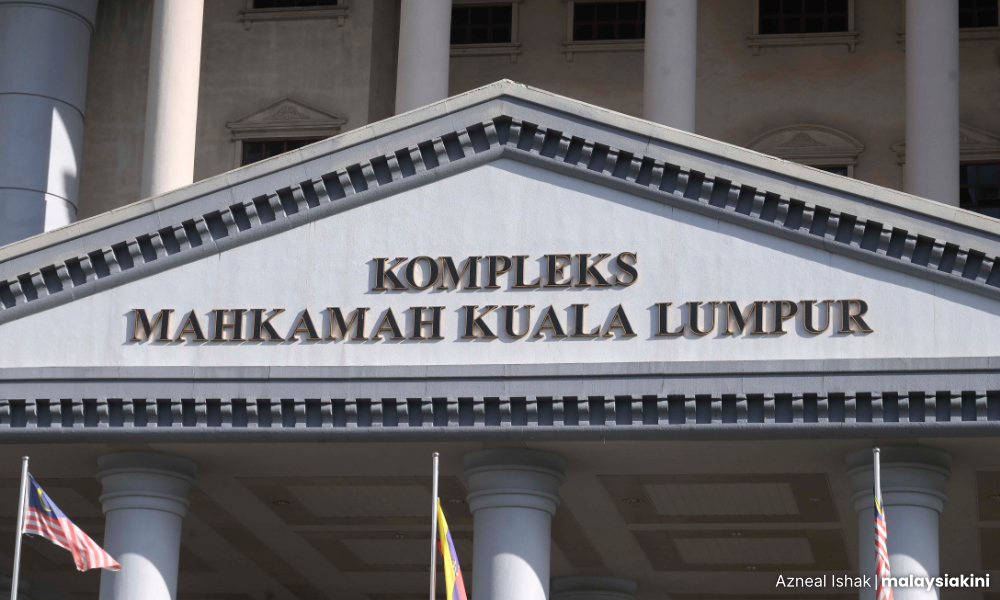
Kuala Lumpur Sessions Court judge Suzana Hussin had acquitted and discharged Adam after deputy public prosecutor Farah Yasmin Salleh submitted that the prosecution is withdrawing all charges filed against him, following the MACC’s acceptance of his representation letter on June 3.
Noting that the anti-graft agency agreed to a proposal for the RM4.1 million compound to be paid by Adam under Section 92(1) of AMLA, Farah had initially requested that the accused be granted a discharge not amounting to an acquittal.
However, the court granted Adam a full acquittal “as the prosecution has withdrawn all charges and no longer intends to pursue the case”.
C4 Center also stressed that Putrajaya’s plan to separate the roles of the attorney-general (AG) and the public prosecutor should not be considered the only solution to the “mounting trust deficit” against the country’s criminal justice system.
“Indeed, although the government has committed to the separation of these offices, there has not been any discussion on the measures that will be taken to ensure the independence of the new public prosecutor in conducting criminal prosecutions once the separation has been effected,” C4 Center said.
It also alleged that prosecutors have “for too long” relied on the “overly broad” discretion purportedly conferred upon them by virtue of Article 145(3) of the Federal Constitution on how the AG “shall have power, exercisable at his discretion, to institute, conduct or discontinue any proceedings for an offence”
“We hold that this cannot be an acceptable state of affairs in any functioning democracy - prosecutors must be subject to proportionate and necessary limits on their powers and discretion in order to ensure justice is upheld,” it emphasised.
/file/publisher-c1a3f893382d2b2f8a9aa22a654d9c97/2025/08/487fdaef3160b374ed9be08a552e9476.jpg)
/file/publisher-c1a3f893382d2b2f8a9aa22a654d9c97/2022/12/8fde8817a2e5e02d350fd76645a12789.jpg)
/file/publisher-c1a3f893382d2b2f8a9aa22a654d9c97/2025/04/79df9c5a875285670c93d7350bd6f1bd.jpg)
/file/publisher-c1a3f893382d2b2f8a9aa22a654d9c97/2025/06/065d24498a243245e33323a4c3d99b8a.jpg)
/file/1162/ddba1992ba76fe099a518e1213e7daeb.jpeg)
/file/publisher-c1a3f893382d2b2f8a9aa22a654d9c97/2024/08/dc6184404495ba5ee7ef7a33594fb187.jpg)


Report this comment
Are you sure you want to delete this comment?
This action cannot be undone.