


/file/publisher-c1a3f893382d2b2f8a9aa22a654d9c97/2020/07/45a4282aa762d43829a1245ae50c90e1.jpg)

Azalina: Govt studying abolishment of mandatory caning
The government has embarked on a comprehensive study into abolishing mandatory caning, marking a potential major shift in the country’s criminal justice system.
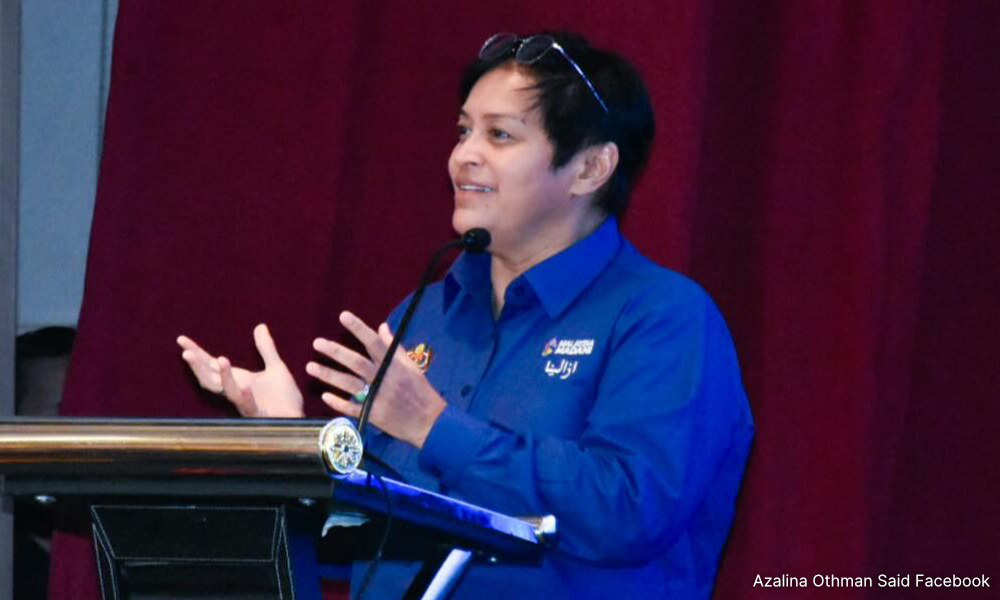
Minister in the Prime Minister’s Department (Law and Institutional Reform) Azalina Othman Said revealed that the government has established a sub-committee following growing concerns about the punishment’s effectiveness and its humanitarian implications.
The government has embarked on a comprehensive study into abolishing mandatory caning, marking a potential major shift in the country’s criminal justice system.
Minister in the Prime Minister’s Department (Law and Institutional Reform) Azalina Othman Said revealed that the government has established a sub-committee following growing concerns about the punishment’s effectiveness and its humanitarian implications.
“The Prime Minister’s Department’s Legal Affairs Division is examining the need to abolish mandatory caning sentences, in line with the approach that gives more scope for judicial discretion in determining appropriate forms and levels of punishment.
“Preliminary research found that there are 57 provisions under the Penal Code that provide for caning sentences. Of this total, there are 26 offences that prescribe mandatory caning,” Azalina explained in a written parliamentary reply.
Azalina was responding to S Kesavan (Harapan-Sungai Siput), who asked whether the government plans to implement any legal reforms regarding punishment, particularly after a prisoner died from being caned at the Taiping Prison last year.
‘Serious questions about medical treatment access’
Apart from the Penal Code, she said, other laws that provide for mandatory caning include the Dangerous Drugs Act 1952, the Immigration Act 1959/63, the Firearms (Increased Penalties) Act 1971, and the Sexual Offences Against Children Act 2017.
Azalina added that the Criminal Procedure Code requires a medical officer to be present during the execution of the punishment to ensure that the offender’s health is not seriously affected.
However, she noted that there are growing concerns about the long-term effects of the punishment, which potentially causes physical and psychological harm to prisoners, including medical treatment access issues after caning.
“The government takes note of an incident reported by Suhakam, where a prisoner at the Pokok Sena Prison was reported to have died after undergoing caning in 2024.
“The government is also aware that this incident raises serious questions about access to medical treatment and health monitoring after the implementation of punishment.
“In this regard, many other Commonwealth countries such as the United Kingdom, South Africa, India, and Canada have taken steps to abolish caning because it is seen as a form of cruel, inhumane, and degrading punishment,” she added, referring to a separate case where an inmate died after being caned.
No study on effectiveness
Azalina explained that to date, no comprehensive study has been conducted in Malaysia or in other Asean countries regarding caning’s effectiveness in preventing a criminal from reoffending.
The minister chaired a special meeting on the study of abolishing mandatory caning on June 23, involving various agencies, including the Home Ministry, the Prisons Department, the Health Ministry, the Federal Court Chief Registrar’s Office, police, Suhakam, and the Malaysian Bar.
Azalina revealed that in the meeting, various views and suggestions were put forward, including concerns about the long-term impact of caning and the need for a comprehensive study to assess the effectiveness and appropriateness of maintaining the mandatory aspect of the punishment.
“In line with the Madani government’s policy based on the principles of humanity, justice, and accountability, a comprehensive study is now being implemented to examine the effectiveness of mandatory caning,” she added.
The study is being coordinated via a special committee, which would submit a report to the criminal law reform committee, then to the deputy minister in the Prime Minister’s Department (Law and Institutional Reform), before it is tabled to Azalina, after which it would be submitted to the cabinet for a decision.
/file/publisher-c1a3f893382d2b2f8a9aa22a654d9c97/2025/08/fe9656153896373f0efb49f7a618cc66.jpg)
/file/publisher-c1a3f893382d2b2f8a9aa22a654d9c97/2021/12/ea23eddfa645b720c70c86703e0913ad.jpg)
/file/publisher-c1a3f893382d2b2f8a9aa22a654d9c97/2024/12/b21a0aabfe815b6bc547df2919ab2142.jpg)
/file/publisher-c1a3f893382d2b2f8a9aa22a654d9c97/2024/12/7899a2997d8064130b9b917179c648db.jpg)
/file/publisher-c1a3f893382d2b2f8a9aa22a654d9c97/2024/11/e31aa5d5df49926892604a64eb0e0590.jpg)


Are you sure you want to delete this comment?
This action cannot be undone.