


/file/publisher-c1a3f893382d2b2f8a9aa22a654d9c97/2024/05/a43c833d024ab041b045fd7f6a65f56d.jpg)

Zaid backs RCI on Petronas, urges probe Into S'wak leaders too
Zaid Ibrahim has backed a Sarawak senator’s call for a royal commission of inquiry (RCI) to investigate how Petronas utilised more than RM1 trillion in profits generated from the state’s oil and gas resources.
However, the former law minister said to be fair, the RCI should also look into Sarawak’s leadership.
“Equal standards of accountability...
Zaid Ibrahim has backed a Sarawak senator’s call for a royal commission of inquiry (RCI) to investigate how Petronas utilised more than RM1 trillion in profits generated from the state’s oil and gas resources.
However, the former law minister said to be fair, the RCI should also look into Sarawak’s leadership.
“Equal standards of accountability. If Sarawak demands transparency from Petronas, the same standard must apply to Sarawak’s own leadership.
“The RCI should, therefore, not only examine Petronas, but also how Sarawak leaders managed federal allocations, natural resources, and state-owned enterprises.
“At the heart of the commission’s work must be a simple question: ‘Why, despite trillions in oil wealth, are Sarawakians, especially rural and indigenous communities, still deprived?’” he said on X.
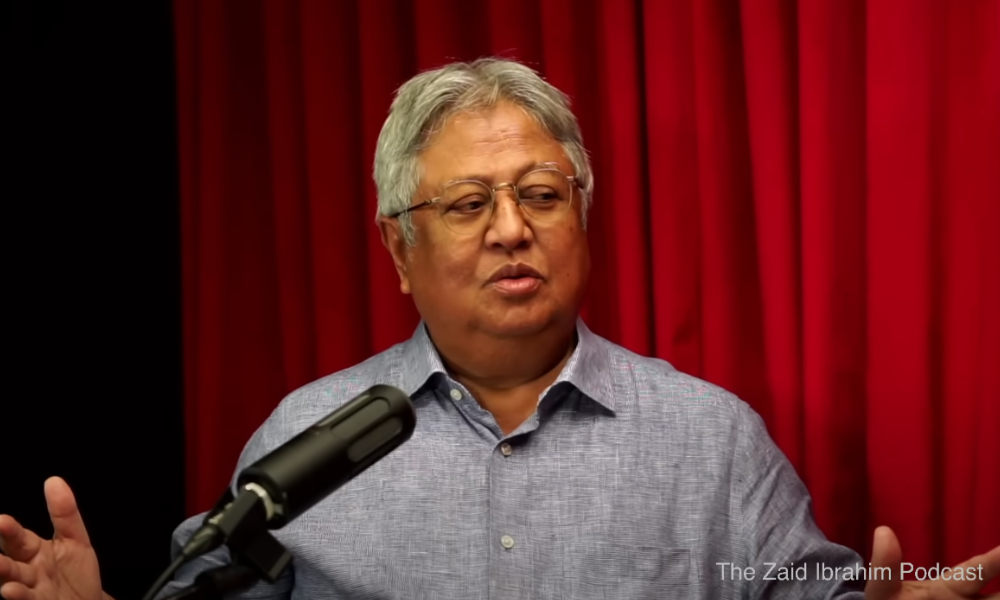
Zaid pointed out that for decades, billions flowed into Sarawak for schools, rural roads, and clinics, but audits have uncovered significant leakages.
Referring to the protracted reign of the late chief minister Taib Mahmud, the former minister raised allegations that contracts went to a small circle of politically-connected firms.
“Timber and oil palm revenues - these industries generated billions, yet indigenous landowners saw their forests taken, while poverty rates remained stubbornly high… What has changed?
“Petros (Petroliam Sarawak Bhd) and new energy ventures - Sarawak’s state oil company, Petros, now plays a central role in energy projects. But who scrutinises Petros?
“Why are details of its contracts opaque? Who benefits from new energy ventures - ordinary Sarawakians, or a select political business nexus?” he asked.
‘Real goose’
In debating the 13th Malaysia Plan in the Dewan Negara on Tuesday, Senator Robert Lau argued that while Petronas is often portrayed as the “golden goose” that sustained the nation during economic crises, the “real goose” is Sarawak and Petronas merely “collects its eggs”.
He lamented that while Sarawak has long poured its rich resources into fueling national development, it continues to trail as one of Malaysia’s slowest-growing economies.

“From 1970 to 1985, petroleum exports surged almost 29 percent annually, largely from Sarawak, helping the nation when tin and rubber prices collapsed.
“Yet, Sarawak recorded only 0.9 percent gross domestic product growth per annum (from 2016 to 2020),” he was quoted as saying by Dayak Daily.
Lau said the RCI must scrutinise Petronas’ handling of profits and propose reforms to strengthen transparency, fairness, and accountability in how revenues are shared with oil-producing states.
He also questioned why Sarawak’s natural gas was being exported while gas from Terengganu was retained to spur domestic industrial growth.
He stressed that this imbalance had deprived Sarawak of vital opportunities to industrialise, grow its economy, improve infrastructure, and uplift the livelihoods of its people.
Lau also took issue with claims that Sarawak’s push for greater control over its oil and gas resources could weaken Petronas and harm the nation.
/file/publisher-c1a3f893382d2b2f8a9aa22a654d9c97/2020/06/c0bad336e39a7517ee0d9f26f9a05392.jpg)
/file/publisher-c1a3f893382d2b2f8a9aa22a654d9c97/2019/06/b006b116ba08e47dec49bc572ca2944c.jpg)
/file/publisher-c1a3f893382d2b2f8a9aa22a654d9c97/2025/06/fb9573507d71e9e3f56ac11ed6f61455.jpg)
/file/publisher-c1a3f893382d2b2f8a9aa22a654d9c97/2025/05/7c20f6d0370061305ec7911004ad45c8.jpg)


Are you sure you want to delete this comment?
This action cannot be undone.