


/file/publisher-c1a3f893382d2b2f8a9aa22a654d9c97/2021/05/de3a18d68ec70435d29b23e16f1bf103.jpg)

Economists, MP: Rare earth terms in US trade agreement good deal
Experts have broadly agreed that Malaysia’s agreement to export rare earth to the United States comes with significant economic benefits.
Centre for Business and Policy Research chairperson Foo Lee Peng told Malaysiakini that the trade agreement could turn Malaysia into a lodestone for foreign investment into refining, magnet manufacturing, and component production.
Summary
Experts agree that Malaysia’s agreement to export rare earth to the US has significant economic benefits, with professor Foo Lee Peng highlighting a potential increase in future foreign investment.
Foo says this is a “strategic evolution” of Malaysia's role in the global value chain, which will also benefit Asean.
Economist Geoffrey Williams touts the regulation and reliability of US companies, while Ipoh Timor MP Howard Lee stresses the other country’s role as a clear and unambiguous option for rare earth exports.
Experts have broadly agreed that Malaysia’s agreement to export rare earth to the United States comes with significant economic benefits.
Centre for Business and Policy Research chairperson Foo Lee Peng told Malaysiakini that the trade agreement could turn Malaysia into a lodestone for foreign investment into refining, magnet manufacturing, and component production.
“It reflects Malaysia’s ambition to move higher up the global value chain by leveraging its estimated 16 million tonnes of rare earth reserves.
“In turn, the agreement with the US provides greater regulatory certainty, longer operating licences, and improved investor confidence in Malaysia’s mineral policies,” the Tunku Abdul Rahman University of Management and Technology economics department associate professor said.
Going up the global value chain
On Oct 26, Prime Minister Anwar Ibrahim and US President Donald Trump signed an extensive agreement on reciprocal trade, the terms of which prevent Malaysia from imposing any quotas on the export of critical minerals and rare earth to the US.
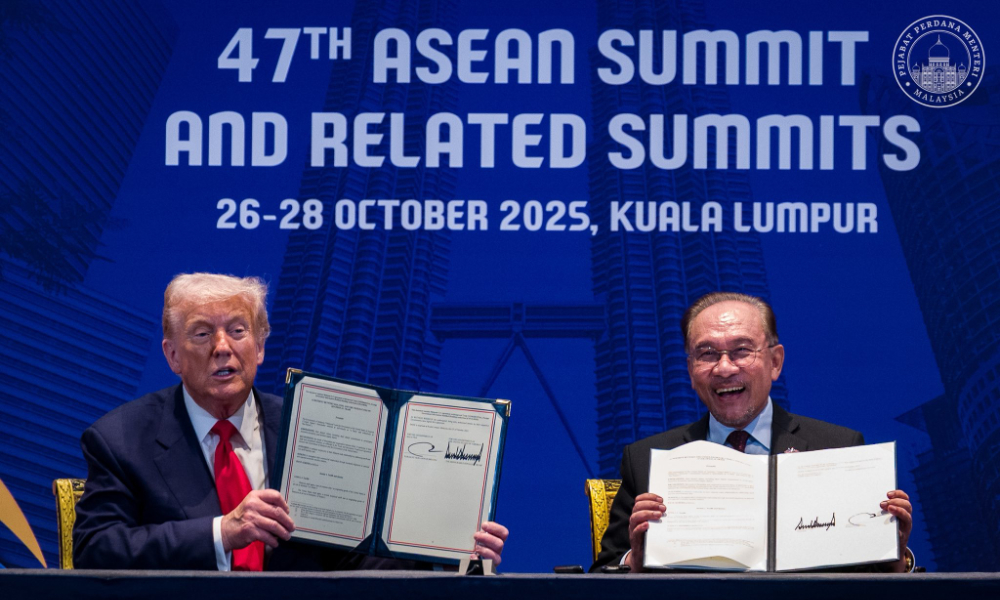
Foo said the deal marks a “strategic evolution” of Malaysia’s role in the global value chain.
“The country is moving beyond its traditional position as a manufacturing base to become a regional bridge that connects Southeast Asia’s resource potential with advanced technological innovation from the US,” she said.
She said Malaysia’s new role will bring diversity to the global rare earth supply network.
At the same time, it will enhance Southeast Asia’s reputation as a stable and sustainable source of critical minerals, leading to new opportunities for the region in technology cooperation, innovation partnerships, and green industrial development, she added.
Another economist, Geoffrey Williams, touched on the benefits of the regulation and reliability of US companies to Malaysia.
“The estimated reserves in Malaysia are more than RM1 trillion, so this is a precious national asset that must be exploited with reliable partnerships scrutinised by good governance practices,” he said.
This would reduce corruption, further benefiting Malaysians, the Bank Negara Malaysia visiting research fellow added.
Trade deal not exclusive
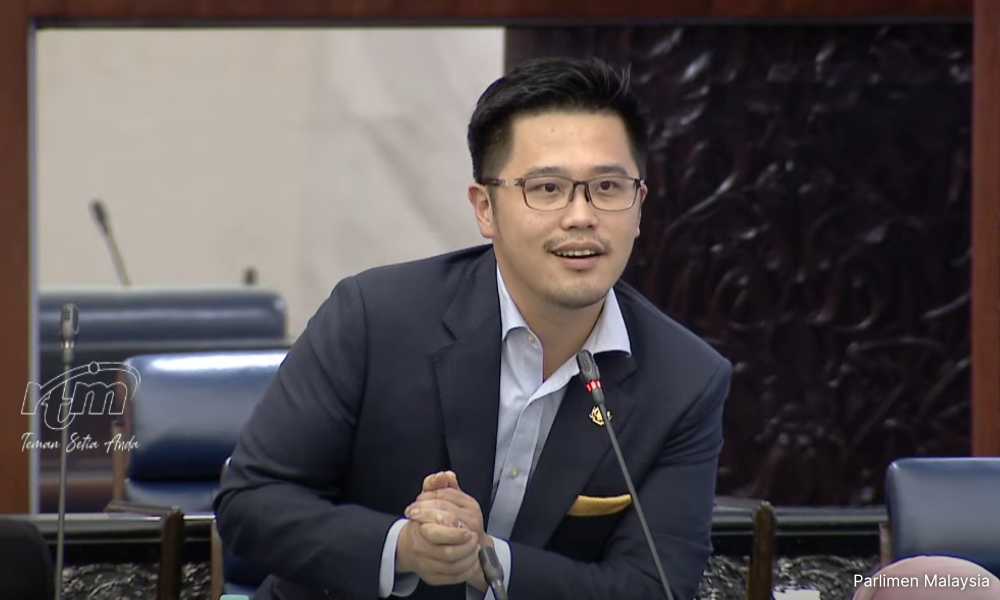
Ipoh Timor MP Howard Lee said the trade deal does not guarantee exclusivity to the US, but merely opens it up as a clear and unambiguous option.
Lee, commenting in his capacity as chairperson of the Malaysian Parliamentary Caucus for Critical Minerals, said supply chains reward such clarity.
He went on to echo US Ambassador to Malaysia Edgard D Kagan’s statement that Malaysia has not surrendered its sovereignty in making the agreement.
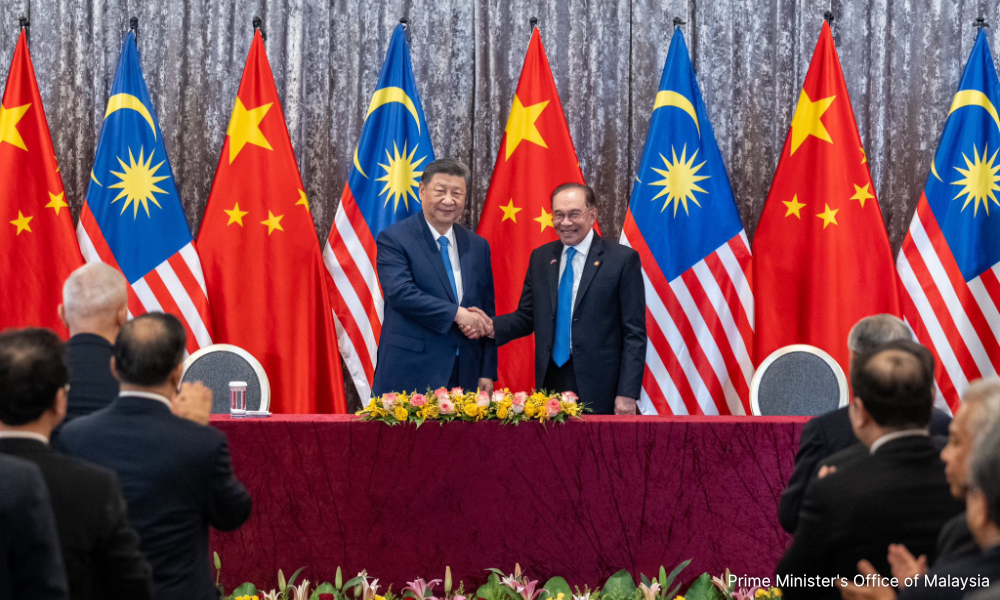
The deal is perceived to be a blow to China, which is the biggest miner and processor of rare earth minerals important for US automotive, defence, and high-tech hardware manufacturers.
The rare earth deal, which the US also struck with Thailand, would reduce US dependence on rare earth from China.
But besides exports, Article 5.2 of the agreement also requires Putrajaya to consult with Washington on investments in critical minerals and critical infrastructure, which may prove another hurdle for China-based companies.
Relations with China unaffected
When asked about the effects of the deal on Malaysia’s relationship with China, experts agreed that it was a non-issue.
Malaysia’s neutrality and practice of pragmatic cooperation ensure that it will continue to engage with other major economies, Foo said.
Williams further pointed out that China has its own rare earth deposits to focus on.
“The relationship with China should not be affected that much because there are no Chinese investments yet, and previous speculation on Chinese investments was quickly ruled out,” he added.
Expressing similar sentiments, Lee said the deal will reduce conflict at global rare earth choke points.
“By anchoring one line with US buyers and another with Asian partners, we reduce single point coercion, which is good for everyone and raises Malaysia’s bargaining power with all sides.
“So, of course it doesn’t (affect Malaysia’s relationship with China) because China understands reality as much as we do,” he added.
Ensuring states’ rights in rare earth extraction
Lee believed Malaysia’s leverage could be further increased through the formation of a national aggregator for rare earth and critical minerals.
“If all the states put their ore, products, or feedstock into one big national feedstock organised by this national aggregator, it will give them a better deal than they would if they were to go (to negotiate) separately.
“Then states get a better deal (as well as) stability, and the federation as a country, as an economy, has better leverage over the global supply and demand dynamics, especially against bigger conglomerates who will probably be wanting the best possible deal on the other side,” he opined.
The national aggregator, which he proposed to be called Mineral Strategic National, could impose conditions that benefit local communities through the development of infrastructure, provision of opportunities, and environmental protection, he explained.
For this to work equitably for all Malaysians, Lee said, mechanisms can be utilised to ensure states’ rights.
Similarly, Williams stressed the need for agreements to safeguard the revenue of states involved in rare earth mining.
“The rare earths deposits should benefit some of the underdeveloped states, but there must be a deal on the returns to ensure fairness and avoid the distribution issues seen in oil and gas reserves, which are still a source of dispute.
“Lessons must be learned from this experience,” he said.
Williams pointed to the recent court decision that ruled on Sabah’s constitutional entitlement to 40 percent of federal revenue collected from the state.
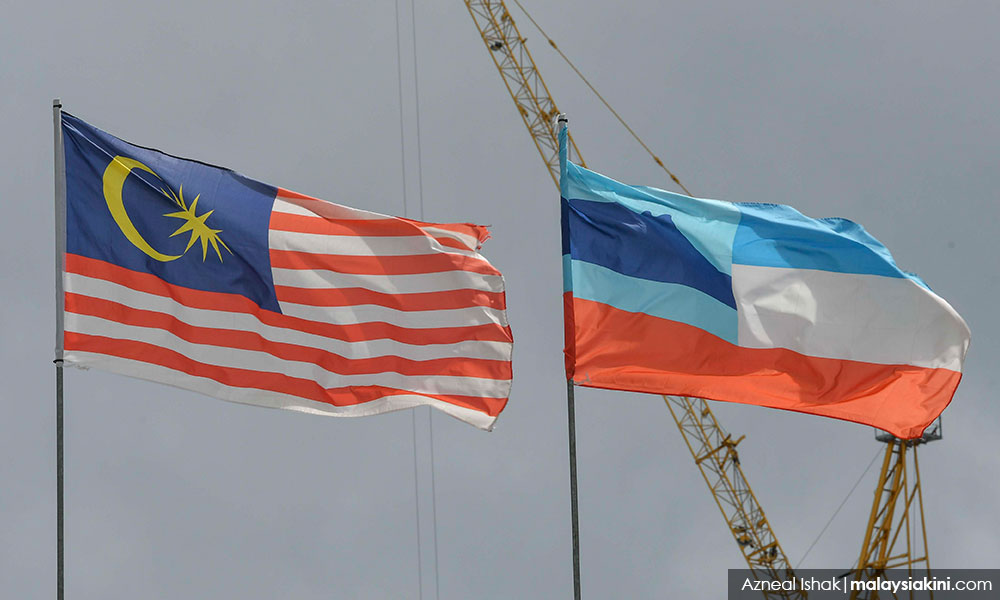
“A similar principle might apply to rare earth revenue since that is a natural resource just like oil,” he said.
Environmental concerns
Another issue would be the environmental impact of rare earth element mining.
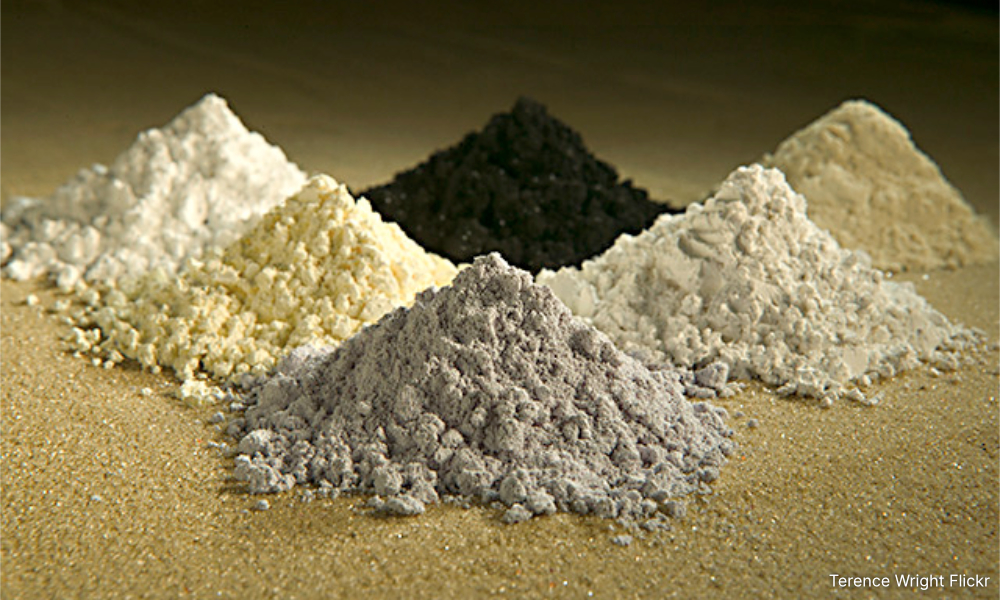
Despite the name, rare earth elements are relatively abundant, but they are produced in small amounts by processing large quantities of earth and rock.
The in-situ leaching method of mining requires the dissolution of rare earth elements with ammonium sulphate, which could leak into groundwater, surface water, and rivers, leading to the deaths of fish.
This mining process is also preceded by the removal of trees and vegetative cover, leading to greater soil erosion and the pollution of nearby rivers.
Foo called for the government to protect the environment through a robust monitoring system, consultation with local communities, and transparent waste management practices.
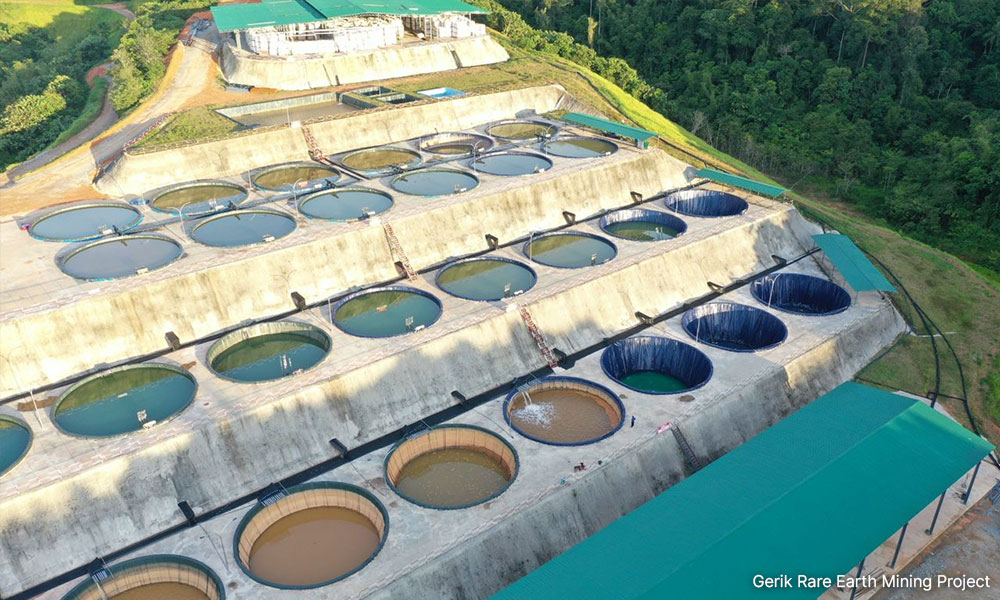
“Rare earth processing can produce hazardous waste, and Malaysia’s past experience highlights the need for strict regulation,” she said.
On the other hand, Lee expressed his view that Malaysia is in a position to say “no” to companies with questionable environmental practices.
“We either run the world’s cleanest in-situ leaching, ion adsorption clay operations, using waste vitrification, strict water baselines, using the best technology there is, invested by the most reputable of companies or operators there is, or we will shut it down or they will deserve to be shut down,” he said.
Williams presented a different take, relying again on US regulations.
“US companies are subject to the most stringent regulations in the world and are under constant scrutiny in a free media and civil society environment, which is much more effective than government regulation.
“There are more protections of the right of free speech in the US than in Malaysia, so any corruption or environmental damage will be called out by civil society and the media without fear or favour,” he said.
/file/publisher-c1a3f893382d2b2f8a9aa22a654d9c97/2025/10/195cf9b88c17aff58fb4363a6ac327e3.jpg)
/file/publisher-c1a3f893382d2b2f8a9aa22a654d9c97/2025/10/501a81d1633596890fbdb49d50bd2c5e.jpg)
/file/publisher-c1a3f893382d2b2f8a9aa22a654d9c97/2025/10/474ffb722c58c2121864010385957b45.jpg)
/file/publisher-c1a3f893382d2b2f8a9aa22a654d9c97/2025/07/f0b937528bea08ddead4373f89e8f079.jpg)
/file/publisher-c1a3f893382d2b2f8a9aa22a654d9c97/2019/02/a2e58e794c0deaab5d1047bf267647fe.jpg)
/file/publisher-c1a3f893382d2b2f8a9aa22a654d9c97/2024/08/9e28164e9bd2fccc380c4a76e1785cd6.jpg)


Report this comment
Are you sure you want to delete this comment?
This action cannot be undone.