
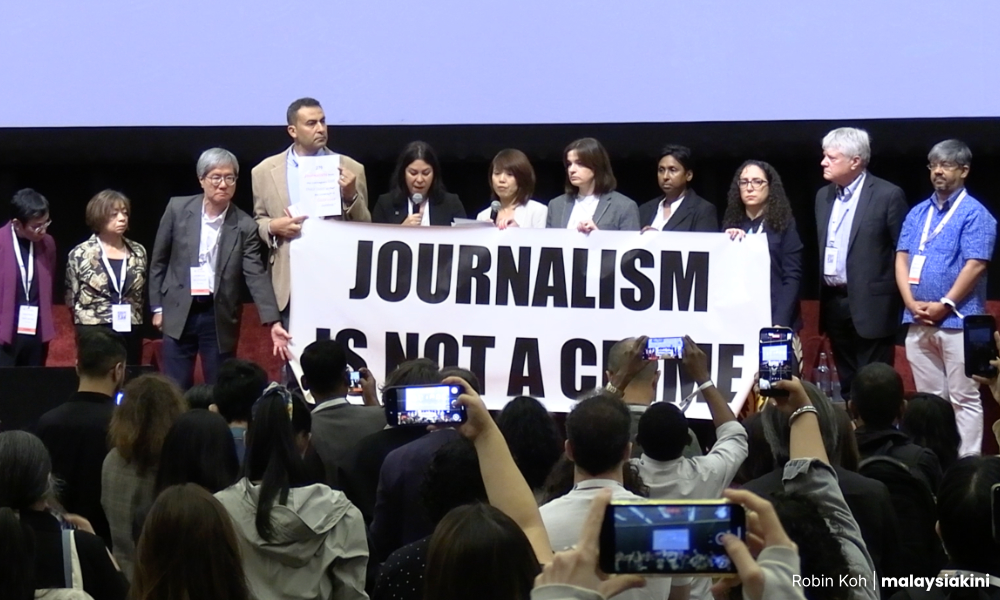
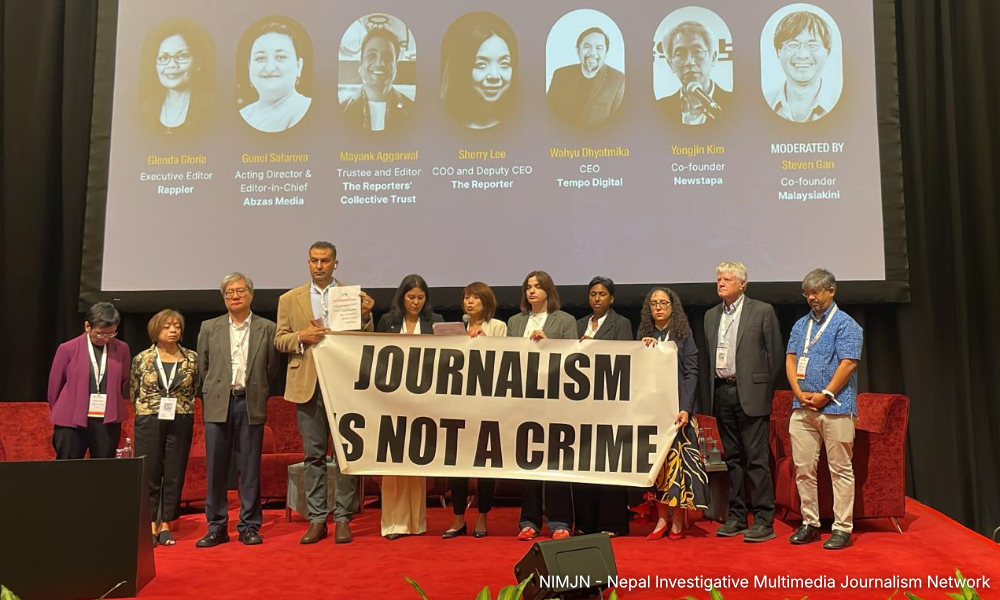
Investigative journalism remains resilient and unbowed despite facing multiple existential threats in a growing war of information and a global funding crisis.

These were among the key takeaways at the 14th Global Investigative Journalism Conference (GIJC) that formally kicked off in Kuala Lumpur today.

In welcoming the conference attendees, former Malaysian Media Council interim chairperson and Malaysiakini director Premesh Chandran emphasised that the driving force for change in a nation is the journalists.

“We are humbled to be the first host of this conference in Asia,” he said, noting the very real impact an independent press can have.

“In 2018, we had our first change of government in 60 years, and that was driven by journalists. Many here have been pushing the boundaries,” he added.

Former Malaysian Media Council interim chairperson and Malaysiakini director Premesh Chandran

The event, which took place from Nov 21 to 24, is co-hosted by GIJ Network and Malaysiakini, making it the first time the global conference has been held in Asia, with nearly 100 speakers and panellists at GIJC25 hailed from the continent and 1,500 investigative journalists from 135 countries and territories.

GIJ Network executive director Emilia Díaz-Struck, in her opening remarks, hit back at forces that seek to diminish, defund, or destroy watchdog reporters around the world.

“Investigative journalism is alive, and we are the proof.

“Despite all these challenges we’re facing - democracy going backwards, wars, more journalists in exile - we are alive; we are resilient; and we are doing the investigative journalism that is key for society: holding powers to account,” Díaz-Struck said.

‘Not content creators’

Nobel Prize laureate Maria Ressa, who was part of the keynote speakers, called for journalists to embrace innovation and “radical collaboration” amid the “battle for facts” against oligarchs, organised criminals, and authoritarian governments who are desperately trying to undermine the media.

“It’s a time for creation because everything we knew has been destroyed,” said Ressa.

Nobel Prize laureate Maria Ressa

She also urged the journalists assembled to distinguish fact-based reporting and story-based inquiry from the growing online deluge of misinformation and entertainment media.

“We are journalists, we are not content creators.

“We should not allow ourselves to be manipulated by the tech companies for their profit. Our goal is to tell the truth and hold the powerful accountable,” said Rappler’s CEO and co-founder.

GIJC25 participants have gathered in Malaysia for four-plus days of cutting-edge sessions and workshops, taught by best-in-class journalists and subject matter experts, sharing the latest reporting techniques and professional best practices across a range of topics

These include artificial intelligence and technology, satellite imagery, war crimes, exiled media, exposing corruption, climate change, and threats to elections and democracy.

Now in its 21st year, the GIJ Network has held 14 different global conferences.