




No vote of confidence for blind senator
Disabled activists are holding back their endorsement of Malaysia’s first blind senator Prof Dr Ismail Mohd Salleh, who was sworn in yesterday in Dewan Negara by reading his oath in braille.
Disabled activists are holding back their endorsement of Malaysia’s first blind senator Prof Dr Ismail Mohd Salleh, who was sworn in yesterday in Dewan Negara by reading his oath in braille.
Prof Dr Ismail Mohd Salleh, who is also president of the Malaysian Association for the Blind, promised that his senate position was to voice the issues of the disabled.
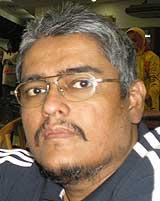 While wheelchair-bound activist Anthony Thanasayan (
left
) welcomes the appointment of a disabled senator, he is not convinced that this will result in significant changes for the disabled community.
While wheelchair-bound activist Anthony Thanasayan (
left
) welcomes the appointment of a disabled senator, he is not convinced that this will result in significant changes for the disabled community.
Referring to Ismail who is an academic and economist by profession, Anthony pointed out the newly-minted senator’s lack of direct involvement with the disabled community.
“He must get his hands dirty. It is crucial, otherwise there is no need for a (disabled) senator,” said Anthony who is also president of Petpositive, an animal-assisted therapy society for the disabled and elderly.
Disabled activist Francis Siva echoed calls for a disabled senator who can work effectively at the grassroots level but stressed that his views were not meant as a personal attack against Ismail.
“We need someone who actively voices out (whenever) disabled people are affected. We want people who can use the position (to help the disabled),” said Francis, president of Independent Living and Training Centre in Kuala Lumpur.
Anthony also expressed doubts that Ismail, who was nominated by Women, Family and Community Development Minister Shahrizat Abdul Jalil, would be able to speak up against government policies that discriminate against the disabled.
“We will be watching him very closely. If he does good, (then) well and good. We don’t want token (senators),” he added.
According to New Straits Times , Ismail plans to hold a congress for the disabled to discuss issues affecting them.
The 60-year-old academic also pledged to champion the rights and equal opportunities for the disabled in terms of rehabilitation, education, employment and accessible infrastructure.
Veteran disabled activist Chong Tuck Meng is skeptical of Ismail’s ability to look into a broad range of disability-related issues but nevertheless remains hopeful.
“We have to look at it positively... wait and see how he is going to do it,” said Chong, the advisor of a spinal cord injury support group, Pewira K9.
Bill will not change our lives
The disabled activists also slammed the Persons with Disabilities Bill, which was passed yesterday - the last day of this year’s parliamentary sittings.
The bill include the creation of a disabled registry and address legal issues and protection of the disabled.
It also outlines the power of the ministry to draw up rules and regulations, as well as the role of the proposed National Council for Persons with Disabilities.
The council is expected to play a key role in implementing policies and actions relating to the welfare, protection, support, rehabilitation and development of disabled persons.
The council will be headed by Women, Family and Community Development Minister Sharizat Abdul Jalil and representatives from local government, the Attorney-General’s Chambers as well as representatives of the human resource, health, transport and housing ministries.
“I don’t think the bill will change our lives (as it does not provide) direct access to rights. (It is) too general,” said Francis.
Francis and Anthony both urged for strict laws to end discrimination, be it for employment, opportunities and infrastructure access for disabled persons.
“We are against the charity approach. We want basic rights... and a decent life,” said Francis.


Are you sure you want to delete this comment?
This action cannot be undone.