


/file/publisher-c1a3f893382d2b2f8a9aa22a654d9c97/2024/12/707351b7bc217a0c1767e63624215cb5.jpg)

Govt moves to enhance tahfiz student protection - Zahid
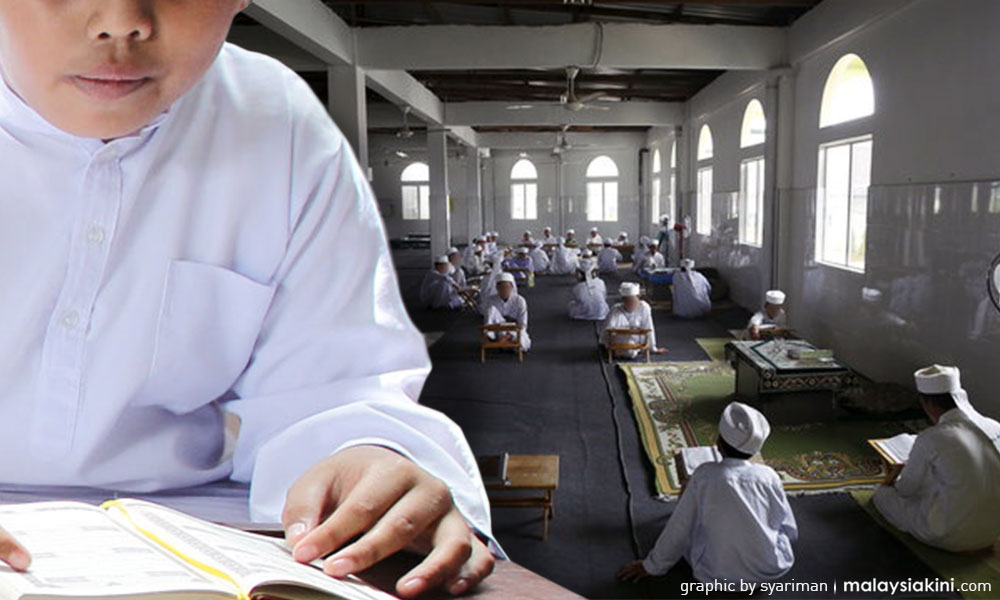
Deputy Prime Minister Ahmad Zahid Hamidi said in a statement today that this includes the Malaysia Tahfiz Recognition Standard (SPTM) and the National Tahfiz Education Policy (DPTN) 2.0, which is scheduled to be launched next year.
“The policy will focus on...
The government is formulating initiatives to strengthen the protection of tahfiz students and tighten governance.
Deputy Prime Minister Ahmad Zahid Hamidi said in a statement today that this includes the Malaysia Tahfiz Recognition Standard (SPTM) and the National Tahfiz Education Policy (DPTN) 2.0, which is scheduled to be launched next year.
“The policy will focus on strengthening legal compliance, enhancing the curriculum and the National Tahfiz Education model, empowering human capital and institutional governance, as well as expanding education pathways and the employability of huffaz,” he said.
Huffaz refer to Muslims who have memorised the Quran.
Zahid said SPTM, a key mechanism to standardise quality across tahfiz institutions, covers governance, student welfare, teaching quality, infrastructure, and legal compliance.
He said the standard will be launched this Sunday in conjunction with the Huffaz Gathering 2025 and Simfoni Dakwah Nusantara in Bagan Datuk, Perak, adding that it is designed to ensure a safe, disciplined, and ethical learning environment at tahfiz institutions.
“I am confident these integrated measures will form a strong foundation to restore public confidence, strengthen tahfiz institutions in a prudent manner, and ensure that Quranic education continues to develop within a humane, regulated, and compassion-based framework.
“May these efforts further elevate tahfiz institutions as platforms for producing huffaz who are knowledgeable, ethical, and respected, and who contribute to the well-being of the ummah and national development,” he said.
Tahfiz student abuse
Meanwhile, Zahid expressed deep regret over recent viral incidents involving violence against students at religious education institutions, including an incident in Sabah and footage showing the physical abuse of a tahfiz student.
He stressed that any form of violence, abuse, or treatment that violates the dignity of children is completely unacceptable, particularly when it occurs in institutions meant to nurture values of morality, compassion, and care.
Such acts, he said, not only harm the victims but also tarnish the reputation of Islamic education and tahfiz institutions, long regarded as pillars in shaping the character of the ummah.
In this regard, Zahid called for prompt and firm legal action against any individual found guilty, in accordance with existing laws, to uphold justice and prevent a recurrence.
“However, I stress that these isolated incidents do not represent the entire ecosystem of the nation’s tahfiz education.
“The majority of tahfiz institutions, teachers, and asatizah have carried out their responsibilities with dedication, wisdom, and accountability,” he said.
- Bernama
/file/publisher-c1a3f893382d2b2f8a9aa22a654d9c97/2025/04/7a1fd38210fd48b354a32c12435be881.jpg)
/file/publisher-c1a3f893382d2b2f8a9aa22a654d9c97/2020/10/aef2b00854807196d5d5054cfba4b041.jpg)


Are you sure you want to delete this comment?
This action cannot be undone.