




'Our baby milk products are safe'
Health Ministry Director General Dr Ismail Merican today said that Malaysian consumers need not worry about milk poisoning as the Malaysian government does not import baby dairy products from China.
Health Ministry director-general Dr Ismail Merican today said that Malaysian consumers need not worry about milk poisoning as the country does not import baby dairy products from China.
"The Health Ministry wants to stress that Malaysia does not import any baby dairy products from China.
"This has been confirmed by the Chinese embassy in Kuala Lumpur and our Veterinary Services Department, which is the body in charge of issuing permits for all animal-based products," said Ismail in a statement issued today.
 Ismail also said that whatever milk products imported from China were not based on milk provided by Chinese producers.
Instead, he said, these products were produced using dairy supplied from Australia and New Zealand.
"This is a requirement set by the Veterinary Services Department when issuing permits for dairy products imported from China due to risks caused by foot-and-mouth disease found in cows bred in the country," he further said in the statement.
China, a trading partner of Malaysia, hit the limelight for all the wrong reasons last week when the nation, at the expense of four infant fatalities and some 53,000 sickened babies, learnt that Chinese produced dairy products contained melamine.
Melamine has sometimes been unethically added into food products to boost their apparent protein content.
The protein levels of food products are done by measuring the nitrogen content, and adding nitrogen-rich compounds such as melamine can mislead the tests.
Melamine found in candies
Melamine, which has been blamed for causing kidney stones and kidney failure has been detected in formula milk powder from 22 dairies across China.
Initially the crisis was thought to have been confined to baby milk powder but further tests have found melamine in samples of liquid milk taken from China's two largest dairy producers, Mengniu Dairy Group and Yili Industrial Group, as well as Shanghai-based Bright Dairy.
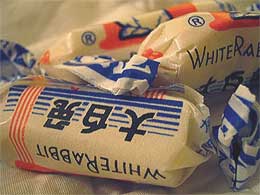 "According to latest information from the Singaporean based Agri-Food and Veterinary Authority, a product called the ‘White Creamy Candy' that is imported from China contains melamine.
"The (Malaysian) Health Ministry has widen its import blockage on all confectionary products containing milk, chocolate, chocolate milk, white chocolate and other milk-based foods imported from China," said Ismail.
He further said that the ministry has confiscated all of the said products and is also conducting nationwide monitoring.
Under Section 13 of the Food Act, any businesses found distributing food products containing melamine if found guilty is punishable by fine of not more than RM100,000 or jail time of no more 10 years or both.
"The ministry will always inform consumers on the latest status of the issue," said Ismail.
Nestle gives its assurance
Meanwhile, milk-product producers Nestle also assured consumers that all its products were safe for consumption.
"Nestle Malaysia would like to inform the public that the milk powder for all its dairy based products currently manufactured and distributed by the company are sourced from suppliers from Australia, New Zealand, Europe or the USA," it said in a statement today.
It added that it does not import any milk powders from China for all its Nestle milk powders in Malaysia.
Some of its products are Nan, Lactogen, Neslac, Nespray Everyday, Nestle Omega Plus, Milo, Nestle ice-cream and Nestle yogurt products.
The company said that all milk powders supplied to Nestle were checked and verified on safety and quality, adding that it applied strict quality control measures and risk assessment at all levels of its raw material sourcing and manufacturing processes.
"In addition, we have received a safety assurance from our largest milk powder supplier that states ‘all products sold and marketed outside China and Taiwan are free of any possibility of contamination with melamine from local Chinese raw milk and adhere to the strictest New Zealand and international standards'."
It also said that it had written to the Health Ministry to confirm the safety of its products.


Are you sure you want to delete this comment?
This action cannot be undone.