




Fong: Why I prefer to be a veep
exclusive The MCA poll on Oct 18 can hold little trepidation for vice-president Fong Chan Onn, for this will be his fifth outing in a contest that he has comfortably won twice before.
exclusive The MCA poll on Oct 18 can hold little trepidation for vice-president Fong Chan Onn, for this will be his fifth outing in a contest that he has comfortably won twice before.
Having held the post for 11 years now, he explained why he has chosen not to aim higher, despite rampant speculation that he would do so.
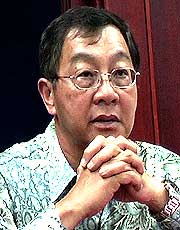 “The MCA is currently at the crossroads. With my experience and economic background, I can serve the party in specific areas,” Fong had written in his blogspot after declaring his candidacy for one of the four elected vice-presidential slots.
During the interview, he elaborated on this: “My strength is in the area of economics. I believe that, with my knowledge, experience and expertise, I can help the party leaders to formulate an economic roadmap which in turn can contribute to our nation’s efforts in facing prevailing economics-related challenges.
“….and this explains why I am not contesting the No. 1 and 2 posts. I truly believe that I am able to play a (better) role as a vice- president, contributing to economic development.”
However, he is critical of the MCA policy to restrict the presidency and various top posts to a three-term tenure, saying this must be reviewed.
Fong, 64, argued the policy creates more disadvantages than advantages: “While it creates more opportunities (for younger leaders), the disadvantage is that the party will lose more experienced leaders.”
Asked why he had endorsed the policy when it was proposed, he said this was “because I was a minister then….with vested interests”.
“There should be more flexibility in implementing it. In the past, it was an unwritten understanding (that a leader cannot hold a government post for a long time), but there was never a written guideline.
 “For example, hypothetically, if Ong Ka Ting
(right)
serves his third term until it expires in 2011 or 2012, a change in president will be necessary. (Since this will coincide with the next general election, it could) affect the party’s performance.”
“For example, hypothetically, if Ong Ka Ting
(right)
serves his third term until it expires in 2011 or 2012, a change in president will be necessary. (Since this will coincide with the next general election, it could) affect the party’s performance.”
He agreed that the leadership profile should be representative of all age groups to ensure continuity and gradual renewal, and that “delegates will look at the leader’s capability and not the age factor”.
Vocal response
On the party’s relationship with Umno, Fong cited the existence of ‘inbuilt understanding’ by way of “body language” among the three major ethnic-based parties in the ruling coalition Barisan Nasional (BN).
“I was deputy education minister for 8 to 9 years. Whenever we mention Chinese education, they (Umno) know what the community needs,” he explained.
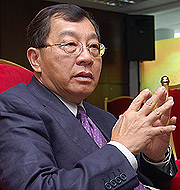 “Although MCA is Chinese-based, Malaysians want the leadership to be more vocal on many other national issues affecting them, for example on issues like public safety, corruption and use of the Internal Security Act (ISA).
“We spoke out in all sincerity against the ISA detention of (DAP parliamentarian) Teresa Kok. I am of the opinion that even (blogger) Raja Petra (Kamarudin) need not be detained under the ISA. He has written a lot. If the government thinks that these materials violate provisions of the (Sedition) Act, then charge him under this law.”
On public perceptions of reform within MCA, Fong disagreed that the party’s vocal stand since the March general election was merely to project a new image.
“This is what the people want to see. They do not want the party to react to issues in a week or two but immediately.”
Economic pie 'shrinking’
Fong, who is also the party’s Economics Bureau chairperson, has been a strong proponent of liberalising restrictive policies and reviewing outdated guidelines, to respond to globalisation.
This, he said, would, improve the environment for trade and commerce, as well as enable more effective competition with neighbouring countries.
On the New Economic Policy, Fong warned that the “shrinking economic pie” from year to year will affect bread-and-butter issues, especially with worsening inflation due mainly to higher petrol prices.
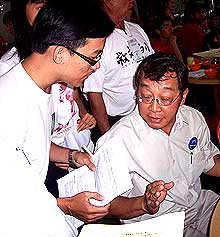 “We cannot waste any more time. We must liberalise (our economy) from the quota system, relax this restriction and be competitive with China, India and other Asean countries like Vietnam,” he said.
“If I am re-elected vice-president, I will help the party to draw up an economic blueprint. I will conduct a nationwide roadshow to explain (this to the grassroots) and obtain their feedback for consensus on economic-related decisions (and submit it via the party’s leadership) to the government.
“Another important area is the government’s role in assisting small- and medium-scale enterprises. MCA will continue to contribute to this.”
Fong further said Malaysia must be prepared for the fallout from economic and financial turmoil in the US, among other countries.
“We must be prepared. We must explain to the ground and the government must prepare contingency plans to face these challenges just as we did during the 1997 financial currency crisis.”
Another major challenge for the nation, he said, is to deal with the impact of the brain-drain. He cited Singapore’s success in stemming corruption and financial leakages by improving salary and wage structures.
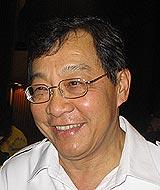 Fong, an electrical engineer by training, later obtained a doctorate in business administration. He was dean of the faculty of economics and administration at Universiti Malaya when former MCA president Dr Ling Liong Sik ‘helicoptered’ him into the party in 1990.
(The term refers to a party candidate being recruited to a political post without undergoing the tedious process of rank-and-file promotion.)
He was appointed deputy education minister (October 1990-December 1999), then promoted to cabinet minister with the human resources portfolio (December 1999 to March 2008).
However, he was dropped from the cabinet following the general election in March, although he was one of only 15 successful MCA parliamentarians - he retained the Alor Gajah seat.
During Ling’s tenure, he played a key role as party representative in the National Economic Consultative Council and in the Tunku Abdul Rahman University Council.
Fong is a blogger and a prolific writer on socio-economic issues like poverty, industrialisation and population. He has authored eight books and written 43 chapters for international journals.


Are you sure you want to delete this comment?
This action cannot be undone.