




Looking beyond the scars
On the morning of Jan 20, Kugan Ananthan took his last breath inside a police station. The events which followed would ensure that he becomes a household name albeit under the most tragic of circumstances.
On the morning of Jan 20, Kugan Ananthan took his last breath inside a police station. The events which followed would ensure that he becomes a household name albeit under the most tragic of circumstances.
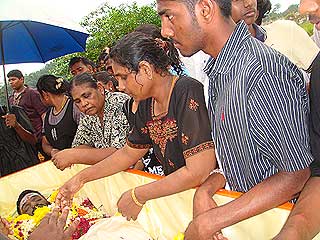
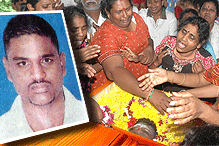 Much had happened since that fateful Tuesday when the 22-year-old youth slumped to the floor, never to regain consciousness, five days after he was apprehended in connection with several car theft cases.
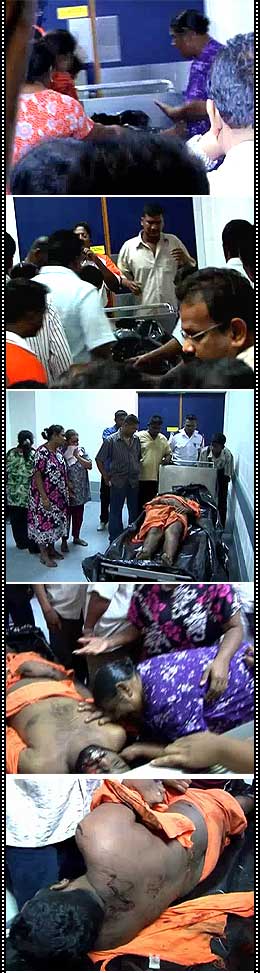
In the wake of enormous public and political pressure as well as a damning video clip which revealed severe lacerations and swellings on the corpse, the attorney-general was forced to intervene and reclassify the case as murder.
The incident became the focal point of the nation and debates raged in the media and elsewhere. Most were appalled by the (alleged) beatings while there were also those who felt that it was somewhat of a befitting end for a person who (allegedly) dabbled in crime.
Having been raised in the same neighbourhood as Kugan and having had the misfortune of being exposed to the 'darker' side of life, I feel compelled to point out that the case should not be viewed from the simplistic vantage point of black and white.
 For starters, given the possibility that he was guilty of the crime he had been accused of, it is for the courts and not the police to punish him according to the letter of the law.
On that note, we should also look at the economical, social and psychological factors which had purportedly driven the 22-year-old and many more youths like him to turn to a life of lawbreaking?
Or do we simply conclude that some are born with a criminal gene and condone the arbitrary snuffing out of their lives?
Do we ignore the root causes, similar to what the experts cite when debating on terrorism, and turn a blind eye and deaf ear instead of instituting the necessary changes and putting in place the mechanisms that would help address and even stem this problem?
While the various quarters who had come forward to ensure that justice is served in this case deserve to be lauded, they must however also work towards preventing more Kugans from landing in police stations in the first place.
'No difference between criminals and cops'
During a heated debate on this matter recently, a learned friend had lamented that the state of the world is such that justice is meted out swiftly on 'simple' criminals whereas corporate and political buccaneers whose 'crimes' affect thousands were left to roam the streets free with honorific titles bestowed upon them.
 He had also surmised that there was little if no difference between the police and criminals, lest for one donning the uniform and badge.
If the police had indeed played judge and executioner in this case, it would mean that Kugan was unjustly robbed of the opportunity of rehabilitation and that proverbial hope of turning over a new leaf.
Let us ponder upon this possibility for a moment:
Police investigations garner sufficient evidence to charge the suspect in court. After a lengthy trial, he is found guilty and sentenced to serve X amount of years in prison. During this period, the youth decides to embark on a little soul-searching and introspection. His parents, during their visits to the prison, also do their best to coax him into following the right path. So he resolves to change, and upon his release, becomes a productive citizen.
The pessimists amongst us would dismiss this as remote, if not impossible. And rightly so, since the statistics favour the contrary. But the optimists would point out that there always exist anomalies to the norm.
Unfortunately in this case, it was fatalism that prevailed while the rest of us shall remain in the dark forever as to what would have become of the youth if he had lived passed that fateful Tuesday.
For years, I have heard tales of how suspects were beaten up with cables, rubber hoses and an assortment of other instruments with some even claiming that they had chillies rubbed on their genitals. All in the name of investigation.
Disturbingly, this had become the accepted fate for an individual, especially those from the subaltern segments of society, who is hauled away to a police station as a suspect.
If crimes could be solved with the employment of such primitive and archaic methods, then why does the government need to waste funds on police training centres and so forth. Why the need for a forensics unit and experts to perform fingerprint dusting and DNA tests?
Would not a simple three-month course in the basics of kick-boxing be sufficient to achieve the two-pronged targets of lowering the crime rate and easing congestion in prisons?
Lest we forget, our nation had even witnessed a former deputy premier being socked black and blue in the face by a former inspector-general of police during detention, what more ordinary suspects.
Not all cops have a vicious streak
However, having been a crime reporter and having worked closely with the police, I am also compelled to point out that not all cops have a vicious streak and the issue of police brutality is also not a simple case of black and white.
And just like Kugan (allegedly) turning to a life of crime, the root causes as to why some police personnel turn to violence must also be studied in depth.
 Apart from being understaffed, the police force, particularly the rank and file, consist of many frustrated personnel who are overworked and underpaid. And this frustration needs an outlet, sometimes culminating in devastating results.
While there is a pressing need to implement a mechanism like the Independent Police Misconduct and Complaints Commission to ensure that cops who cross the line face the music, which would also serve as a deterrent to others, concrete measures must also be taken to address their woes and plug the shortcomings.
As pointed out by certain quarters, the training modules for police officers and personnel must be reviewed to ensure that recruits have greater exposure and stricter adherence to ethics and human rights.
The government, politicians and civil society must look beyond the scars and view the big picture in order to prevent such cases from recurring.
RK ANAND is a member of the Malaysiakini team.


Are you sure you want to delete this comment?
This action cannot be undone.