


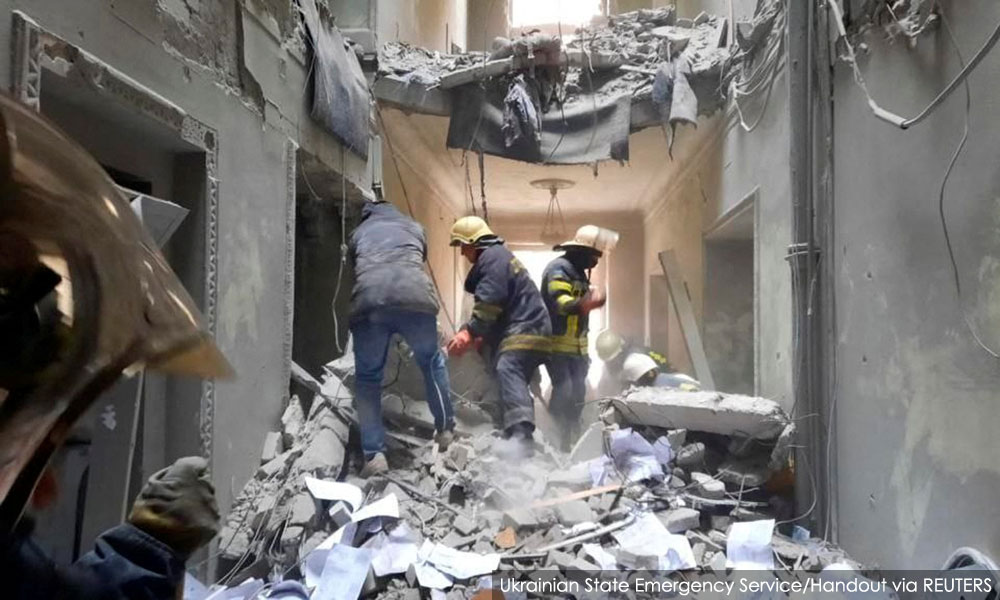

Red Cross seeks funds for Ukraine aid as humanitarian crisis mounts
Red Cross agencies appealed on Tuesday for 250 million Swiss francs (RM1.14 billion) to provide food, water and shelter to millions of people in Ukraine where the humanitarian situation is "deteriorating rapidly" and to those who have fled abroad.
The International Committee of the Red Cross (ICRC) and the International Federation of the Red Cross and Red Crescent Societies - the world's largest disaster relief network - issued the joint appeal as a huge Russian armoured column bore down on Kyiv, six days after Moscow's invasion began.
"We need the funds in order to address the humanitarian needs which are already staggering...
Red Cross agencies appealed on Tuesday for 250 million Swiss francs (RM1.14 billion) to provide food, water and shelter to millions of people in Ukraine where the humanitarian situation is "deteriorating rapidly" and to those who have fled abroad.
The International Committee of the Red Cross (ICRC) and the International Federation of the Red Cross and Red Crescent Societies - the world's largest disaster relief network - issued the joint appeal as a huge Russian armoured column bore down on Kyiv, six days after Moscow's invasion began.
"We need the funds in order to address the humanitarian needs which are already staggering - food, water, shelter, healthcare, psychological support - and they are growing by the hour," Martin Schuepp, ICRC regional director for Europe and Central Asia, told a news briefing.
A priority was to reach people detained during the conflict and the ICRC is in touch with all sides regarding visits to detainees, he said. All sides have an obligation to facilitate the return of dead bodies, and ICRC teams are ready to help but remain limited in their movement due to insecurity, he added.
‘I saw war’
Meanwhile, Ukrainians arriving into the European Union on Tuesday described their frantic journeys to the border after leaving behind husbands and fathers to fight a Russian invasion and escaping their homes to the sound of shelling.
As a massive Russian convoy rumbles toward the Ukrainian capital Kyiv, the United Nations said more than 500,000 refugees had fled to neighbouring countries since Russian President Vladimir Putin launched what he has called "a special military operation" last Thursday.
At the Hungarian border crossing Tiszabecs, a young mother cradled a baby in her arms as she and her son recounted watching rockets stream through the air before they drove for four days from the capital Kyiv.
"I saw war, I saw rockets," said 15-year-old Ivan, who looked exhausted and pale after the journey. The family, whose father stayed behind to fight, travelled in two cars carrying Ivan's three sisters, two aunts and grandmother.
New arrivals continued to pour across central European border crossings, with news of fierce fighting, civilian deaths and the massive Russian convoy stoking worries of those fleeing the war.
Across central Europe, authorities set up makeshift reception centres in tents where people could get medical aid and process asylum papers, while thousands of volunteers have driven to the borders with donations of food, blankets and clothes.
Most of the refugees escaping the war have crossed into the European Union from borders in eastern Poland, Slovakia and Hungary and in northern and northeastern Romania.
Poland, whose Ukrainian community of around 1 million is the region's largest, has welcomed a big chunk of the arrivals. The Polish Border Guard said that over 377,400 people had so far entered from Ukraine, with around 24,000 arriving on Tuesday since 7am local time.
At the Medyka crossing, Poland's busiest along its roughly 500km border with Ukraine, people huddled around a bonfire in freezing temperatures as they waited for buses to take them to reception centres. Discarded bottles, clothes and other items littered the road, and a few hundred people gathered near a local grocery store.
‘Everything hurts right now’
Also at the crossing was Ibrahima Sory Keita, who had arrived in Meliptopol three weeks ago from Guinea to begin studies.
Cities under siege across Ukraine are home to tens of thousands of African students studying medicine, engineering and military affairs. Thousands of Indian students are also trying to flee.
Keita and a few friends raced to the border when fighting broke out, walking the final 45km on foot.
"Everything hurts right now," he said after crossing the border. "I haven't had a chance to lie down for four days. I am shaking (from the cold) and I need to sleep in a warm place."
Some refugees were met by family members already working in the European Union who waited at the many border crossings, while local residents and officials across the region offered apartments and set up reception centres for temporary lodging.
Hungarian police reported that more than 60,000 people have arrived in the country since the Russian invasion while nearly 90,000 have entered Romania.
At some border crossing, queues on the Ukrainian side stretched back for kilometres.
At the Budapest train station a newly-arrived Ukrainian man in his 60s met by volunteer workers worried about his sons who stayed behind in Kyiv and wondered whether he would ever return to his home.
"I think this war will be very long in time," said Amir, who did not want to give his last name. "I left my house, my car, all of my profit in my life, I left all. We have nothing now."
A United Nations agency said at least 136 civilians have been killed, including 13 children, and 400 have been injured since Russia invaded Ukraine last week.
"The real toll is likely to be much higher," Liz Throssell, a spokesperson for the UN human rights office (OHCHR), told a briefing, adding that 253 of the casualties were in the Donetsk and Luhansk regions in eastern Ukraine.
The UN World Food Programme is scaling up activities in Ukraine so that it can support up to 3.1 million people, WFP spokesperson Tomson Phiri said, adding: "Food supplies are running low."
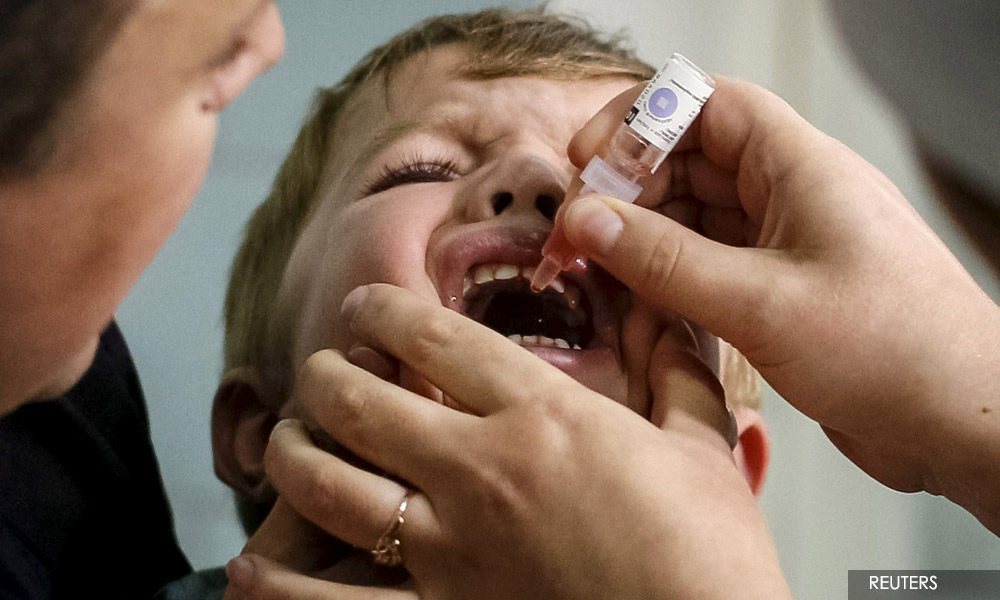
Earlier, the World Health Organization sounded the alarm on Ukraine’s depleting medical supplies, including vaccines needed to control polio and Covid-19 outbreaks and oxygen for ICU patients.
- Reuters
Russian column bears down on Kyiv as battle for Ukraine capital intensifies
Fears of medical shortages and disease in Ukraine after invasion
Rockets kill 70 Ukrainian soldiers, huge Russian column approaches Kyiv
British intelligence indicates Russian advance on Kyiv has made little progress
UN General Assembly set to isolate Russia over Ukraine invasion
Taekwondo: Putin stripped of black belt over Ukraine invasion


Report this comment
Are you sure you want to delete this comment?
This action cannot be undone.