




2 Malaysia in health services
As we approach September 16, the date on which Sarawak achieved independence through by joing Malaysia 46 years ago, my thought turns to the progress made in developing my home state.
The Malaysiakini report on the failed Flying Doctor Service is particularly illuminating, in highlighting the problems of public health care for the rural dwellers of Sarawak - and Sabah as well.
Readers of Malaysiakini are probably urban dwellers for whom medical facilities are taken for granted, along with clean water, sanitation, good roads, and all the amenities that are available aplenty in large cities and towns
As we approach September 16, the date on which Sarawak achieved independence through by joing Malaysia 46 years ago, my thought turns to the progress made in developing my home state.
The Malaysiakini report on the failed Flying Doctor Servic e is particularly illuminating, in highlighting the problems of public health care for the rural dwellers of Sarawak - and Sabah as well.
 Readers of
Malaysiakini
are probably urban dwellers for whom medical facilities are taken for granted, along with clean water, sanitation, good roads, and all the amenities that are available aplenty in large cities and towns
Readers of
Malaysiakini
are probably urban dwellers for whom medical facilities are taken for granted, along with clean water, sanitation, good roads, and all the amenities that are available aplenty in large cities and towns
If you get sick, there is always the neighbourhood GP's clinic; a jab and some pills will take care of the usual minor-ailments.
If you are really sick, there are always the public or private general hospitals with all the latest sophisticated medial equipment and the professional expertise at your disposal, as long as you can pay the bills.
But imagine this: what do you do when you get sick if you are a citizen living in a remote village in the deep interior of Sarawak?
Well, you try to consult the old folk or the local village healer, look for traditional medicines like some herbs and roots, and try to sleep off your ailment.
If you are afflicted with some serious conditions like cancer or a difficult child birth, you just lie down and wait to die.
In my travels throughout Sarawak a long time ago, I have seen many rural Sarawakians just lying down and waiting to die. Why?
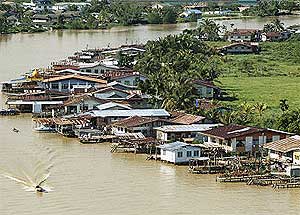
In the upper reaches of the great rivers in Sarawak, transportation facilities are really primitive.
The only semblance of medical facilities are the rural clinics run by a dresser or a nurse, and access to them may mean hours of walking on foot and travelling in a small boat up and down those infamous rapids.
And the medical personnel and the facilities are usually not sufficient to handle really serious cases at all.
Dubious deals and deaths
Let's take the upper or middle Baram regions for instance.
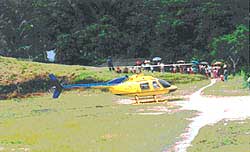
In the vast mountainous terrain of that area, the only way to send the patients with a serious medical condition is to fly them down to the Miri General Hospital in a helicopter.
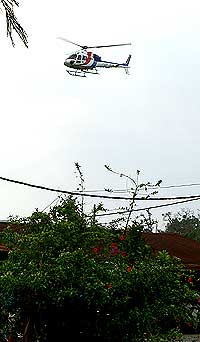 That is why my blood boiled when I read about the failure of the contractor who had not fulfilled their contract agreement to provide a helicopter service.
How many rural patients have died because of their dubious deals?
The other alternative is for the rural patients to take a boat ride down the treacherous water of the Baram for many hours.
The Penans and the Orang Ulu who live in the upper reaches of the river do not always have the kind of cash to pay for the fare.
Let's say our rural patients finally get to the Miri GH one way or another.
Their problems have just begun. The hospital may not want to admit them as in-patient because many rural Sarawakians do not have identity cards.
When the Sarawak rural mother gives birth, she may not have the strength or money to travel to the nearest National Registration Department which is always half a universe away.
Even if rural patients are admitted without identification papers, they may still be denied the assistance rendered by the Social Welfare Department on the grounds that they are not bona fide citizens!
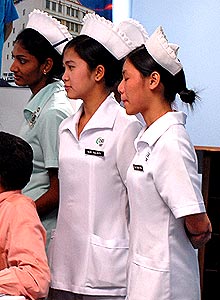
The public hospitals in Sarawak are always over-crowded and under-staffed.
The medical personnel there are almost always overworked and stressed out. The odd ones will take it out on the patients who had come a long way from home to seek treatment.
It is also a custom in Sarawak for relatives or family members of the rural patients to accompany them to the hospital in the big city.
They will take turns to be with the patients in the hospital 24/7, to help with simple tasks like bringing a glass of water or passing the bed pan, and even to call the doctor if there is a sudden turn for the worse in the condition of the patients.
Half-way houses for patients' families
Where are they going to live in the duration of the patient's protracted treatment in the hospital?
You cannot expect them to check into the Holiday Inn because they would have neither cash nor credit cards, as you and I have!
The obvious solution is for the government or some charitable organisations to build a kind of halfway house for these stranded rural people with minimal facilities for cooking and sleeping.
 So far, I have heard of only one project in Miri where some kind-hearted citizens have rented a house to help the Penans caught in that kind of predicament.
Let's say the patients do not die, but recover from the treatment and is discharged.
Will the hospital authorities waive their payment as a matter of policy, and even give them money for the fare home as is done by the NHS (National Heath Services) in the UK?
Or will the petty officer at the pharmacy humiliate them about their inability to pay for the medicines to take home for follow-up treatment?
The best way of providing health care is to take medical service to the rural people.
For quite a few years in recent past, this is what a group of selfless dedicated government doctors and nurses have done.
They do not take leave all through the years, so that with the accumulated leave, they can take a long trip into the Baram interior.
They raise funds on their own to finance expenses needed for their trips and to buy medicines.
They make a few trips a year deep into the jungle to bring modern medicine to the Penan settlements and the Orang Ulu villagers.
Very often, they are the first medical team that has ever been welcome in those remote human settlements.
A doctor who had frequently gone on these trips related one story to me.
They had encountered a Penan man in one village with a thorn from a rattan vine lodged deep in his thigh. It had been there for three weeks.
Thorn in the flesh removed...weeks later
Actually, he had gone to the health clinic at Lio Matoh, 3 hours boat ride and 2 hours hitch ride away.
The medical officer there removed half the thorn and said he could do no more.
So the man returned to his village, waiting for the infection to worsen, and perhaps to die, until our volunteer medical team arrived.
 A young doctor from Kuching removed the offensive thorn with the under a torch light using a pair of primitive pincers.
I bet you this grateful Penan man will remember that young Chinese doctor for the rest life.
Their main problem is funding. They try to raise funds from charitable organisations like the Lion's Club, as well as private companies.
The best solution is for them to set up a charitable trust fund that can begin to receive donations from overseas.
But for that, they will need a million ringgit to start with. So you guys with many millions to spare do remember these good doctors in your will.
As we are still located in this ambiguous period between two independence day celebrations, my thought goes out to this group of enlightened doctors and nurses.
They have sacrificed their time and talent, taken the long and torturous journey to bringing modern medicine to the homes of those Malaysians long forgotten by the nation 46 years after their independence from British rule.
You will not hear much about these good Samaritans, because they are publicity shy.
But they embody for me the best spirit of Merdeka. They have shown us all that charity indeed begins at home.
Unfortunately, this is the only voluntary effort I know of that does its best to relieve the physical suffering of Sarawak's rural dwellers.
Those who receive help from them are indeed fortunate, but there are numerous people in the deep interior who continue to suffer neglect by the government.
For them, Merdeka has made no difference in their inability to gain access to public health care.
This just goes to show that the lives of rural people are cheaper than those in the towns and cities.
This is the 2Malaysia we have.
The first Malaysia belongs to those in the cities and towns whose life is precious, and the second Malaysia exists among those whose life is cheap and expendable, in the deep interior of Sarawak and Sabah.
Sim Kwang Yang can be reached at kenyalang578@hotmail.com


Are you sure you want to delete this comment?
This action cannot be undone.