




MIC top brass did not discuss 'pullout'
MIC deputy president G Palanivel today said he was unaware of any meeting of top officials to discuss the possibility of pulling out the party’s representatives from the new cabinet.
MIC deputy president G Palanivel today said he was unaware of any meeting of top officials to discuss the possibility of pulling out the party’s representatives from the new cabinet.
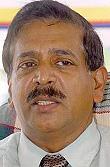 "If such a meeting was held, I would have known about it. MIC secretary-general Dr S Subramaniam and information chief M Saravanan have also denied knowledge of the proposal," he added in a statement.
Subramaniam is MIC's sole full minister overseeing the human resources portfolio while Saravanan is the deputy federal territories minister.
Apart from the duo, the party has one more deputy minister, SK Devamany (Prime Minister's Department).
However, Palanivel agreed that MIC - being a senior partner of Barisan Nasional - should be given greater representation in the cabinet and in other decision-making bodies in the government, government agencies and government-linked companies.
He also hoped that newly-minted Prime Minister Najib Abdul Razak will rope in experienced people into advisory positions as well.
He added that Najib once told him that he does not belief in putting "all the eggs in one basket" and expressed hope that the premier "will just do that".
Unresolved issues
Palanivel was responding to a Malaysiakini report yesterday, which quoted an insider saying that MIC was mulling pulling out its representatives in the cabinet.
The insider said MIC was deliberating on doing so because of many unresolved issues, chief among them is the "treatment accorded by the new administration to the Indian community".
He said MIC was willing to become a standalone party within BN and concentrate its efforts to unite the Indian community.
"The decision is expected to be made soon, perhaps at the next MIC central working committee meeting later this month," he added.
According to the party insider who is close to the MIC leadership, topping the list of grouses is that the Indians were still being "treated as second or even third-class" citizens in the country.
Secondly, and perhaps the main reason for the pull-out threat, is because the new cabinet line-up saw the absence of a senior ministerial portfolio for MIC despite the party's repeated appeal to former premier Abdullah Ahmad Badawi and current Prime Minister Najib Abdul Razak to return the Works Ministry to MIC.
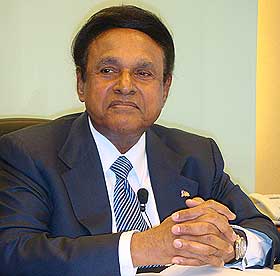 MIC president S Samy Vellu had declined to comment on the matter but those close to him claimed that the veteran politician is upset with the cabinet line-up with regards to his party.
The Malaysiakini report was also picked up by Tamil dailies today, with the Samy Vellu-owned Tamil Nesan running it as the top story on its front-page.
Not a junior ministry
Meanwhile, Palanivel said he could not comment much on the report since he is unaware of who the senior official who was quoted in the report. "My policy is not to comment on speculation or unsourced news."
However, he disagreed with the party insider's assertion that the Human Resources Ministry was a junior ministry.
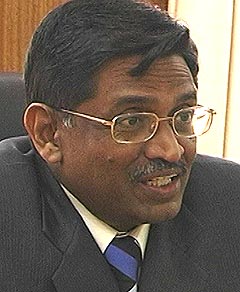 "In many countries, ministries such as human resources, social development ministry and the environment ministry are considered important ministries and are often held by senior ministers.
"As such, I will not term the Human Resources Ministry as a junior ministry. In fact it is an important ministry centred on human capital development," he said.
On a personal note, Palanivel said given his relatively new experience, Subramaniam has been doing a good job as minister.
"Our two deputy ministers are also doing a good job," he added.
In a related development, MIC vice-president KS Nijhar said instead of harping on the cabinet issue which can only cause bad will, the party should focus more on building symbiotic relationships with Indians who are not MIC members and Malaysians as a whole.
 "We should stop sulking like adolescents and behave like adults," he said in a statement.
"Instead, let us develop an economic agenda jointly with the government and banks that can lead to a multiplier effect to strengthen the Indian economy as opposed to pleading for a 100 percent government agenda based on the old 100 percent dependency syndrome," he added.
Nijhar also said there is a need to study the achievements of the Indian diaspora elsewhere and adopt the approaches to local conditions in order to advance the Indian community in Malaysia.
"Stop thinking old and start thinking new and we will regain our respect," he said.


Report this comment
Are you sure you want to delete this comment?
This action cannot be undone.