




A tale of two Malaysias
We live in at least two Malaysias.
One Malaysia is full of gleaming buildings, sharp points scraping the sky as if trying to puncture the Shakespearean myth that there are more things in heaven and earth than are dreamt of in our philosophy. In this Malaysia, metal Jaguars and shining Prancing Horses fly along broad expressways. Here, food is a status symbol and friendship is often a commodity.
Then there is another Malaysia, where treated water is available to less than half the population, where the ratio of teachers to students, or doctors to patients, is greater than 3,000 to 1, and the nearest school or hospital may be many hours’ trek away.
Here, in rural Sabah or Sarawak, very few own a car or a truck because of poverty and no roads.
We live in at least two Malaysias.
One Malaysia is full of gleaming buildings, sharp points scraping the sky as if trying to puncture the Shakespearean myth that there are more things in heaven and earth than are dreamt of in our philosophy.
In this Malaysia, metal Jaguars and shining Prancing Horses fly along broad expressways. Here, food is a status symbol and friendship is often a commodity.
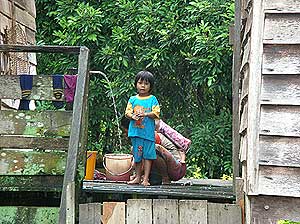
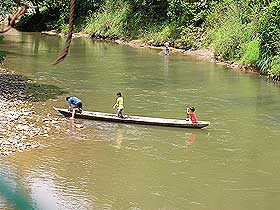 Then there is another Malaysia, where treated water is available to less than half the population, where the ratio of teachers to students, or doctors to patients, is greater than 3,000 to 1, and the nearest school or hospital may be many hours’ trek away.
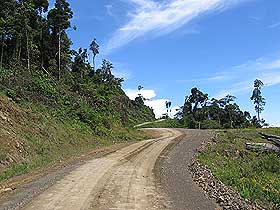
Here, in rural Sabah or Sarawak, very few own a car or a truck because of poverty and no roads.
In both Malaysias, however, illness and death are inevitable. The way the two different worlds deal with these two issues further illuminate the gulf between us. The following are a few examples.
The contempt we have for the poor
Apik is a 40-year-old Dayak teacher from a remote village. His mother had fallen down in the bathroom while she was visiting relatives in a large town in Sarawak. Apik was with her at the time, and he carried her to the hospital. They waited for a long time.
They were told she had suffered a stroke and her blood pressure was high. She was given some blood pressure medicine and told to go home. She became more confused at home, and her speech became unintelligible.
Apik took her back to the emergency room. He was told her stroke was getting worse - and to go home. On the third visit, a week after she fell ill, she was admitted to hospital.
Apik asked the ward staff what they thought was happening to his mother. Apik was dressed simply, in faded kampung clothes. He did not introduce himself as a schoolteacher. Apik was polite, diffident and soft spoken.
The nurse or doctor on duty – Apik cannot be certain of her role or uniform – replied contemptuously, “Even if I tell you what’s wrong with her, what makes you think you’ll be able to understand?”
 Apik was angry but he bit his tongue. “I managed to keep smiling,” he explained, “even though my blood was boiling. I didn’t want my mother to suffer or be penalised.”
His mother underwent a brain scan. The scan showed a blood clot trapped between the skull and her brain. She was rushed to surgery. She can walk now, thanks to the skill of her surgeon, and she talks almost normally, but her memory is poor.
Apik, on the other hand, has an excellent memory, yet he says he will try to forget the insult. He continues to inspire his students in the ulu, hoping they will learn from him, his love of the forest, and his love of poetry and literature.
A doctor’s unbearable fear of infection
A doctor friend told me a story about handling illness recently, when we were discussing the A(H1N1) flu crisis. The good doctor was telling me about life as a junior doctor in a busy Malaysian urban hospital.
“During the SARS epidemic in 2003,” the doctor recalled, “we had a fairly senior surgeon in one of our wards. He had airs, and no one liked him. Let’s call him Dr Carpenter. He was unhappy because the hospital had cancelled his operating lists.
“At the time, whole wards and operating theatres were being closed down, patients and doctors were being quarantined. There were patients in some wards suspected to have SARS, and we couldn’t run the risk of SARS spreading through the operating theatres. Dr Carpenter showed his anger in hospital meetings.
 “A few of us house officers volunteered to look after sick patients in some of the wards, although we knew doctors had died in Vietnam, Hong Kong and Singapore, treating SARS patients. We spent some time in quarantine too.
“Dr Carpenter insisted that any patient with fever or cough – whatever the cause, even if SARS wasn’t suspected – had to be moved off his ward into other wards. He was terrified of being exposed to any risk,” my doctor friend sighed.
“He still had to come to his wards, though, to see his own patients. He walked around everywhere in a gown, apron, gloves, boots and a maximum-protection mask. We house officers used to laugh at him. We used to imagine what he’d do if we went up to him, threw our arms around him, and gave him a hug! He’d have yelled and run away, I suppose,” the doctor laughed.
“Eventually, the SARS epidemic ended, and life went on. All epidemics end eventually. We prepare for the worst, I suppose, but we mustn’t live in fear. As for Dr Carpenter, he’s making a lot of money in private practice now, I hear,” my friend concluded.
The death of a VIP
The doctor went on to tell me, “Once we had a VIP in our ward for over a month. He was very rich, but frail and elderly. He had a bad infection. He could talk a little, but we all knew he was going to die.
“His daughter was very caring when she was with him, but she was nasty to the nurses. She was abusive when the nurses did not help her father with the smallest tasks, even combing his hair. She treated the nurses like servants.
“The whole family was very fearful of death. The VIP and his daughter seemed to have the idea there was some better, miraculous treatment that the doctors were keeping secret from them, for some mysterious reason.
“In the end, when his heart stopped beating, his daughter insisted we should perform resuscitation. All the doctors had told her beforehand that trying to resuscitate him would be traumatic – and hopeless – and shouldn’t be attempted. But the daughter got her way.
“I guess the senior doctors were afraid to go against her, even though it meant the old man had to go through this… indignity. We went on for two whole hours, before we finally stopped. We juniors had to take part, but we hated doing it, we knew it was wrong,” the doctor said sadly.
Adon, the Malay boy with cancer
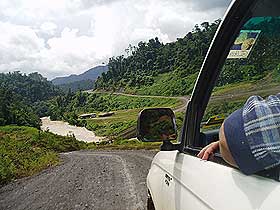
“The patient I remember best,” my friend continued, “was Adon, a Malay boy with cancer. He was 16. Adon came from a rural family. It took him four hours’ drive and a boat ride, across a river, each time they came to see us.
“Adon’s father had left the family when Adon was small. But Adon and his mother scraped together their savings for the fare for every trip to hospital, and they kept on coming - for months. The national cancer council, Makna, helped them a little with the travel costs.
 “Adon was a charismatic boy. The nurses loved his sense of humour and cheeky smile. He was patient with his mother, and with us nurses and doctors. Everyone liked him and his mother. There was one time, when Adon was allowed home, he fell off his bicycle, and we told him off when his wounds got infected. His mother begged him not to cycle again and he listened.”
My friend said, “One day, we couldn’t find any blood of his type to transfuse him with. Stanley, an Iban-Chinese boy, a little older than Adon, was in the next bed. Stanley offered to let Adon have the blood that Stanley’s own family had donated for Stanley. We were all really moved. Stanley had cancer too, but we cured him in the end.
“Over a few months, after a lot of chemotherapy, it became clear to everyone that Adon’s cancer was getting worse and would never be cured. He asked us how the treatment was going, and we explained things to him and his mother. Adon became weaker and kept having fever. He was a little breathless because of some lung infection that his body couldn’t clear, but he could walk around slowly.
‘I don’t want mom to carry my dead body’
“One day,” the doctor said slowly, “Adon asked for permission to go home. He said he knew he wasn’t getting any better. He thanked us. He told us he knew more treatment wouldn’t help. He tried to persuade his mother to allow him to leave hospital.
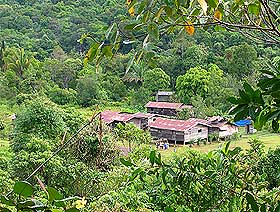 “I asked him why,” the doctor said, “and I was shaken, when he told me, ‘I want to go home while I’m still alive. It’s much easier for my mother to take me home now, instead of trying to carry a dead body. The cemetery is just beside our house in the village. It’ll be better, and less expensive, for my family.’
“His mother did as he wished, and they went home together for the last time. He became more breathless over the next day, and his mother called us for help. The hospital nurses did their best. We sent an oxygen tank to the small rural clinic near his village, to try to make him more comfortable.
“But the medical assistant at the clinic wasn’t particularly helpful. He didn’t even go to Adon’s house to see him when Adon was dying. And after all that, the oxygen arrived too late anyway - Adon was already dead.
“His mother called us after his funeral to thank us. Can you imagine that?” my friend said. “I’ll never forget Adon, as long as I live,” the doctor finished.
We may live in two separate worlds, but we share a common humanity.
KERUAH USIT is a human rights activist - anak Sarawak, bangsa Malaysia. His ‘The Antidote’ column, which appears in Malaysiakini every Wednesday, is an attempt to allow the voices of marginalised people to be heard all over Malaysia. The writer can be contacted at keruah_usit@yahoo.com.
Previous columns


Are you sure you want to delete this comment?
This action cannot be undone.