




Country pays for 'arrogance'
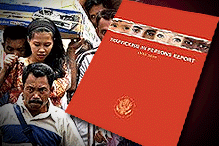
Migrant rights activist Irene Fernadez is not surprised that the US State Department has placed “arrogant” Malaysia back in its blacklist, in the just-released 'Trafficking in Persons Report 2009'.
Migrant rights activist Irene Fernadez is not surprised that the US State Department has placed “arrogant” Malaysia back in its blacklist, in the just-released 'Trafficking in Persons Report 2009'.
The report revealed that Malaysia shares the blacklist with 16 other countries, including Sudan, Zimbabwe and Saudi Arabia. Malaysia had been removed from the list last year.
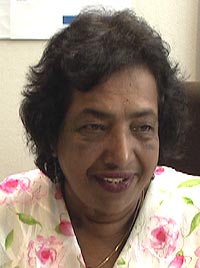 “It is a big shame to the country. We are economically developed but on social aspects like commitment on protection, we are on par with Zimbabwe,” said Irene.
“There is a lot of arrogance in the way Malaysia sees migrants and refugees, and this attitude is reflected in the way we manage issues.”
The report scrutinised the efforts of more than 173 countries in combating trafficking of persons for forced labour, prostitution, military service and other purposes.
“The Malaysian government continues to be in a state of denial. This is the crux of the problem. There is no dialogue or no consequential arrests (of officials)... no political commitment in order to reduce the issue,” Irene said.
The report also made reference to earlier findings by the US Senate Foreign Relations Committee two months ago, which highlighted the involvement of Immigration Department officials in trafficking Burmese refugees.
Although this was publically confirmed by the prime minister, “no officials were arrested, prosecuted, or convicted for involvement in trafficking during the reporting period”.
 Irene pinpointed the lack of “political commitment and political will”, despite calls by civil society groups for a comprehensive policy.
“There needs to be a rights-based approach such as giving equal treatment to migrants and refugees (as well as) transparency in terms of the conduct of officials and open investigation of complaints.”
Even the Human Rights Commission (Suhakam) “feels strangled” when it receives complaints, she said, adding that this speaks volumes of the government’s lack of action.
‘Slow response’
Transparency International Malaysia's former president Ramon Navaratnam said the report should be given “high priority and attention” as its findings are recognised internationally.
He said the government should have taken remedial action when it was aware of the “high possibility” that Malaysia would end up on the blacklist.
“Unfortunately, as in many cases, we are slow in responding. And now we face the serious implications and consequences.”
 Suhakam vice-chairperson Simon Sipaun echoed this, adding that the enforcement authorities have worsened the problem.
“(Suhakam) is already doing its best in handling complaints. Now it is up to the government to deal with the problem as it has more authority and facilities compared to us,” he added.
On domestic workers
In a separate development, Migrant Care, an organisation for Indonesian migrant labour rights, demanded clear enforcement of the mandatory day off for domestic workers in Malaysia.
 While provision for a mandatory day off is in the Malaysian Employment Act 1961, this has yet to be extended to include maids, it said in a statement.
The group also said the recruitments and placement practices by the Malaysian Association of Foreign Maid Agencies must be addressed as “almost 100 percent” of the maids are forced to sign the contracts without being briefed on the contents.
It claimed there are violations of religion rights, where Muslim maids are forced to handle pork and dogs, which are prohibited by Islam.


Report this comment
Are you sure you want to delete this comment?
This action cannot be undone.