




Budget 2010: What's in it for healthcare?
Prime Minister Najib Abdul Razak's maiden budget appears people-centric, but on closer scrutiny, has less goodies and more generalities than specifics.
Prime Minister Najib Abdul Razak's maiden budget appears people-centric, but on closer scrutiny, has less goodies and more generalities than specifics.
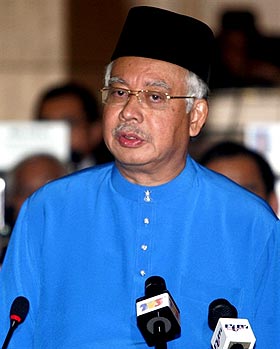 Still, Najib must be credited for trying to reduce the national fiscal deficit from a high of 7.4 percent in 2009 to 5.6 percent for 2010.
The overall national expenditure has been reduced by 11.2 percent from RM215.7 billion to RM 191.5 billion. Operating expenditure has also been cut to just RM138.3 billion, but still consumes 72.2 percent of the entire budget. The remaining RM53.2 billion or 27.8 percent is earmarked for development expenditure.
What is more worrisome is that the projected federal revenue in 2010 is expected to decline 8.4 percent to RM148.4 billion compared with RM162.1 billion in 2009. From an expected recession of 3.5 percent negative growth ending this year 2009, growth is expected in 2010, at a modest positive rate of two to three percent.
What about healthcare?
What is there in the 2010 budget for healthcare?
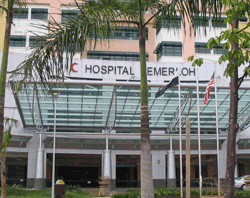 Well, most health economists and pundits including the Malaysian Medical Association (MMA) have always advocated a larger allocation of the national budget for healthcare services. Over the past five years, healthcare expenditure has been prudently but frugally low at 3.6 to 4.9 percent of the GDP, something many consider inadequate.
Yet despite this, Malaysia must be commended for providing better than expected health care outcomes and relatively high quality medical services. Our human development index has been above average for many years, although obviously lagging behind Asia Pacific front liners.
Malaysian medicine can become better, if we show greater commitment to improvements and excellence of standards in health care providers, supporting staff and properly trained use of amenities already in place in most of our hospitals and medical facilities nationwide.
There must be a greater commitment to retain and reward excellent performers, so that their talents and skills remain within the nation and preferably within the very well established institutions and academic centres. Our medical research should be raised several notches to showcase our serious intent into becoming a world-class deliverer of excellence.
We should remove that all-too-common tendency of many brilliant scientists and doctors to leave our public institutions because of financial concerns, petty local politics, glass ceilings and administrative interference. We must build and sustain a culture of excellence and steadfastly protect these cloistered if egg-shelled veneered institutions.
The government has announced intentions to increase spending to seven percent of the GDP in 2010. But this would mean that health care spending should reach some RM 70 billion out of our total projected 2010 GDP of RM 1.026 trillion. Does this seem plausible that within two years, our healthcare spending is projected to double from that of the year 2008?
Mystery of funding
Where is the extra funding coming from, since the government is coming up with only less than RM 12 billion?
Would this projected shortfall of RM 58 billion (of the RM 70 billion) be taken up by the other government-linked agencies and the private sector? This does not seem possible.
Unfortunately Najib's 2010 budget does not shed any light on this.
The private sector has been expected to take up the slack in this push for greater health care expenditure, but this would depend largely on the economic recovery.
Nevertheless, this 2010 budget on health care is a better commitment than what the MMA had earlier lobbied for. And we hope the private sector is given sufficient impetus and incentive to invest more and generate greater, if not more cost-effective, spending.
Think of the people
More importantly, the public and the less well off should not be short-changed when it comes to access to health care. Cutting back on public health care spending may adversely affect the quality and delivery of health care service, especially those who have limited options or capacity to choose.
It is increasingly clear that our government, our pensions, our public sector healthcare service cannot indefinitely continue to offer on-demand, unrestrained superlative and quickest care for all. It's simply just not possible.
Healthcare costs unfortunately, will always soar outside the realm of normal economic constraints, because life extending measures and new discoveries will almost always outstrip our abilities to pay for these, especially if modern cutting edge tests and therapies are to be expected and demanded by everyone! Escalating health costs will remain an infinite limitless demand that most finite resources or public purses can never hope to match.
Of course, a single payer national health service type insurance mechanism is probably best, but this remains on the drawing board due to uncertain public and practical concerns. In the interim, our citizens must engage in greater self-preventive and health-enhancing measures to help reduce unhealthy lifestyle risks. They must be encouraged to take up health insurance earlier and with wider coverage.
To encourage this uptake further, our insurance agencies must improve their operating standards. They must be made more accountable that they cannot always be looking at the bottom line to limit or to deny access. They must strive to be more all-inclusive, without being meticulously dismissive-no exhaustive pre-existing conditions which would unduly exclude patients. This ultimately defeats the community coverage goals of health insurances.
Think of the locals
Some believe that medical or health tourism is the way to go, to help create a new dimension for economic growth in the service industry.
Yet the reality is that this is unlikely to become a major contribution to the nation's coffers for foreign exchange earnings. As of 2008, only some RM 300 million has been earned from foreign patients. It has been projected that perhaps by 2015, medical tourism dollars would reach RM 2 billion. But this will still only be a small fraction of our GDP.
This cannot be used as a benchmark, an alternative key performance indicator or an ego-boosting, chest-beating symbol, of having come of age! Being a preferred destination for ‘cheaper' medical treatment, does not necessarily mean and certainly does not imply that our health care system has attained the standards of the first world.
It simply means that some of our private health care settings, some of our selected medical disciplines are sufficiently good enough to be recognised as suitable, perhaps comparable and safe, and most importantly cost-effective choices for foreign patients.
More importantly, there are already grouses among many civil groups that despite this push to attract more patients through medical tourism measures, Malaysia has not yet been able to commit to a declaration to provide universal access to health care for all our citizens!
To further promote the medical tourism industry, the Government will enhance tax incentives for healthcare service providers who offer services to foreign health tourists.
'1Malaysia' clinics
 The purported aim of these 1Malaysia clinics is that our government cares about the well being of the rakyat. Apparently, in 2010, hospitals under construction and being upgraded include those in Kluang, Bera, Shah Alam, Alor Gajah and Tampoi.
In addition, we are informed that the EPU is the main driver for urging the government to expand these community clinic services, to be known as 1Malaysia Clinic in urban areas.
We need to enlighten the government that this may not be the best approach. Standards of health care cannot be compromised or made expedient just to accommodate some economic or short-term considerations.
Thus overall, the Budget 2010 for health care has been more noise than substance, and is quite disappointing, with a few shocks and regressive suggestions which are at best impractical, but at worst even contradictory, to our existing system and regulations.
We urge the government and the MOH to help resolve some of these incongruities by tapping, perhaps integrating, existing services such as urban private GP clinics, and engage and enhance greater public-private partnerships.
We must move towards a better and more consistent maintenance culture for our existing health care facilities and management so that they function at tip top, zero-defect efficiency, with enhanced quality and safety, supported and staffed by adequately trained personnel and physicians.


Report this comment
Are you sure you want to delete this comment?
This action cannot be undone.