




Appeal Court overturns decision on MACC
The Court of Appeal today overturned a High Court ruling restricting Malaysian Anti-Corruption Commission (MACC)'s interrogation sessions to office hours.
The Court of Appeal has today overturned a High Court ruling restricting Malaysian Anti-Corruption Commission (MACC)'s interrogation sessions to office hours.
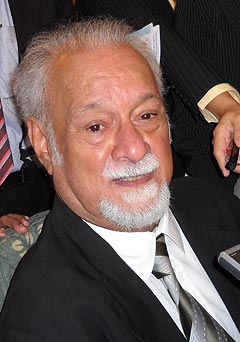
Court of Appeal judges Hasan Lah, Ahmad Maarop and Syed Ahmad Helmy Syed Ahmad made the decision after hearing submissions from senior federal counsel Amarjeet Singh for the MACC, and counsel Karpal Singh for Kajang municipal councillor Tan Boon Wah ( below ).
They were unanimous in their decision and said that the MACC Act 2009 does not restrict the time for recording statements to normal working hours.
Hasan, said they were unable to agree with the High Court judge's judgment limiting the MACC's operation to within office hours only.
 "We agree with the submission by senior federal counsel (Amarjeet Singh) that there are two parts within Section 30 of the MACC Act.
"It must be read (with Section 30 (1) (a)) where initial investigations should not be restricted to mean bringing witnesses (and interrogating them) during normal working hours only."
"The other phrase, day-to-day, as stipulated under Section 30 (3) (a) would mean that until the whole investigation is completed," ruled Hasan.
Hasan said the court will provide written judgments at a later date.
Today's judgment will have severe repercussions as not only does it affect Tan's matter, but also another legal action by Attorney General Abdul Gani Patail.
Abdul Gani is challenging a circular issued by the Selangor Pakatan government, which bars its civil servants from giving statements to the MACC after office hours.
This matter is pending at the Shah Alam High Court.
Investigations done while 'iron still hot '
Earlier, Amarjeet Singh submitted that the High Court judge had erred in its interpretation as Section 30 (3) (a) of the MACC Act should not be read restrictively as it cannot mean that the MACC should only operate within office hours.
Amarjeet said since enacted this year, it is not meant to limit its officers' role. He said that corruption as with other crimes can happen anytime and not only limited to office hours.
"If someone comes to lodge a complaint late at night, do we say come the next day as the office is closed. Similarly, when we ask a witness to give a statement for the first time, the MACC can summon them at anytime of the day and it is not restricted to within office hours. "
"Hence, investigations must be done while "the iron is still hot". The phrase day-to-day as in Section 30 (3) (a) is to only secure the attendance of the witness, without being interrupted from one day to another until the investigations is completed," said Amarjeet.
Amarjeet emphasised that investigations into incidences of corruption was off of paramount interests to help curb graft.
He submitted that was the purpose of the new MACC Act, to facilitate faster investigations and bringing the culprits to justice.
Karpal: Suspects have better rights
Karpal submitted that Lock Up Rules state that suspects must be allowed rest between 6.30pm to 6.30am and they should remain in their cells.
"If suspects are accorded such provisions, why not the same for witnesses?" he asked.
In this matter Tan was summoned to the MACC office at about 8.45pm on July 15 this year along with political aide Teoh Beng Hock.
 Tan and Teoh were subjected to interrogation which went beyond 2am on July 16.
Teoh was found dead, sprawled on the fifth floor of Plaza Masalam which houses the MACC's headquarters located on the 14th floor.
Karpal ( left ) submitted that if the Act was meant the way it was brought up the senior federal counsel, then it should be be amended by the parliament.
"The court should adopt the literal meaning of the term day-to-day to mean within office hours as was agreed by the High Court," he said.
"The adverb day-to-day can never mean round the clock investigations or interrogations," said Karpal.
Landmark decision
In a landmark decision last month, the High Court banned MACC from interrogating witnesses after office hours, contrary to its practice all this while.
Following the ruling, MACC investigation division director Shukri Abdull had on Nov 25 issued a directive to all MACC offices to confine the questioning of witnesses to the working hours of 8.30am to 5.30pm.
On Nov 19, High Court Judge Mohammad Ariff Md Yusof, in allowing a judicial review filed by Tan, ruled that Section 30 (3) (a) of the MACC Act 2009 does not empower the MACC to investigate a witness "round-the-clock".
 Tan, 39, is suing MACC chief commissioner Ahmad Said Hamdan (
right
), MACC assistant superintendent Mohammad Hassan Zulkifli and the MACC, claiming that his detention and questioning for 16 hours overnight by the MACC was unlawful, which resulted in him suffering losses and damage.
Tan, 39, is suing MACC chief commissioner Ahmad Said Hamdan (
right
), MACC assistant superintendent Mohammad Hassan Zulkifli and the MACC, claiming that his detention and questioning for 16 hours overnight by the MACC was unlawful, which resulted in him suffering losses and damage.
Karpal, meanwhile, said that he will be filing a leave application on Monday to appeal against the decision.
He added that there were serious repercussions to the Court of Appeal decision's as it meant the MACC could "drag people in the middle of night to get their testimony".
"By right witnesses should be fresh when they are to be interrogated and people should not be subjected to being interrogated late at night," he said.
He also said the panel did not give a definitive interpretation of what day to day means under Section 30 (3) (a) and it is pivotal for the Federal Court to give a final ruling over the matter.
"The judges did not define what 'day-to-day' means. We are still in doubt," he said, adding the administration of justice will be compromised.
Karpal, who is also Bukit Gelugor MP also warned the MACC to be careful in their investigations following today's decision, and not subject witnesses to lengthy interrogations late into the night.
Meanwhile, MACC head of Legal and Prosecution division Abdul Razak Musa, who was present to observe proceedings, in an immediate response, said the appellate court had given a definitive ruling to differentiate between suspects and witnesses.
"The court encourages witnesses to come to the MACC office at a time convenient to them.
"If they are busy with their work, the MACC office is always open 24 hours," he said.


Are you sure you want to delete this comment?
This action cannot be undone.