




Better vaccine for H1N1 'second wave'
Don’t retire those face-masks yet - the danger from H1N1 is far from over. In fact, the virus is expected to emerge in mutated form.
Don’t retire those face-masks yet - the danger from H1N1 is far from over. In fact, the virus is expected to emerge in mutated form.
Word of the potential second wave of the disease was circulated last September, but Health Ministry Director-General Dr Ismail Merican said there are no signs of this as yet in Malaysia.
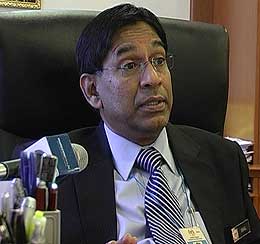 “We cannot say how serious the second wave can be, but we don’t want to be caught with our pants down,” he told
Malaysiakini
.
While the ministry has reduced the frequency of its public updates on the disease, it has continued to monitor the situation and is ready to pounce back to action at any time.
"We have upgraded our ICU (intensive care unit) facilities, we have trained our doctors…should this thing become a reality, we will resurrect all our inter-ministerial and technical meetings,” said Ismail.
The ministry has purchased 400,000 doses of vaccine, with priority for frontline workers in healthcare and national security, followed by high risk groups like those with chronic illnesses, the elderly and pregnant women.
The vaccine, which cost the government RM35 per dose, is provided free of charge at government facilities, but the private sector is encouraged to get its supply from authorised companies.
Asked if a ceiling price will be set on privately-administered H1N1 vaccine, he said there is no such decision although he agreed that the drug is “quite expensive” even at cost price.
The fact that the virus may mutate has also been taken into consideration, with the ministry’s second batch of orders meant to attack all strains of influenza.
But Ismail warned against a “frenzy” of vaccination, saying that the best way to prevent the spread of the disease is through good hygiene and etiquette while sneezing and coughing.
Negligence behind dengue
On dengue, an endemic disease, Ismail expressed disappointment that the level of public awareness is relatively low despite constant reminders.
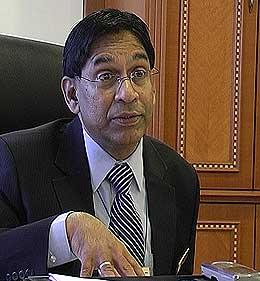 "I used to buy chicken from one chap, about 35 (and who was physically fit). The next week I went back, he wasn’t there. When I asked (for his whereabouts, I was told that) he had died of dengue,” said Ismail.
“We have brochures and the campaigns (telling the public to see a doctor) if (they) have the symptoms. The public must play its part and come early (for diagnosis and treatment). We guarantee you that if you come within three days, the risk of dying is certainly much less.”
Once the fever reaches the haemorrhagic stage, it becomes more difficult to save the patient.
“When I was a young doctor, I made sure to save any patient with dengue. Okay, the patient must come first, you must be diagnose (the condition) within three days.
“The doctor must be knowledgeable and competent enough to detect signs of severity. The moment he detects signs of severity, he must admit the patient (to hospital).”
Detecting dengue is not rocket science, said Ismail.
“You examine the patient and (if you) find that the abdomen is hard, obviously there has been leakage. Once there is leakage, the patient must be (sent) to the ICU.”
The ministry has embarked on a ‘10 Minutes’ a week campaign in the media to encourage people to clean up their premises and remove receptacles that could trap water, thereby providing a breeding ground for the vector.
While fogging is effective in killing the Aedes mosquito, it does not affect the eggs. When the larvae hatch, they carry the virus which is then transmitted to humans.
Tomorrow: 1Malaysia Clinic scheme
Yesterday: 'Housemen not over-worked in hospitals'


Report this comment
Are you sure you want to delete this comment?
This action cannot be undone.