




Penan rape report: 'NGOs have an open agenda'
The Penan Support Group - a coalition of 36 NGOs - expects to come under fire from Sarawak officials for its exposé on loggers’ sexual attacks against Penan women and girls.
The Penan Support Group (PSG) - a coalition of 36 NGOs - expects to come under fire from Sarawak officials for its exposé on loggers’ sexual attacks against Penan women and girls.
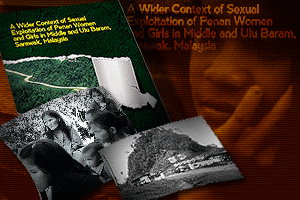 Its
report
, released in Parliament yesterday, was based on a fact-finding mission to Baram after the police reneged on a promise to investigate the sexual attacks, citing a lack of funds.
The PSG also highlighted the failure of authorities to respond to the shocking findings of a national ministerial task force.
In an interview, Sarawak land rights activist Muhin Urip answered the claim that the NGOs have a private motive for their revelations.
Malaysiakini: How would you respond if state ministers repeat previous allegations that the NGOs have a ‘hidden agenda’ and are trying to damage Sarawak’s reputation, perhaps in order to get funding from foreign contributors?
Muhin Urip: The PSG has an open agenda, to bring out the voices of the oppressed, the abused. We are trying to allow the suppressed voices of the survivors of sexual exploitation to be heard. And the NGOs are proud of having this ‘hidden’ agenda.
But if, in the first place, governments and institutions exist to protect our rights and welfare and meet the needs of the people, then there would be no need for NGOs to exist, least of all to have any hidden agenda.
Suhakam and the police were asked to join the original mission, but turned us down with their respective excuses. The PSG has shown we had no intention to hide our mission. We did what we set out to do, as shown by our objectives in the report.
Why do you think police have neglected to investigate the sex crimes against the Penan?
We must look at the government actions and police inaction in a historical perspective. Firstly, Malaysians know very well that the police force is not an independent institution whose existence is solely to uphold law and order. Instead, it has become an institution that serves the ruling government to allow it to hang onto power.
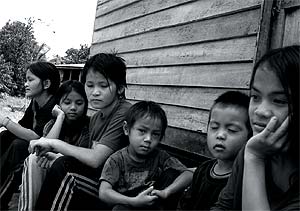 In the context of the indigenous peoples’ struggle to defend their rights, the police have a history of being very biased.
Whenever police reports are made by rural communities, nothing happens. But when companies involved in disputes with communities make police reports, the police act immediately to take down blockades.
The Penan have made countless police reports against companies but there has never been any action to protect their rights. Instead, the Penan have been subjected to arrests, imprisonment and other forms of harassment - the total opposite of protection.
Over the decades, the Penan have come to consider the police untrustworthy. In this respect, I think the Penan are similar to many sectors of the Malaysian public in not trusting the police. But the Penan do not have much of a voice, compared to other Malaysians.
 The PSG engaged with the police, to have a joint mission to get a better picture of how widespread sexual exploitation among the Penan is.
The public now knows that the police had no interest to discover the truth - they backed off, citing an untenable excuse of lack of funding . So it can only be expected that the police will not act, not even with the publication of this latest report, unless Malaysians speak up and hold the police accountable.
But it is not just police inaction that is troubling. It is most disturbing when the police, our supposed protectors, collaborate in trying to cover up the hideous crime of rape, as told to the fact-finding mission by villagers. The police, accompanied by an alleged perpetrator visited their village in Middle Baram.
They were looking for a rape survivor who had lodged a report with Bukit Aman. Another rape survivor ‘Bibi’ had already been pressured to retract her statement.
A past response from the state authorities was to say Penan rape survivors are “good story-tellers”. How would you respond to any claim that the only evidence is oral reports given to the PSG?
For the Sarawak government not to deny or dismiss this report would be original, and therefore unimaginable. They will do all that and more. Even the report by the federal Ministry of Women, Family and Community Development was dismissed. We know that several Suhakam reports on the rights of indigenous people were also ignored. There is a pattern of denial in the state government.
 The PSG is opening up our report not only to share our findings, but also to expose our mission to public scrutiny.
The government can deny the findings all they want, but the federal and Sarawak governments will have to be responsible to Malaysians and the international community for their continuing inaction.
This report is just another small way for the PSG to support the people by bringing out the voices of the Penan girls and women.
Has the PSG called for an end to logging activities in the Baram areas where the alleged sexual abuse and loss of land rights is taking place?
I think the voices of the many affected middle and upper Baram Penan have been consistent since the 1980s - they have called for a halt to all logging activities on their native customary rights lands.
 The Penan are not after the halt of all logging but just those on their lands. The loggers, on the other hand, are after the trees on all Sarawakians’ land.
The Penans’ legitimate and peaceful voice has been consistently ignored, and they have been insulted by the Sarawak government.
Meanwhile, the logging companies continue their government-sanctioned disregard for human decency, as they destroy the lives of Sarawakians. So the call by the Penan to halt logging is a call to all Sarawakians, Malaysians and all human rights defenders to support the people’s rights.
What terms of reference would you propose for a royal commission into the land rights of indigenous people, as the PSG report has recommended?
A royal commission would be the most appropriate mechanism to get to the root of the whole issue of land rights of Sarawak indigenous people. Land rights cannot be seen in isolation from the wider social, political, economic development and environmental factors.
In addition, it cannot be separated from the key issues of good governance, transparency and accountability. Logging, mono-crop plantations and mega-dam projects are symptoms of the wanton disregard for the rights of Sarawak’s indigenous people.
KERUAH USIT is a is a human rights activist - ‘anak Sarawak, bangsa Malaysia’.


Report this comment
Are you sure you want to delete this comment?
This action cannot be undone.