




Japan rushes against time to avert N-plant meltdown
Japanese military helicopters dumped water on an overheating nuclear plant today while he United States expressed growing alarm about leaking radiation and said it was sending aircraft to help Americans leave the country.
The helicopters appeared to partly succeed, with two of four water drops over the site hitting their mark. The giant, twin-blade aircraft have to make precisely timed flyovers and drops to avoid the brunt of the radiation.
However, in another setback, emergency crews had to temporarily withdraw a water cannon from the nuclear power plant because of high radiation levels, broadcaster NHK said.
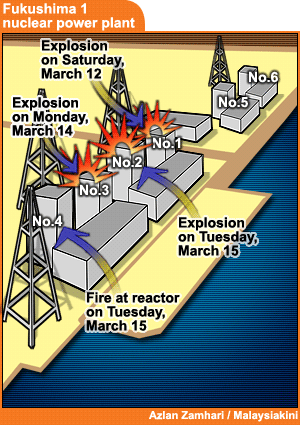 The water cannon had been called in to spray the No 3 reactor, which contains plutonium fuel and has been the top priority for authorities. When ingested even in minute amount, plutonium can cause cancer.
Compounding the problem, white smoke or steam had been seen coming from the No 2 reactor late today. Japan’s nuclear safety agency said it will start dropping water from the air on the reactor.
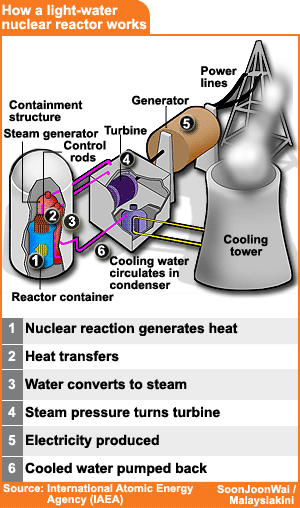
Workers were trying to connect a 1km long power cable from the main grid to restart water pumps to cool reactor No 2, which does not house spent fuel rods considered the biggest risk of spewing radioactivity into the atmosphere.
"The situation continues to be very serious," International Atomic Energy Agency chief Yukiya Amano told reporters at Vienna airport as he left with a group of nuclear experts for Japan.
One official from the plant operator told a late night briefing the cable could be connected within hours. Other officials said it was unclear if water pumps at reactor No 2, which sustained less damage from a series of explosions, would work.
While Japanese officials scrambled with a patchwork of fixes, the top US nuclear regulator warned that the cooling pool for spent fuel rods at reactor No 4 may have run dry and another was leaking.
Twenty-three nuclear and rescue workers have been injured and 20 have received high radiation doses so far at Japan’s Fukushima power plant, the International Atomic Energy Agency (IAEA)
said today.
Two people were missing at the plant that was hit by a magnitude-9 earthquake and a tsunami on Friday, the Vienna-based agency said, citing government information. Of the casualties, 15 were caused by the explosions at three reactor units since Friday.
The IAEA did not indicate that any of the 23 injuries was due to radiation.
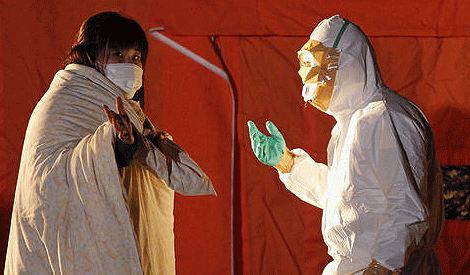
However, of the 20 people who were exposed to radiation or contaminated with radioactive material, one worker “suffered from significant exposure,” the IAEA said.
The others appeared to have received minor doses. In addition, an unspecified number of firefighters was being monitored after being exposed to radiation.
Meanwhile, Russian President Dmitry Medvedev has called the nuclear crisis in Japan a "colossal national disaster" and catastrophe and said he hopes it will not cause serious problems elsewhere.
‘Radiation levels extremely high’
Gregory Jaczko, head of the Nuclear Regulatory Commission, told a parliamentary hearing that radiation levels around the cooling pool were extremely high, posing deadly risks for workers still toiling in the wreckage of the earthquake-shattered power plant.
“It would be very difficult for emergency workers to get near the reactors. The doses they could experience would potentially be lethal doses in a very short period of time,” he said in Washington.
Japan’s nuclear agency said it could not confirm if water was covering the fuel rods.
The plant operator said it believed the reactor spent-fuel pool still had water as of yesterday, and made clear its priority was the spent-fuel pool at the No 3 reactor. This morning alone, military helicopters dumped around 30 tonnes of water, all aimed at this reactor.
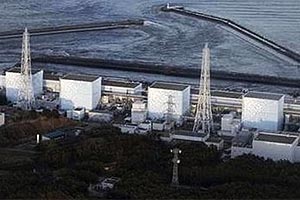
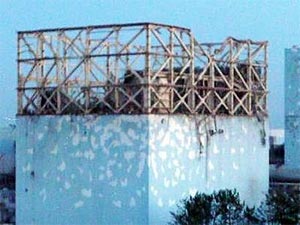 Inside the complex, torn apart by four explosions since a 9.0-magnitude earthquake and tsunami hit last Friday, workers in protective suits and using makeshift lighting tried to monitor what was going on inside the six reactors. They have been working in short shifts to minimise radiation exposure.
US officials took pains not to criticise the Japanese government, which has shown signs of being overwhelmed by the crisis, but Washington’s actions indicated a divide with its close ally about the perilousness of the situation.
“The worst-case scenario doesn’t bear mentioning and the best-case scenario keeps getting worse,” Perpetual Investments said in a note on the crisis.
Japan said the United States would fly a high-altitude drone over the stricken complex to gauge the situation, and had offered to send nuclear experts.
A State Department official said flights would be laid on for Americans to leave, and family of embassy staff had been authorised to leave if they wanted.
Health experts said panic over radiation leaks from the Daiichi plant, around 240km north of Tokyo, was diverting attention from other life-threatening risks facing survivors of last Friday's earthquake and tsunami, such as cold, heavy snow in parts and access to fresh water.
The latest images from the nuclear plant showed severe damage to some of the buildings after the four explosions. Two of the buildings were a mangled mix of steel and concrete.
‘Beginning of catastrophic phase’
Sebastian Pflugbeil, president of the private German-based Society for Radiation Protection, said Japan's efforts to pull the Fukushima plant back from the brink signalled “the beginning
of the catastrophic phase”.
 “Maybe we have to pray,” he said, adding that a wind blowing any nuclear fallout east into the Pacific would limit any damage for Japan's 127 million people in case of a meltdown or other
releases, for instance from spent fuel storage pools.
Low and harmless concentrations of radioactive particles were heading from Japan towards the United States, Lars-Erik De Geer, research director at the Swedish Defence Research Institute, a government agency, said, citing data from a network of international monitoring stations.
An unexpected, large-scale power outage was possible in Tokyo and surrounding areas at night if power demand exceeded that of the morning, Japan's trade minister said as a beautiful sunset bathed the city in purple, Mount Fuji in stark relief on the horizon. The earthquake and tsunami cut electricity supplies.
In a possible sign of panic, one bank, Mizuho, said all its automatic teller machines in the country crashed twice during the day after excessive transactions at some branches.
A stream of gloomy warnings and reports on the crisis from experts and officials around the world triggered a sharp fall in US financial markets, with all three major stock indexes slumping on fears of slower worldwide growth.
 Earlier, one G7 central banker, who asked not to be named, said he was “extremely worried” about the wider effects of the crisis in Japan, the world's third-largest economy.
But German Chancellor Angela Merkel said she did not expect the global economy to be hurt significantly by the catastrophe in Japan, adding also that Germany cannot get by totally without
nuclear power in the short term.
G7 finance ministers will hold a conference call early tomorrow Japan time to discuss steps to help Tokyo cope with the financial and economic impact of the disaster, a source said.
Japanese Economics Minister Kaoru Yosano said that the country's markets were not unstable enough to warrant joint G7 currency intervention or government purchases of shares.
“I don't think stock and currency markets are in a state of turmoil,” Yosano said in an interview.
The yen surged to a record high against the dollar on market speculation Japan would repatriate funds to pay for the massive cost of post-disaster reconstruction. The yen rose as high as
76.25 per dollar , surpassing the previous record high of 79.75 reached in the wake of the Kobe earthquake in 1995.
Bid to restore power to reactors
High radiation levels yesterday prevented helicopters from dropping water into reactor No. 3 to try to cool its fuel rods after an earlier blast damaged its roof and cooling system.
Another attempt today appeared to partly succeed, with two of four water drops over the site hitting their mark. The giant, twin-blade aircraft have to make precisely timed flyovers and drops to avoid the brunt of the radiation.
 The plant operator described No. 3 - the only reactor that uses plutonium in its fuel mix - as the “priority”. Experts described plutonium as a pernicious isotope that could cause cancer if very small quantities were ingested.
Officials from plant operator Tokyo Electric Power Co (Tepco) said bulldozers tried to clear a path to the plant so fire trucks could get in and use hoses to cool the facility.
Scores of flights to Japan have been halted or rerouted and air travellers are avoiding Tokyo for fear of radiation.
Today, the US embassy in Tokyo urged citizens living within 80 km of the Daiichi plant to evacuate or remain indoors “as a precaution”, while Britain's foreign office urged citizens “to consider leaving the area”.
The latest warnings were not as strong as those issued earlier by France and Australia, which urged nationals in Japan to leave the country. Russia said it planned to evacuate families of diplomats on Friday, and Hong Kong urged its citizens to leave Tokyo as soon as possible or head south.
Japan's government has told people within 30km of the plant to stay indoors.
- Agencies
Chinese panic, buy salt & iodine


Report this comment
Are you sure you want to delete this comment?
This action cannot be undone.