




Nazri: PSC to mull over Bersih's demands
Proposals by NGOs will become major component of the framework for the Parliamentary Select Committee (PSC) to study improvements to the electoral system.
Proposals by NGOs will become major component of the framework for the parliamentary select committee (PSC) to study improvements to the electoral system.
Minister in charge of Parliamentary affairs Mohd Nazri Abdul Aziz, however, refused to confirm if these proposals came from the outlawed Coalition for Free and Fair Elections, better known as Bersih 2.0.
“We have discussed in detail on the framework. We have agreed that what has been suggested by the content of the memorandum given by the various NGOs looking into electoral reforms will be put into the framework.
“The content will contain the framework, including the eight matters raised by the NGOs,” said Nazri.
Asked whether the NGOs he was referring to include Bersih 2.0, Nazri was coy and instead said: “I’m sure some of them are legal”.
The Bersih 2.0 coalition is an unregistered body but the group's leaders said that it is perfectly legal because it is a coalition of like-minded groups.
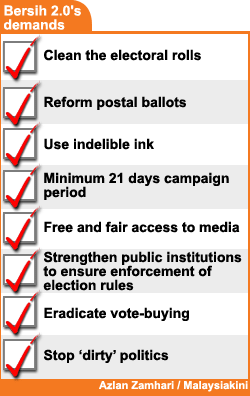 An open endorsement of Bersih 2.0's demands would leave the government red-faced as it had tried to paint the group as illegal, out to takeover the federal government by force, influenced by foreign groups and trying to spread communism.
After a meeting with Election Commission (EC) chairperson Abdul Aziz Yusof and other representatives for more than an hour today, Nazri said it was decided that the EC will put up a framework which will be presented first to the cabinet.
“Once it is approved by the cabinet the proposed framework will be put through to the Parliament’s rights and privileges committee,” he said.
“This memorandum, the basis is free and fair elections and actually from the side of the government, we feel that there are no actions under present laws that could result in an unfair or not free election,” he added.
He stressed that the setting-up of the PSC was a mere “preventive measure” to avoid mishaps that would justify claims such as “double voting” in future.
“There is no point having a select committee if we don’t look into all these. We don’t want, as they (the opposition) claim, to be window dressing. We will look into these from the point of view of prevention,” he said.
Indelible ink and biometric system
Among the eight-point demands proposed was to implement the usage of indelible ink, but Nazri said this option will be proposed alongside the EC’s suggestion for a biometric system.
The framework will be prepared by the cabinet meeting scheduled for Sept 7 and put through to the Dewan Rakyat by way of a motion when the sitting resumes on Oct 3.
The idea behind the setting-up of the PSC was put forth by Prime Minister Najib Abdul Razak last week to put to rest claims of rigged polls or any other forms of manipulation to the electoral roll.
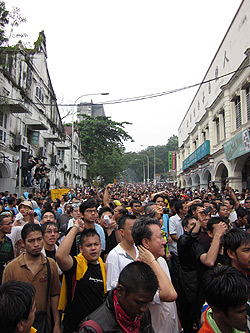 The forming of the committee same after ten of thousands flooded the streets of Kuala Lumpur on July 9 in support of Bersih’s call for electoral reforms.
Najib’s administration came under heavy scrutiny from both the local and the international front for using harsh tactics in clamping down on the protest.
Asked on the demands for Opposition Leader Anwar Ibrahim to head the PSC instead of a minister, Nazri attributed that it is easier for a minister to head the committee as they have easier access to the government departments.
“It will be much easier for the minister to give instructions to the civil servants. I think it’s easier for civil servants to receive instructions from a minister, rather than someone else.
“Also, the chair must command the respect of the committee and we are in the opinion that in past practices, having a minister as the chair makes the work of the select committee much easier,” said Nazri.
He explained that once the PSC is formed, the members will have a six-month time frame to submit its findings to the Dewan Rakyat.
Nazri also sidestepped criticisms on Najib’s refusal to make a commitment that the electoral reforms will be implemented before Parliament is dissolved to make way for the 13th general election.
“That is not my problem. My concern is forming the committee to look into all the proposals given by members of public and to work within the period of the Parliament, which should expire in April 28, 2013.
“That is the perimeter that I’m working on because I don’t know when the election will be held,” he explained.
Related stories:
Did Najib do a U-turn on select committee?
'Polls panel void if Parliament is dissolved'
'If PM means business, election must wait'
PAS accuses Najib, Nazri of insulting Parliament
Electoral fraud: Is Sinar Harian under pressure?


Are you sure you want to delete this comment?
This action cannot be undone.