




Journalists: Cops violated PAA during Bersih 3.0
Police appear to have breached a provision of the Peaceful Assembly Act 2012 (PAA) that grants the mass media access during the Bersih 3.0 rally on April 28.
Police appear to have breached a provision of the Peaceful Assembly Act 2012 (PAA) that grants the mass media access during the Bersih 3.0 rally on April 28.
This is based on the testimonies of two journalists testifying at the Human Rights Commission's (Suhakam) public inquiry today, that they were assaulted and their equipment were confiscated.
 At one point, Mahaletchumi Balakrishnan, who is holding watching brief for polls pressure group Bersih 2.0, asked
Malaysiakini
journalist Koh Jun Lin if the police had violated Section 24 of the PAA which states:
At one point, Mahaletchumi Balakrishnan, who is holding watching brief for polls pressure group Bersih 2.0, asked
Malaysiakini
journalist Koh Jun Lin if the police had violated Section 24 of the PAA which states:
"Any media representative may have reasonable access to a place of assembly and use any equipment to report on the assembly."
"Based on your experience, would you agree that the police breached this section?" asked Mahaletchumi, when Koh took the stand as the 16th witness today.
Koh agreed and recalled his experience of how several police personnel rushed at him while he was photographing a group of rally participants at the intersection of Jalan Raja Laut and Jalan Parlimen, near Dataran Merdeka.
Memory card confiscated
He said the police seized his camera and government press accreditation tag despite repeatedly identifying himself as a journalist.
"The officers tugged at my press tag in my photographer's vest pocket. I took it off for them to see but they confiscated it, along with my camera.
"They grabbed me by my backpack and took me to the Royal Selangor Club along with some few hundred detainees, one of them another fellow journalist.
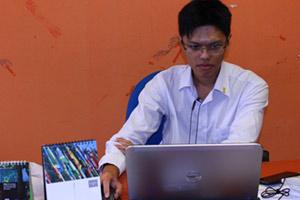 "On the way to the club, I felt a sharp jab in the mid-section of my body. I believe I was punched by a police officer," said Koh.
"I felt fearful when I was arrested. I went to cover the rally, expecting a lot of things to happen such as the firing of tear gas and police acting violently towards the crowd.
"But I did not expect all that to happen to me," he added.
Although his camera was returned, the memory card was removed and seized, as the officer informed him that they wanted the photos of the clash between the police and protesters as evidence
Koh was taken to the Police Training Centre (Pulapol) at Jalan Semarak, where he was later released as another officer claimed that his arrest was a "mistake".
Internal injuries
The next witness, Radzi Razak, a journalist from The Sun , was asked the same question on Section 24 of the PAA by Mahaletchumi to which he agreed as well.
Following this, Radzi testified that he suffered a severe beating by the police while covering the rally despite identifying himself as a journalist.
"I saw Dang Wangi police chief (Zulkarnain Abdul Rahman) ordering the police officers in the area to regroup. It looked like a de-briefing session was going on," he said.
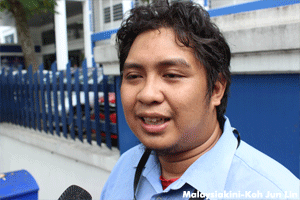 He told the panel that about eight police officers from the group charged at him while he was sitting down on the platforms along Jalan Tuanku Abdul Rahman near the Dataran Merdeka intersection while smoking a cigarette.
Radzi said they kicked him in the abdomen and rained punches on him even though the rally had ended at about 7pm, ignoring his pleas that he was a media personnel.
He was rushed to the Kuala Lumpur Hospital and later transferred to Assunta Hospital. He was warded for one week after sustaining a fractured jaw and internal injuries.
Safety handbook
Upon hearing the testimonies, the Suhakam panel suggested journalists should be provided a handbook on precautions to take when covering rallies.
 The panel head Khaw Lake Tee
(left)
recommended that it is included to the National Union of Journalist’s (NUJ) journalists’ safety handbook.
The panel head Khaw Lake Tee
(left)
recommended that it is included to the National Union of Journalist’s (NUJ) journalists’ safety handbook.
It was raised when ACP Jamaluddin Abdul Rahman had questioned Malaysiakini photojournalist Koh Jun Lin on precautions he had taken while on duty at the rally, as outlined in the handbook.
Koh answered that he was not familiar with the recommendations, as the handbook is not given to the Internet media.
To this Khaw said, NUJ should amend the handbook and include recommendations for journalists covering peaceful assemblies.
"There are guideline published by the International Committee of the Red Cross (ICRC) on reporting on such situations, that are available for journalists," said Khaw.
The current handbook was published based on the guideline prepared by the International Federation of Journalist (IFJ) last December after Bernama cameraperson Noramfaizul Mohd Nor was shot dead on duty while covering a humanitarian mission in Mogadishu, Somalia.
Cops moots helmets, flak jackets
It entails a quick guide on precautions for journalists and employers of the print media if assigned to cover natural disasters and social unrest.
Jamaluddin asked both the journalists if the Bersih rally could constitute as "social unrest" and whether they were prepared with gear like helmets, mask and combat jackets.
Although the duo agreed that the peaceful assembly which turned into unrest as chaos ensued after the tear gas was fired into the crowd, they disagreed that such extensive gears was necessary as they had clearly identified as journalists on duty.
Met on the sidelines, NUJ general secretary V Anbalagan, who was present at the inquiry, said the document could not be amended as it was based a copy from the IFJ.
However, Anbalagan said, there were other published handbooks on occupational hazards and safety.
The panel is headed by Khaw and assisted by commissioners Detta Samen and Mahmood Zuhdi A Majid.
The inquiry resume on Monday at 10am.
Related stories
We want solutions not excuses, Bersih tells EC


Report this comment
Are you sure you want to delete this comment?
This action cannot be undone.