




UN rep: Government's job to ensure rallies are peaceful
INTERVIEW United Nations special rapporteur for peaceful assembly and association Maina Kiai has lamented that Malaysia is one of the few countries in the world where protest organisers are personally held liable for damage resulting from street demonstrations.
INTERVIEW United Nations special rapporteur for peaceful assembly and association Maina Kiai has lamented that Malaysia is one of the few countries in the world where protest organisers are personally held liable for damage resulting from street demonstrations.
"This is completely against human rights standards as the state has the responsibility to ensure that those who want to assemble can do so peacefully," he said.
"We (UN rapporteurs) have expressed concern on how the Bersih 3.0 rally was handled and we still hold that view," said Kiai, who studied law in both the University of Nairobi and Harvard.
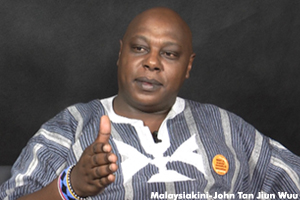 Kiai, who was in Malaysia last week on the invitation of several NGOs and the Bar Council, said the state should understand that allowing freedom of assembly does not negate its responsibility to ensure that the rallies remain peaceful.
The top Kenyan lawyer was on his first visit to Malaysia as part of a familiarisation tour to get to know the country better, particularly on the issue where he has been tasked by UN to protect - the right to peaceful assembly.
During his brief visit, Kiai made time to call on inspector-general of police Ismail Omar.
A number of UN special rapporteurs had earlier written to the government, asking for a formal invitation to conduct a visit following the Bersih crackdown. Kiai confirmed he had received an official invitation from Putrajaya to come next year.
Elaborating on the Bersih 3.0 rally, he said the UN special rapporteurs believed that, under the international law, the organisers should be generally responsible for the event.
"However, if unlawful acts happen, then it is the state's responsibility. The state has the primary task to ensure that the rally is peaceful.
"If there are agent provocateurs in the rally, they need to pull them out in a humane way and deal with them according to the law. You cannot, and should not, pass that responsibility to individual citizens."
Police concerns
Kiai said he empathises with the police on the need for order, and that the meeting with Ismail was to help him (Kiai) understand how the police operate.
He said the IGP had indicated that the police are re-examining their standard operating procedures.
He expressed hope for active public debate by citizens, the media, civil society, and members of parliament to provide input on various aspects.
Kiai described his meeting with Ismail as "quite open" and that he had left feeling rather satisfied.
"The IGP voiced his concerns that the organisers didn't know everybody who came, which was true. However, if there are people out to create chaos or damage, it is the role of the police to make sure they don't.
"You do not blame a shopkeeper if a theft is committed in his shop. The man who came in to steal should be held accountable."
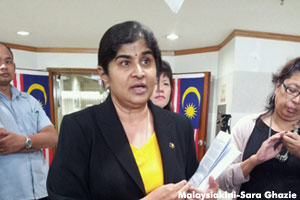 This was in reference to the fact that Bersih co-chairperson S Ambiga and several members of the steering committee are facing a
RM122,000 civil suit
by the government and police, over claims of damage to public property and 15 police vehicles during the Bersih 3.0 rally on April 28.
This was in reference to the fact that Bersih co-chairperson S Ambiga and several members of the steering committee are facing a
RM122,000 civil suit
by the government and police, over claims of damage to public property and 15 police vehicles during the Bersih 3.0 rally on April 28.
Kiai and Frank La Rue, the UN special rapporteur for the promotion and protection of the right to freedom of opinion and expression, have both been critical of the governments's handling of the Bersih rallies.
La Rue, who came to Malaysia a day after the Bersih 2.0 rally on July 9 last year, had commented in May that he is willing to come to Malaysia to probe the Bersih 3.0 rally but this was summarily rejected by the Foreign Affairs Ministry.
In the past, both Kiai and La Rue had voiced displeasure over the crackdown on Bersih.
Kiai has called on the government to withdraw its complaint against Ambiga, while La Rue has urged it to ensure a safe and conducive environment for journalists covering demonstrations.
Several journalists were hurt, while several were arrested, during Bersih 3.0. This, among other complaints, sparked a public inquiry by Malaysia's Human Rights Commission.
Tomorrow: UN special rapporteur pans Peaceful Assembly Act
NGOs can receive foreign funding, says UN rep
Related stories
End of the road for Ambiga's bid to challenge S'wak ban
UN rep: Government's job to ensure rallies are peaceful
Sabah Bersih questions long silence on Sabah RCI
Internal police delays hamper Bersih brutality probe
'Officers may have lost control of men during rally'


Are you sure you want to delete this comment?
This action cannot be undone.