




Loads of questions about Chin Peng's ashes
The police have been asked how the force plans to ensure that the ashes of former Communist Party of Malaya's (CPM) secretary-general Chin Peng, who died in Bangkok on Monday, do not cross the porous Malaysian borders.
Lawyer Baljit Singh, a Penang Gerakan leader, has taken a different path from his colleagues in the BN to question the authorities on how the police were monitoring the situation, other than stepping up security at all borders and entry points into the country.
The police have been asked how it will ensure that the ashes of former Communist Party of Malaya's (CPM) secretary-general Chin Peng, who died in Bangkok on Monday, does not cross the porous Malaysian borders.
Lawyer Baljit Singh, a Penang Gerakan leader, has taken a different path from his colleagues in the BN to question the authorities on how the police were monitoring the situation, other than stepping up security at all borders and entry points into the country.
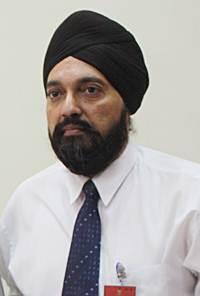 "Are we going to check every Tom, Dick and Harry who comes in - either by land, sea or air, from Bangkok?" Baljit (
right
), the former state Gerakan legal and human rights bureau chief, asked.
"Are we going to check every Tom, Dick and Harry who comes in - either by land, sea or air, from Bangkok?" Baljit (
right
), the former state Gerakan legal and human rights bureau chief, asked.
"And if we do have a suspect, someone who happens to be found with ashes, how are we going to prove they actually belong to Chin Peng?" Baljit asked.
"If we manage to prove it is Chin Peng's ashes, although I wonder how it is going to be done, will Malaysia be the first country to repatriate someone's ashes?.
"If we did that, we would indeed be the laughing stock of the whole world," Baljit told Malaysiakini yesterday.
Chin Peng, born Ong Boon Hua in 1924, was pronounced dead at 6.20am in a hospital in Bangkok, on Sept 16, Malaysia's 50th anniversary day.
It is learnt that the ex-guerilla, who lived in exile in Thailand since the 1960s, wanted to be buried in his hometown, Sitiawan, Perak.
His wishes are not to be fulfilled as several ministers, including Prime Minister Najib Abdul Razak, maintain that Chin Peng is a terrorist and traitor to the country and have rejected the possibility of bringing his ashes back to Malaysia.
What about other traitors roaming the country?
"If Chin Peng, who is considered a traitor cannot be buried in his homeland, what about other traitors who are still roaming in the country now?" Baljit asked.
He explained that traitors to the country include those involved in corruption, which is bleeding the country dry.
Baljit urged Malaysians on the whole to forgive but not to forget the historical involvement of the CPM in the country's fight for independence from the colonials - the Japanese (1942-45) and British, which ended with Merdeka on Aug 31, 1957.
He said the outrage from certain quarters whose families and loved ones were sacrificed during the war with the communists is understandable.
"But after 50 years, it is time to move on, to move forward, forgive but don't forget," he said.
The government too had its duty to honour the 1989 Peace Accord that had been signed by the Malaysian and Thai governments with the CPM in Haadyai that year.
Top leadership barred from returning
The agreement, among others, specifies that the CPM and Malaysian government would cease fire, while members of the party would be allowed to return to the country.
However, only 300-odd of the CPM's lower rank soldiers and their families were allowed home but the top party leadership was barred from doing so.
Many chose to follow their CPM leaders, who later resided in a village in Southern Thailand, sponsored by the Thai government. The village is located an hour's drive from Narathiwat.
"We must honour the agreement or else we do not look good as the party that has reneged on its promises," Baljit said.
He also reminded the authorities about the Japanese Occupation of Malaya from 1942 to 1945, during which many people were killed, and which still haunted some who experienced the brutal torture inflicted by the Imperial soldiers.
"The atrocities done by the CPM are nothing compared with the torture and loss of lives inflicted by the Japanese soldiers during their four years in Malaya," Baljit said.
"Yet, we forgave them and looked East, towards their policies. We should do the same with CPM," he suggested.
Baljit also reminded the Malaysian government about the 1965 Indonesian Confrontation, during which Jakarta threatened to invade Malaysia, which had just formed a federation in 1963, together with the Sabah, Sarawak and Singapore.
"Yet we forgave them and allowed the Indonesians to come into the country to live and work, legal or illegally," Baljit added.
Related stories
Gov't will not send rep to Chin Peng's funeral
KJ joins the 'no to ashes' bandwagon
Osama never signed any peace deal with US
Mubarak backs move to bar Chin Peng's ashes


Are you sure you want to delete this comment?
This action cannot be undone.