




Najib turns from Santa to the Grinch that stole Christmas
MP SPEAKS Merdeka Center reported on Dec 22 that Prime Minister Najib's approval rating of 52 percent is an all-time low, compared with the 65 percent when he launched the New Economic Model (NEM).
The NEM was a response to Anwar Ibrahim's New Economic Agenda, replacing affirmative action based on race with one based on needs.
After two pre-election budgets, when Christmas came early, the post-election budget has turned Prime Minister Najib Abdul Razak from Santa Claus to the Grinch that stole Christmas...
MP SPEAKS Merdeka Center reported on Dec 22 that Prime Minister Najib's approval rating of 52 percent is an all-time low, compared with the 65 percent when he launched the New Economic Model (NEM).
The NEM was a response to Anwar Ibrahim's New Economic Agenda, replacing affirmative action based on race with one based on needs.
After two pre-election budgets, when Christmas came early, the post-election budget has turned Prime Minister Najib Abdul Razak from Santa Claus to the Grinch that stole Christmas.
Many (the 51 percent who voted Pakatan Rakyat) seek solace from the crippling price hikes in the thought that economic hardship will knock some sense into those who retained BN in power (the 43 percent, including newly-minted voters of foreign origins) to mend the error of their ways in the next general election.
I was also of the same mind until I read the words printed on my son's T-shirt: ‘Everybody wants to change the world but nobody wants to change himself.'
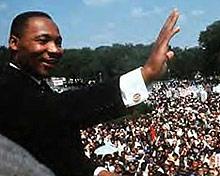 This, I discovered, is a quote by Leo Tolstoy, author of ‘War and Peace' and ‘Anna Karenina'. His book, ‘The Kingdom of God is Within You' and the idea of non-violent resistance have been acknowledged by Mahatma Gandhi and Dr Martin Luther King Jr (
left
) to have inspired and influenced them in their struggle against oppression.
This, I discovered, is a quote by Leo Tolstoy, author of ‘War and Peace' and ‘Anna Karenina'. His book, ‘The Kingdom of God is Within You' and the idea of non-violent resistance have been acknowledged by Mahatma Gandhi and Dr Martin Luther King Jr (
left
) to have inspired and influenced them in their struggle against oppression.
This quote struck me that no matter how bad the economy is going to be, we are not going to change Malaysia, not in the next GE and the GEs to come, if we, Malaysians, do not first change ourselves.
We cannot hope for a multicultural and equitable society if we do not first get rid of the racial prejudices within us.
We have never been one Malaysia. We have as many different Malaysia as there are ethnic groups, each living separate lives. Each group has no real idea how the others live. Malaysians have been separated and segregated in a manner that discourages peoples of different ethnicity to interact with one another in a meaningful and positive way.
Fifty-six years of racial politics has poisoned, dehumanised and desensitised us. We cannot remove BN if we cannot remove the fear and ignorance Umno has instilled in the 47 percent.
We cannot remove fear and ignorance if...
We cannot remove the fear and ignorance, if we cannot remove the prejudices, preconceptions and preconditions in us. To do so we must, firstly, know how ethnicity is used, organised and structured by Umno to mobilise political support. The events this December are instructive.
As leaders of the world gathered in South Africa to pay homage to Nelson Mandela, who fought racial discrimination, leaders of Umno gathered in Malaysia to pay homage to Ketuanan Melayu.
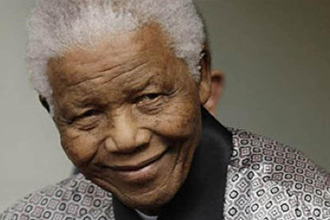 The unkindest cut to Nelson Mandela's memory is the shameless comparison in likening Umno's Ketuanan Melayu with Mandela's struggle against apartheid. As Umno secretary-general Tengku Adnan Tengku Mansor said, playing the race card at BN party meetings is normal.
The Umno general assembly is the annual tribal gathering for ritual racial diatribe, ethnic histrionics and minority bashing. It is the yearly affirmation of historical legacies of mistrust, the reinforcement of the mentality of victimisation and the propping up of feelings of shared deprivation.
Umno Youth exco member Fathul Bari told delegates there is nothing to worry if people called Umno racist because "we are only protecting our rights". Bukit Mertajam division chief Musa Sheikh Fadzir wants the ‘1Malaysia' slogan to be replaced with ‘1Melayu' to teach non-Malays a lesson for ditching BN in GE13.
And, Umno Youth chief Khairy Jamaluddin condemned non-Malay companies for not hiring Malay chief executives.
At last year's assembly, Tokyo Umno Club representative Ariff Yassir Zulkafli sang ‘Lagu Warisan'. The lyrics, translated to English, say:
"A small child plays with fire
A desolate heart burns
Tears, blood and sweat (yet)
His land belongs to outsiders."
It is the signature song of Malay patriots yearning for the Malay motherland to be free of ‘pendatang'. The song became the emotional and psychological high point of the assembly, bringing tears to the delegates who joined in spontaneous rendition.
Umno's doctrine of nationalism
However, nothing is comparable to Hishamuddin Hussein brandishing his keris to cries from the delegates not to just wave it but to use it.
 Lim Teck Ghee (
right
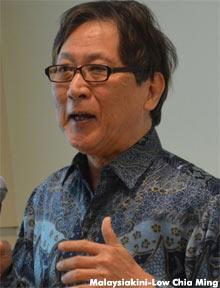
) has observed that ‘Lagu Warisan' and the keris waving encapsulates the Umno mind and mentality in propagating the doctrine of "Blood and Soil" nationalism. Blood and soil nationalism refers to an ideology that focuses on ethnicity based on two factors - descent and homeland.
Lim Teck Ghee (
right
) has observed that ‘Lagu Warisan' and the keris waving encapsulates the Umno mind and mentality in propagating the doctrine of "Blood and Soil" nationalism. Blood and soil nationalism refers to an ideology that focuses on ethnicity based on two factors - descent and homeland.
David A Lakefield and Donald Rothchild in ‘Containing Fear: Origins and Management of Ethnic Conflict' said competition for resources lies at the heart of ethnicity. Property rights, jobs, scholarships, educational admissions, language rights, government contracts and development allocations all confer benefits on individuals.
All such resources are scarce and thus, become objects of competition. Where ethnicity becomes the basis for identity, group competition becomes a struggle along ethnic lines. Politics matter because the state controls access to scarce resources.
Groups that possess political power gain privileged access to goods and benefits. The groups struggling for political power compete on their visions of just, legitimate and appropriate political orders.
John M Richardson and Shinjini Sen in ‘Ethic Conflict and Economic Development' explained that in a typical scenario, leaders of a dominant ethnic group gain office and then use state institutions to distribute economic and political benefits preferentially to their ethnic brethren.
Discrimination against subordinate groups, often portrayed as less deserving human beings, accompanies this preferential treatment.
When force is needed to impose discriminatory practices and quell subordinate group resistance, it is exercised by police officers and soldiers recruited almost exclusively from the dominant group, who often view themselves as "ethnic soldiers".
The dominant group uses its power to discriminate
In democracies, a dominant group that is a majority often uses its voting power to entrench discriminatory practices by legal or quasi legal means. When a dominant group is the minority, it typically imposes discriminatory policies by force, as in apartheid South Africa.
Historical legacies of mistrust, a mentality of victimisation and feelings of shared deprivation make group members more receptive to simplistic appeals from extremist leaders and encourage those vying to be leaders to make such appeals.
In South Africa, Mandela and FW de Klerk, who released Mandela from prison, have shown how courageous leadership can reduce ethnic tensions.
Unfortunately, political leaders in a diverse society, more often than not, are less courageous. Such political leaders play a divisive role by appealing to ethnic sentiments and use rival groups as scapegoats in order to enhance personal political power and win or retain political office.
Historical legacies of mistrust are used to kindle and stoke present day fires based on memories of "ancient hatreds".
In the Middle East, ethnic differences are traced to biblical times. In Northern Ireland, historical clashes between Protestants and Catholics are relived in annual festivals that often become violent.
Sri Lankan school children are reminded of the pivotal clash between Sinhalese Prince Dutugemunu and Tamil King Elaric that re-established Singhalese dominance on the island.
For Serbians and Croatians, the incursions into Europe of Ottoman Sultans are a living reality, along with the ethnically divisive policies of the Austro-Hungarian Empire and the atrocities instigated by ethnic based regimes.
A victim mentality helps unite group members
A victim mentality helps to unite group members behind their leaders and justifies present sacrifices. Moreover, members of a victimised group feel justified in victimising others.
 In South Africa, white Afrikaners viewed themselves as victims of British colonialism redeemed by ruling over the inferior Blacks, Indians and Coloureds.
In Sri Lanka, the Sinhalese majority also viewed themselves as victims. They resented the favourable treatment given to Tamils under colonial rule. In the words of world historian KM de Silva, the Sinhalese were a "majority with a minority complex".
This attitude fuelled political support for Sinhalese nationalist leaders, whose policies convinced many Tamils there was no alternative to secession ending in a disastrous tragedy for all.
Relative deprivation is a perception that, due to the historical legacies of mistrust and victimisation mentality, the members of the group believe they are not being provided the benefits to which they are justly entitled.
Feelings of relative deprivation are intensified not only when benefits, including political, religious and language rights, as well as economic well-being decline, but also when expectations increase.
Feelings of deprivation resulting from declining benefits or unrealised expectations will be interpreted as an ethnically motivated injustice. It is this relative deprivation that justifies the ethnically motivated leader to re-establish a "more equitable social-economic order".
In Sri Lanka, both SWRD Bandaranaike and Sirimavo Bandaranaike won democratic elections by appealing to Buddhist-Sinhalese nationalist sentiments and denigrating ethnic Tamils.
In the United States, appealing to white racist sentiments is a staple of political campaigning in the racially divided Southern states. Similar tactics were used by leaders such as Slobodan Milosevic, of Serbia and General Tudjman of Croatia, who won their presidencies by appealing to the most divisive aspects of Serbian and Croatian nationalism.
John M Richardson and Shinjini Sen were referring to Rwanda, Serbia, Croatia, Sri Lanka and Ethiopia, but Malaysians will easily recognise that these same things are happening in Malaysia.
Tomorrow: Part 2 - From new economic model back to old
WILLIAM LEONG JEE KEEN is the Member of Parliament for Selayang.


Report this comment
Are you sure you want to delete this comment?
This action cannot be undone.