




Analysts: Red shirts failed to achieve all their aims
The organisers of the red shirt rally believe they proved a point on Sept 16, claiming 300,000 people had joined their protest against Bersih's allegedly anti-Malay sentiments.
A spokesperson for the red shirts, Sungai Besar Umno chief Jamal Md Yunos, said it also showed that Prime Minister Najib Abdul Razak still enjoyed popular support.
Analysts that Malaysiakini spoke to however were quick to burst the red shirts' bubble.
The organisers of the red shirt rally believe they proved a point on Sept 16, claiming 300,000 people had joined their protest against Bersih's allegedly anti-Malay sentiments.
A spokesperson for the red shirts, Sungai Besar Umno chief Jamal Md Yunos, said it also showed that Prime Minister Najib Abdul Razak still enjoyed popular support.
Analysts that Malaysiakini spoke to however were quick to burst the red shirts' bubble.
International Islamic University Malaysia (UIAM) professor Maszlee Malik ( photo ) said the number of protesters, which police estimate at 50,000, was small compared to the actual Malay population.
This, he said, shows that most Malays were not convinced by the racial sentiments played up by the rally organisers and spokespersons.
"Influential and prominent Malay NGO leaders (also) failed to show up. It's clear that the rally was not recognised by a majority of Malays in the country," Maszlee added.
Likewise political analyst Phoon Wing Keong said the rally failed to achieve its objective of countering Bersih 4.
"In terms of participation figures, the emotions of the protesters, the course of events, the Sept 16 rally failed when compared to Bersih," he said, adding that the turnout did not represent society as a whole.
Former Universiti Malaya Centre for Democracy and Elections (UMcedel) director professor Mohammad Redzuan Othman ( photo ) meanwhile said the Himpunan Rakyat Bersatu doesn't benefit Najib at all.
"I don't see how this rally gives 'added value' to Najib or helps strengthen his position.
"The rally failed to unite the Malays... the turn out was not huge. If you look at the number of participants Najib doesn't have full support of the Malays," he said.
This was echoed by Phoon who said: "This rally was not a (show of support), instead it revealed weaknesses."
"Those who (spoke) at the rally were not influential leaders, and most of the participants were mobilised. So this does not show consistent support from Umno or Najib either," he added.
Riot would have hastened PM's downfall
Penang Institute fellow Wong Chin Huat said the rally could have actually hurt Najib if the standoff between red shirts and police in Petaling Street had turned into a riot.
This, he said, would have hastened the prime minister's downfall.
"The Petaling Street incident was not good for Najib, but (because there wasn't a riot) the negative impact was not huge," said Wong ( photo ), who is also a resource person for Bersih 2.0.
For Phoon, what the red shirts succeeded in doing was to drag Umno's internal struggle between deputy president Muhyiddin Yassin and Najib out to the streets.
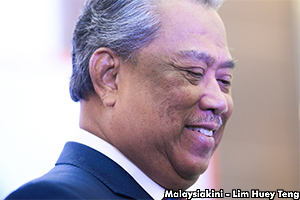 He said Muhyiddin (
photo
), who has always been vocal about Malay rights, had
opposed
the rally, as did Najib's most vocal critic former premier
Dr Mahathir Mohamad
.
He said Muhyiddin (
photo
), who has always been vocal about Malay rights, had
opposed
the rally, as did Najib's most vocal critic former premier
Dr Mahathir Mohamad
.
"When Umno's internal conflict is dragged on to the streets, one can only imagine how intense the conflict is," he said.
The only person who seems to have benefited from the rally it seems, is Jamal, who has received consistent media attention for weeks, after being largely unnoticed for a long time.
"I think this rally was only meant to promote certain individuals," Redzuan said snidely.
Related reports
Analysts: Red shirts failed to achieve all its objectives
Najib: Racial slurs at red shirt rally will be probed
Yes, Malays need to defend themselves - from Umno
Red shirt rally - Umno the biggest losers
Red shirts’ objective is to spook the Chinese
Look who’s talking - so red shirt rally not racial?
Lim moots Rafidah to head racial harmony committee
Journalists recount racial slurs, abuse at red shirt rally
Not a way to bring dignity to Malays
Jamal denies Najib gave RM3m cheque to red shirt rally


Report this comment
Are you sure you want to delete this comment?
This action cannot be undone.